Peace of mind through personalized care: Michelle's breast cancer story

Learning you have breast cancer is an overwhelming experience. With one in eight women receiving a diagnosis in their lifetime, annual mammograms remain an essential, life-saving screening tool. Early detection offers patients more options with better outcomes, as it did for Michelle in December 2024.
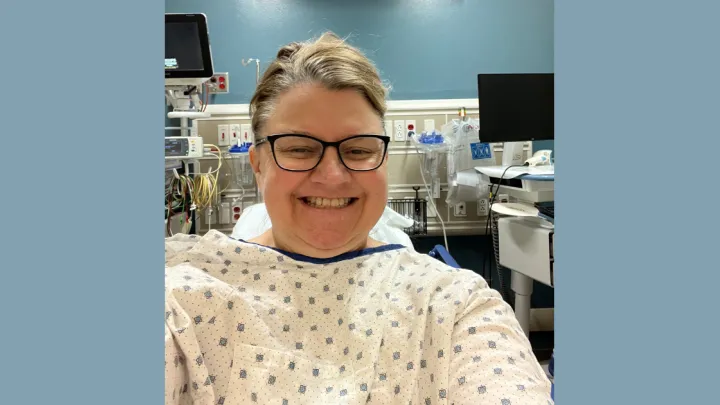
Michelle was a healthy woman who had no symptoms of breast cancer. She enjoyed helping others, entertaining family and friends, and working in her flower gardens and yard.
After a routine mammogram, Michelle was called back for further imaging.
“I’ve had callbacks after mammograms due to having fibrous breast tissue,” says Michelle. “It wasn’t unusual to have an ultrasound to confirm I was clear. However, this time I was asked to go to a different location for more detailed imaging of a suspicious mass. Then they saw a second area of concern.”
After undergoing additional imaging and difficult biopsies, Michelle awaited the results.
A staff member from the imaging facility called Michelle back and informed her that both biopsies were cancerous.
“Those results were hard to digest, and the staff member was unable to answer my questions,” she recalls. “Then not receiving a call from my doctor right away caused me even more anxiety. I felt like I was on an island with no clear direction. I was completely traumatized.”
Moving forward with clarity
A breast cancer diagnosis is stressful enough without having to wait too long for answers. Michelle’s friend, a nurse, recommended that she consider receiving her care from Nebraska Medicine | Fred & Pamela Buffett Cancer Center.
A representative from Nebraska Medicine called Michelle, requesting a detailed health history. An appointment was then scheduled for her to meet with her care team. The team's specialists had already reviewed Michelle’s medical files before she arrived.
“At my first appointment with Nebraska Medicine, I was so nervous,” Michelle recalls. “Fortunately, I brought my husband and a good friend for support. The team was very informative, sensitive and clear in presenting my treatment options. The appointment provided me the comfort and confidence I needed to move forward in the capable hands of my team.”
Now that Michelle had answers – and options to consider – she finally felt some relief from her anxiety.
“We confirmed that Michelle had two separate areas of cancer in her right breast,” says breast surgeon Janelle-Cheri Millen, MBBS. “One area was determined to be ductal carcinoma in situ (DCIS), stage 0 breast cancer, and the other was a subcentimeter invasive breast cancer, stage 1 disease. We were able to offer her a less aggressive, more targeted treatment plan.”
Because Michelle had a family history of breast cancer (her mother and maternal aunt), she decided to undergo genetic testing. Fortunately, no pathogenic mutation associated with an inherited risk for cancer was found.
Michelle was offered the option of treating both right breast cancers with two lumpectomies, which remove the cancers while preserving the rest of the breast, or having a mastectomy with the option of breast reconstruction.
An innovative approach
Michelle chose to preserve her breast and had the lumpectomies on Jan. 22, 2025. Her decision was influenced by less recovery time and fewer restrictions than those of a mastectomy.
To preserve the symmetry of her breasts, she also chose to proceed with an oncoplastic reduction mammoplasty. With this procedure, the lumpectomies are performed through a breast reduction pattern incision and the nipple is lifted. A simultaneous reduction of the healthy left breast was also performed to maintain symmetry and accommodate expected changes after radiation.
“Dr. Millen explained that doing this procedure would result in both of my breasts appearing similar,” adds Michelle. “They would look like ‘sisters,’ not ‘identical twins.’ I feel content with my decision and satisfied with the results.”
As an outpatient procedure that included a lymph node biopsy, Michelle was relieved to hear she could go home the same day.
Dr. Millen called her the next day to give her the good news: All the cancer was successfully removed, and her lymph nodes showed no evidence of cancer. “I really can’t say enough about Dr. Millen’s surgical care and expertise,” adds Michelle.
Three weeks of right whole-breast radiation therapy with radiation oncologist Breann Bowar, MD, began in March. Michelle also follows up with the breast surgery team for continued screening every six months for two years, then yearly through the five-year mark.
“The most inspiring and encouraging interactions I have are when I get to see patients for follow-up visits,” says Dr. Millen. “They're doing better than they were when we first met, because now they're moving more, prioritizing their health and getting back to activities that gave them joy before their diagnosis. These experiences give particular meaning to our work.”
Caring support makes all the difference
“Looking back on my journey, I really appreciated having my care from experienced, intelligent, nurturing women,” says Michelle. “Dr. Millen, Dr. Bowar, and the whole care team were not only knowledgeable, but also gentle and thoughtful.”
In addition to an expert medical team, having people around to support and advocate for you is everything. For Michelle, it was her family and friends.
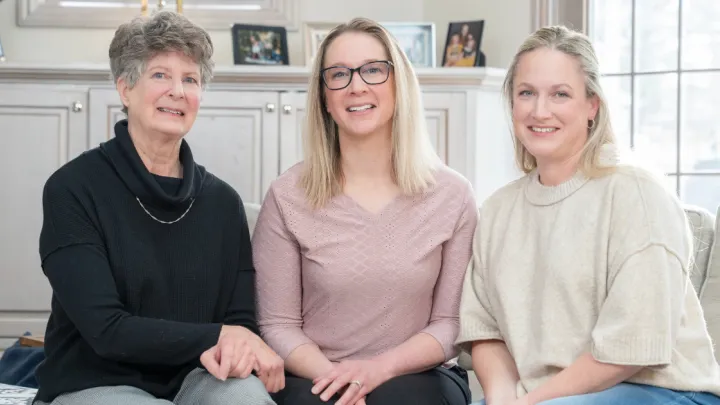
“My husband, daughter, son, mother-in-law, family and friends were my support system from day one,” she says. “I couldn’t have had such a successful recovery without my family and friends upon returning home. I am very blessed.”
Michelle’s advice to others:
“Stay faithful in getting your mammograms. Ask questions. Expect clear, timely communication. Confidence in your care team’s expertise is important. If you’re not comfortable with what’s happening, find another doctor who will listen and develop a treatment plan you feel good about.”
Multidisciplinary team, personalized care
Every person is unique and deserves more than a one-size-fits-all approach. Patients are offered same- or next-day appointments (the SONDA program) for those recently diagnosed with breast cancer and evaluated by a breast cancer team that offers coordinated care across multiple specialties.
“One of the biggest improvements in breast cancer care has been an increase in individualized care,” says Dr. Millen. “There have been a lot of strides in treatments, and overall outcomes, regardless of the stage of diagnosis, are significantly better now than they used to be, and it's continuing to get better.”
As the state’s only NCI-designated cancer center, the Fred & Pamela Buffett Cancer Center offers a multidisciplinary breast cancer team dedicated to focusing on you, your priorities and preferences. The team works to ensure you receive the best treatment at the right amount – no more, no less – to maximize effectiveness, minimize side effects and support patients before, during and after treatment.
When you’ve been diagnosed with cancer, it’s normal to have questions or be unsure about the next steps in your care. A second opinion from the Fred & Pamela Buffett Cancer Center can confirm your diagnosis, give you a chance to discuss treatment options or clinical trials, and help you feel more confident in your chosen path forward. Call 402.559.5600 to get started.