You asked, we answered: What is the difference between spider veins, reticular veins and varicose veins?
Question:
What is the difference between spider veins, reticular veins and varicose veins?
Answered by vascular surgeon Jonathan Thompson, MD:
Veins play an important role in the body’s circulatory system. They work hard to carry oxygen-poor blood back to the heart. Healthy veins have one-way valves that help keep blood moving in the right direction.
When these valves are not working properly, blood may flow backward, causing pressure, vein stretching, swelling and pooling.
Spider, reticular and varicose veins are similar in that they are considered to be malfunctioning or damaged. What makes them different from each other is how they look, size and location.
Spider veins
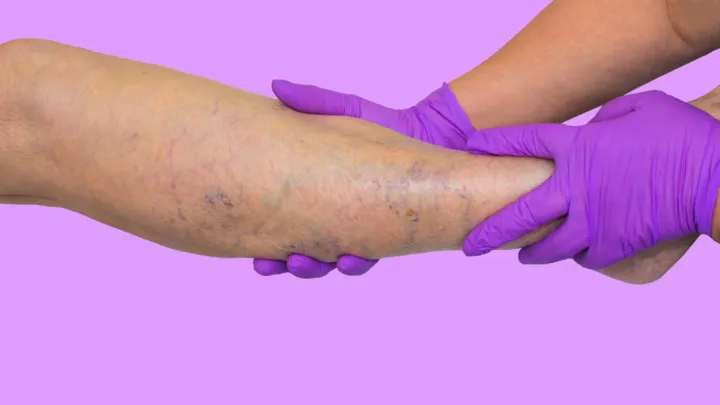
Spider veins, or telangiectasias, appear as clusters that may remind you of thin spider webs or branches. Visible just beneath the skin’s surface, they may look blue, red or purple where small blood vessels are damaged. They most often develop on the legs or face and are not typically worrisome. Some people may not notice symptoms, while others may feel minor discomfort. If the appearance of spider veins bothers you, they can be treated with a minor procedure known as sclerotherapy.
Reticular veins
Reticular veins connect larger veins with smaller, surface-level veins. They appear a bluish-green color, tend to appear flat, and don’t bulge above the skin like varicose veins. Although they may resemble spider veins in similar locations, they are typically larger, measuring 1 to 3 millimeters in diameter. Reticular veins may show no symptoms, but may be accompanied by local tenderness, burning or itching. They often act as feeder veins to spider veins, which is why treating them may be necessary for durable results.
Varicose veins
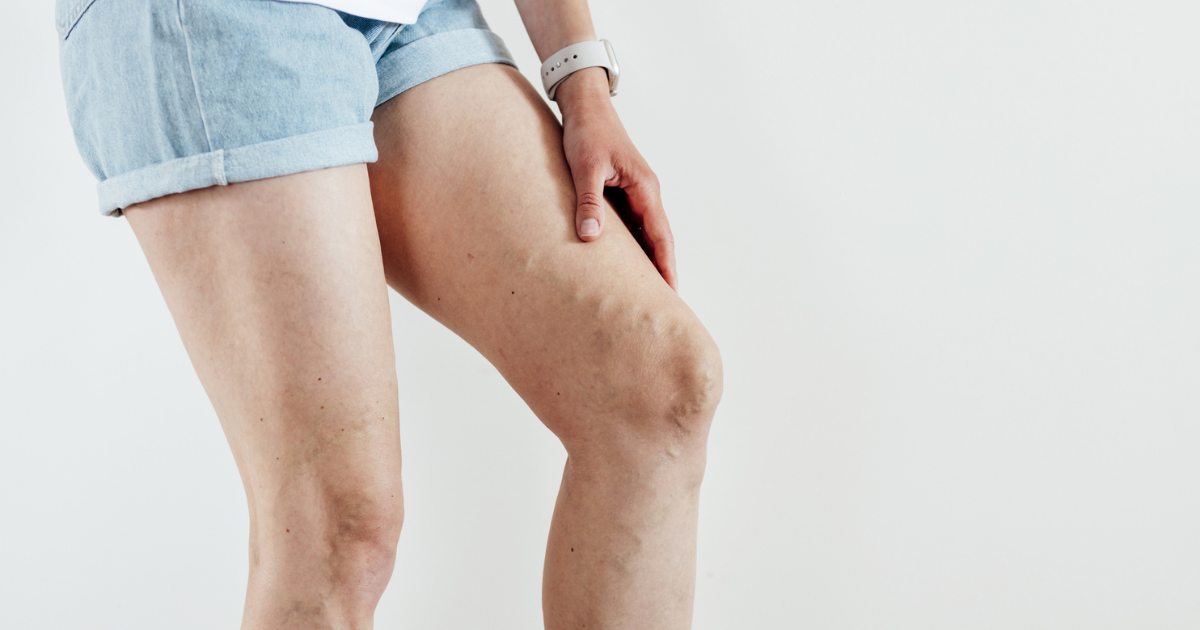
Varicose veins bulge above the skin’s surface and measure larger than 3 millimeters in diameter. They often appear blue or purple and are most commonly found on the legs, ankles and feet. These can cause painful symptoms, including itching, skin changes, throbbing, fatigue, heaviness or progress to leg ulcers.
Varicose veins are a sign of chronic venous insufficiency. If you’re experiencing symptoms, treatment is recommended to prevent further complications. Compression stockings are often the first step and can help relieve symptoms.
When compression isn’t enough, other treatment options include minimally invasive procedures such as endovenous laser or radiofrequency ablation, sclerotherapy, or small outpatient surgeries like ambulatory phlebectomy.
Read more about how to manage varicose vein symptoms in the summer.