Will nipple sensation return after breast surgery?
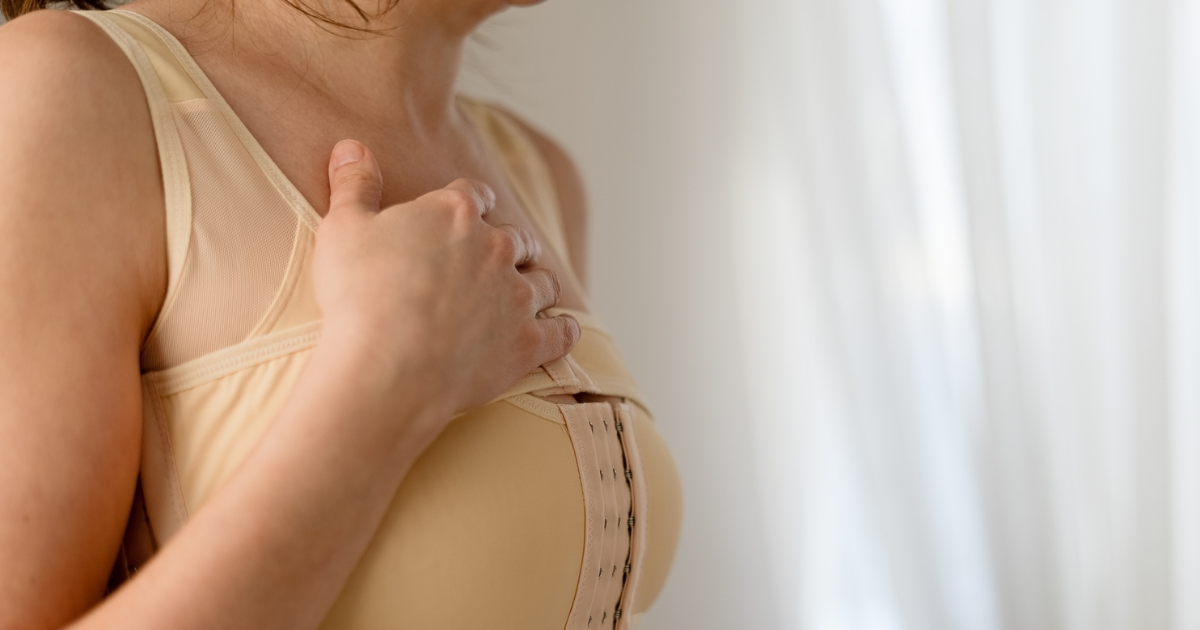
Losing nipple sensation after breast cancer surgery is common and can be distressing.
Nebraska Medicine| Fred & Pamela Buffett Cancer Center surgeons explain what’s happening, what’s possible and why the conversation around sensation is finally changing.
Why sensation is often lost
Whether a patient has a mastectomy or a lumpectomy, breast cancer surgery results in some degree of nerve damage and numbness.
“The nerves to the nipple go through the breast itself,” says plastic surgeon Sean Figy, MD. “When we remove the breast during a mastectomy, those nerves are almost certainly cut.”
The result is little to no feeling in the chest after a mastectomy. A lumpectomy, which removes only the tumor and a small margin of surrounding tissue, tends to cause less nerve damage.
“There’s a lesser chance that there will be numbness into the breast skin or nipple, because you’re still preserving a lot of the nerves,” explains breast surgical oncologist Juan Santamaria, MD.
Can sensation be preserved or restored?
In recent years, surgeons have started offering sensation-sparing techniques for some mastectomies.
During this procedure, a surgeon uses a small nerve graft – a piece of donor nerve tissue – to bridge the gap left when breast nerves are removed. The goal is to give the remaining nerves a pathway to regrow and reconnect, allowing gradual recovery of feeling in the nipple and chest skin.
Not every patient is a candidate. Eligibility depends on factors like breast size, cancer location and how much the breast has dropped over time.
For women with larger or lower-hanging breasts who are interested in nerve reconstruction, there may still be options.
“We can potentially restore some nipple and skin sensation if we do a staged approach in which they get a breast reduction lift first, and later on, we do a nipple-sparing mastectomy with reconstruction and nerve reconstruction,” Dr. Santamaria says.
How long does it take?
Sensation doesn’t return overnight. Nerves regrow slowly, at about a millimeter per day.
“When we’re talking 70, 80, 90 millimeters of distance, it takes months,” Dr. Figy says. “The degree of sensation that has returned after about a year is about what we can expect to be the new normal.”
Dr. Santamaria agrees. “Maximal sensation restoration we have seen has been at least a year out,” he says. “It doesn’t happen right away.”
Retraining the brain
Even as nerves regrow, the brain needs time to relearn how to interpret the new signals. The care team uses a re-sensation protocol to help speed that process along.
“Looking in the mirror, patients can take different materials and brush them on the skin and the nipple,” Dr. Figy says. “Because their brain will tell them what this is supposed to feel like, it’ll retrack that to the sensation that they’re getting.”
Dr. Figy follows up with implant patients annually for life. “I always ask about sensation,” he says. “We’re always going to take care of the cancer first – but we’re constantly trying to think about what we can do better, how can we help people feel better.”
Why sensation matters
For years, the medical community focused on how reconstructed breasts looked rather than how they felt. That’s changing.
“We’ve gotten good at making breasts look like breasts,” Dr. Figy says. “But we have not been historically great about making breasts feel like breasts.”
Sensation loss affects more than sexual health. It can affect safety, too. “A numb chest can be dangerous,” Dr. Figy says, describing patients who’ve come in with burns because they couldn’t feel heat against their skin.
It also affects emotional connection. “Imagine never being able to feel the hug from your child again,” Dr. Figy says. “It’s that deep social-emotional connection that we’re trying to help preserve.”
For some patients, regaining nipple sensation has had meaningful effects. “The psychosexual well-being of some women has improved, because they have regained nipple sensation, which was important for them,” Dr. Santamaria says.
What to expect – and what to ask
Both surgeons encourage patients to speak up about their concerns before surgery, even if the topic feels personal or awkward.
“In our culture, it’s somewhat taboo to talk about your sexual health and emotional life,” Dr. Figy says. “But it is important for a lot of people.” He says he raises the topic in every consultation where a patient will retain their nipple.
And while full sensation restoration isn’t guaranteed, patients shouldn’t lose hope. “It’s a work in progress,” Dr. Figy says. “If anyone says that we can give you perfect sensation back, it’s currently not truthful. It’s something that we are trying, and it is a goal, but it’s a lofty goal.”
Every patient is different. Nerve anatomy varies from person to person, and outcomes depend on many individual factors. The most important step, both surgeons agree, is having an honest conversation with your care team early and often.
Expertise close to home
Fred & Pamela Buffett Cancer Center is the only NCI-designated cancer center in Nebraska. Its breast cancer program includes four breast surgical oncologists, all of whom are fellowship trained – meaning they each completed additional education in breast cancer surgery after their general surgery residency.
“We have the highest expertise in all areas of breast reconstructive surgery,” Dr. Santamaria says.
The breast program has plastic reconstructive surgeons offering the full array of reconstructive options. Services include:
- Implant reconstruction.
- Autologous reconstruction (using the patient’s own tissue)
- Surgeries to reduce the risk of or reverse lymphedema.
The team also offers oncoplastic breast surgery, which combines breast conservation cancer removal with techniques to improve the appearance and symmetry of both breasts.
Patients are seen at Fred & Pamela Buffett Cancer Center – Village Pointe Health Center, Fred & Pamela Buffett Cancer Center – Nebraska Medical Center and Fred & Pamela Buffett Cancer Center – Bellevue Health Center.