Investigational drug offers hope for rare tumor-related hypoglycemia
For almost a decade, Jolene Lichty’s neuroendocrine cancer barely slowed her down. That changed earlier this year when her tumors started making large amounts of insulin. Her blood sugar dropped to dangerous levels, and she spent two and a half months in the hospital hooked up to continuous dextrose infusions just to stay alive. “I hardly could breathe, and it felt like I had a belt around me that there was no way to unhook,” Lichty says of those weeks. “It was a really, really dark time.”
Lichty’s condition is called tumor-associated hyperinsulinism. It happens when a neuroendocrine tumor gains the ability to release insulin on its own. When endocrinologist Domenic DiSanti, DO, began treating Lichty, her options were limited.
“She was stuck in the hospital – she could stay connected to this continuous glucose infusion or transition to palliative care,” Dr. DiSanti says.
Then Dr. DiSanti remembered an email he’d received months earlier about a research study on ersodetug. The drug is an antibody that regulates the insulin receptor, stopping excess insulin from causing severe lows.
Dr. DiSanti and his team moved quickly to provide access to this investigational medication at the Nebraska Medical Center.
Lichty qualified for ersodetug under an expanded access protocol, which allows an investigational medication to be provided to a patient with a life-threatening condition. She received her first three infusions in the hospital before her glucose stabilized enough for her to go home. She now returns to the UNMC Clinical Research Center every other week for ongoing infusions.
Lichty says she is grateful to receive the drug in Nebraska instead of traveling to research sites in other states. She and her husband, Kevin, live in Sumner, about 30 minutes northwest of Kearney. The protocol covers travel costs to Omaha, and they stay at Hope Lodge during visits.
“The beauty of it is that I never had to relocate or figure out how to fly somewhere for treatment,” Lichty says. “And they’ve been so accommodating with scheduling.”
Dr. DiSanti credits Lichty’s ability to receive ersodetug to the infrastructure already in place across the health system, from the investigational pharmacy to the institutional review board (IRB). He also credits study coordinators Adam Hornig and Adi Chandlekar, who helped throughout the process.
Lichty, whose cancer was treated with chemotherapy for many years, recently transitioned to immunotherapy at Nebraska Medicine | Fred & Pamela Buffett Cancer Center.
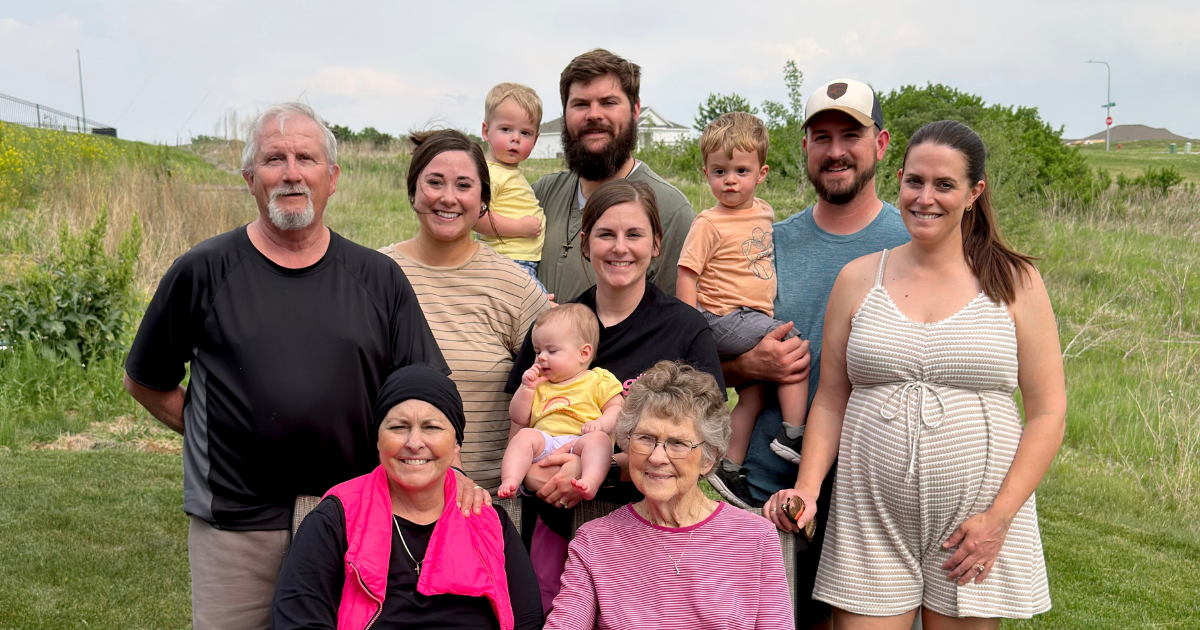
She continues to receive ersodetug to manage her glucose. Through it all, she says her faith and her family – including her husband, Kevin, three children, and four grandchildren – have kept her going.
“This is a soldier on your side,” she says of the drug’s role alongside her cancer treatment. “You’re not fighting another battle besides the battle of cancer.”
Disclaimer: Ersodetug is an investigational drug and has not been approved by the Food and Drug Administration (FDA) or any health authority.
IRB number: 0110-26-CU
ClinicalTrials.gov NCT07262970