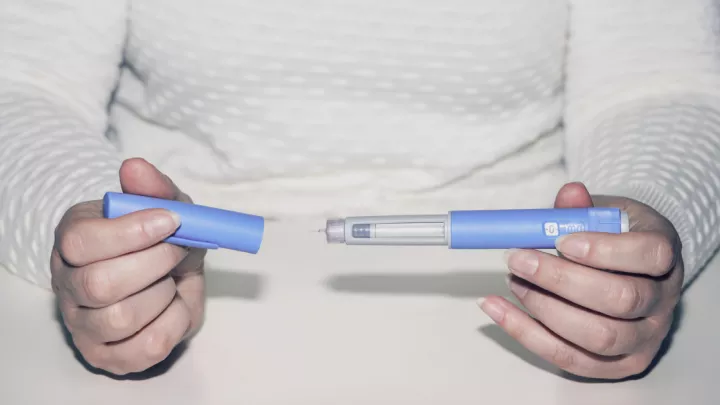
Medicare GLP-1 Bridge program offers access to weight loss drugs for $50 a month

The Medicare GLP-1 Bridge program helps eligible Medicare patients access certain weight loss medications for $50 per month.
“The program launched earlier this year to help expand access for obesity therapies for Medicare beneficiaries who don’t already have other qualifying conditions,” says Miranda Kuhr, PharmD, BCACP, ambulatory care pharmacist at the Bariatrics Center.
The Bridge program began on July 1, 2026, and will continue until Dec. 31, 2027.
Who qualifies for the Medicare GLP-1 Bridge program?
Eligibility for the program depends on:
- Your Medicare drug coverage
- Your body mass index (BMI)
- Whether you have certain weight-related health conditions, such as heart disease, kidney disease, high blood pressure, or prediabetes
- Whether your current Medicare drug plan already covers a GLP-1 medication for another condition
Because the eligibility rules are complex, the Bariatrics Center can review your situation to help determine whether you qualify and find your best options.
Which GLP-1 medications are included?
Covered medications include:
- Zepbound (Kiwkpen only)
- Wegovy (all formulations)
- Foundayo (an oral GLP-1)
What should you know before starting a GLP-1 medication?
GLP-1 medications can cause side effects, especially when someone first starts treatment or increases the dose. Common side effects include:
- Nausea
- Stomach upset
- Constipation
- Diarrhea
- Vomiting
- Heartburn
Kuhr says side effects are often strongest during initial treatment or after a dose increase and may improve over time. She recommends talking with a prescriber if symptoms are severe or do not improve.
Why is medical supervision important for weight loss medications?
Weight loss medications should be used with medical guidance. Losing weight too quickly can increase the risk of muscle loss.
Your provider will also monitor for side effects while on weight loss medications. More severe side effects like vomiting or prolonged diarrhea can raise the risk of dehydration, electrolyte imbalances, and kidney injury, so it is important that your provider is aware of any serious side effects as soon as possible.
“It’s really important that patients are losing weight at a safe rate,” Kuhr says. “A prescriber who is aware of the rate of weight loss can help make sure that you’re not losing it too quickly, and that we’re adjusting the dose of the medication appropriately.”
Medical supervision can be especially important for older adults, who are already more likely to lose muscle mass with age.
How do medication, nutrition, and exercise work together?
GLP-1 medications are just one part of a larger treatment plan.
“The medication itself does not increase metabolism or the number of calories you burn,” Kuhr says. “It really works by decreasing appetite and slowing gastric emptying, which helps patients feel fuller for longer and with smaller portion sizes. These mechanisms help reduce calorie intake, which supports weight reduction.”
For long-term success, Kuhr recommends pairing medication with balanced nutrition and physical activity. A diet that includes adequate protein, vegetables, fruits, whole grains, and healthy fats helps provide needed nutrients.
Strength training can help preserve muscle, while regular physical activity can support weight loss and overall health.
What makes our Bariatrics Center different?
The Nebraska Medicine Bariatrics Center takes a team-based approach to obesity care. Patients have access to physicians, nurse practitioners, physician assistants, nurses, dietitians, and a pharmacist who work together to support safe, sustainable weight management.
“We have a comprehensive approach to managing obesity therapies in our clinic,” Kuhr says. “We have a really big team that helps set our patients up for success, and then, if they’re having side effects or hit a weight-loss plateau, we’re there to help navigate that as well.”
The Bariatrics Center is also the only MBSAQIP Center of Excellence with obesity medicine qualifications in the region. MBSAQIP stands for the Metabolic and Bariatric Surgery Accreditation and Quality Improvement Program, a national accreditation program focused on safe, high-quality bariatric care.
“Being a Center of Excellence through MSBAQIP means that we are meeting all standards set forth by MBSAQIP regarding patient safety, clinical outcomes, and quality of care,” Kuhr says.
How can I get help with the Medicare GLP-1 Bridge program?
If you think you may qualify, schedule an appointment with the Bariatrics Center. A provider can review your health history, medications, weight management goals, and eligibility. Patients do not need a referral to book an appointment.
FAQ: Medicare GLP-1 Bridge program
When did the Medicare GLP-1 Bridge program start?
The program began July 1, 2026.
When does the Medicare GLP-1 Bridge program end?
The program is scheduled to continue through Dec. 31, 2027.
How much do GLP-1 medications cost through the program?
Eligible beneficiaries pay $50 per month for covered medications.
Which GLP-1 medications are included?
Covered medications include Zepbound, Wegovy, and Foundayo.
Do I need a referral to visit the Bariatrics Center?
No. Patients can schedule directly with the Nebraska Medicine Bariatrics Center.
How can I find out if I qualify?
A Bariatrics Center provider can review your medical history, BMI, insurance coverage, and treatment goals to see whether a GLP-1 medication may be appropriate for you.
Begin your weight-loss journey with our step-by-step guide or by calling 402.559.9500.