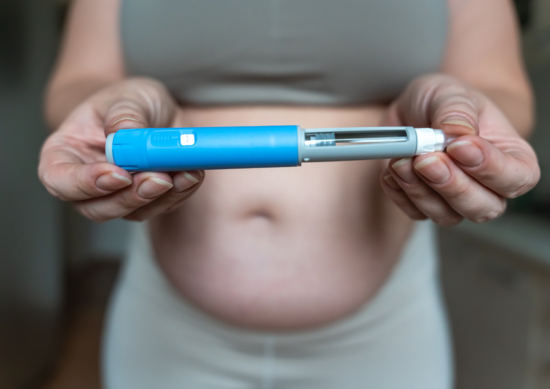
Weight management (and the treatment of weight-related comorbidities) is not one-size-fits-all. GLP-1 medications can be an effective tool for weight loss but require close monitoring and a multidisciplinary approach.
Some patients will go on medications and be successful on them for the rest of their lives. Others will not find success, never seeming to find the sweet-spot dosage without intolerable side effects.
Key markers of success
Generally, GLP-1 medications begin at a low dose, which is gradually increased every few months based on the patient's response to appetite suppression, food cravings, hunger, weight loss and side effects.
The average well-managed patient should lose around 10% to 15% of their total body weight within the first year on the medication at its maximum dose. This includes the patient doing their part, such as mindful eating and physical activity, including resistance training, getting enough daily protein and other lifestyle changes.
Success should look like:
- Improvement or resolution of weight-related health issues.
- Reaching a healthy BMI (under 30).
- Achieving a healthy body fat percentage.
“GLP-1 success really looks the same as any other success as far as losing sufficient weight,” says certified obesity medicine and bariatric surgeon Corrigan McBride, MD. “Whichever the measure, the real goal is to get out of the obese range, not necessarily to get out of the overweight range. However, when significant health problems are driven by weight, we aim for a lower goal and discuss the health problems as well.”
Options for patients who are not reaching their target
At a certain point, patients often reach their personal maximum dose (or dosing maximum) and may still not have lost enough weight to be in a healthier place.
Layering medications on top of each other.
“If a patient has reached their maximum dose but is still ravenously hungry, they may benefit from adding a medication like phentermine to help suppress their appetite,” says Dr. McBride. “If they are not losing as much or having a lot of cravings, something like Contrave®, Naltrexone or Topiramate could be added as standalone medications.”
However, if you’ve managed all the variables, are layering medications, and the patient is still not making sufficient progress, then a bariatric procedure should be part of the conversation.
Bariatric surgery
A patient may need a stronger tool than medications alone. Even for patients who have successfully lost weight on GLP-1 medications but then regain some of it after discontinuation, bariatric surgery may be an option to consider, especially if their BMI is back in the obese range.
Early data show that if a patient has been highly successful with GLP-1s, they are likely to be highly successful with weight-loss surgery because they work through many of the same mechanisms.
“Although I fully support patients trying GLP-1s, the literature is pretty clear that bariatric surgery works better than the medications,” adds Dr. McBride. “They lose more weight, have more significant improvements in weight-related co-morbidities, and the results are more durable. It is more cost-effective to have bariatric surgery than to be on GLP-1 medication for the rest of their lives. When coming off the GLP-1 medication, the average patient regains about half of what they lost.”
None of the medications achieves the 25% to 30% weight loss seen with bariatric surgery.
Signs of unhealthy weight loss
Providers need to carefully monitor patients on GLP-1 medications, especially if they are losing too much weight too quickly, or reaching very low BMI levels. In-body composition testing, such as the scale at the Nebraska Medicine Bariatric Center, measures body fat and lean muscle percentages, making decision-making about dosing and calorie recommendations easier.
“These medications don’t work in a vacuum,” says Dr. McBride. “Patients need a multidisciplinary team approach, including dietary counseling and frequent visits to monitor and support their success. Sometimes we choose not to use pounds as the metric and instead use muscle mass. To me, maintaining a healthy muscle mass and a healthy percent body fat composition is more important than what the scale says.”
Vitamin and mineral deficiencies.
Patients are at risk for vitamin and mineral deficiencies associated with rapid weight loss. If patients lose more than about 100 pounds, consider ordering the same vitamin and mineral panel recommended for bariatric surgery patients.
Bone density loss or muscle wasting.
A DEXA (Dual-Energy X-ray Absorptiometry) scan is recommended for patients who lose more than 100 pounds and have a low BMI. Check body composition, fat distribution and look for muscle wasting.
Body dysmorphic disorder.
Some patients continue to ask for more medication or higher doses despite getting down to BMIs of 20 and 21, which are considered the low end of the normal range.
“We absolutely are seeing body dysmorphic disorder in some patients,” says Dr. McBride. “They’ve never been thin in their lives, and they finally are, but they don't see that they are. This should be a red flag.”
In these cases, Dr. McBride suggests titrating them down to reduce or stop their loss, either by lowering the dose or spreading it out over time. If continuing to prescribe GLP-1s for a BMI in the lower twenties, monitor them monthly.
“All of this requires honest conversations, including how medications are not going to fix that specific body part a patient may not be happy with,” adds Dr. McBride. “If they are looking in the mirror and seeing a heavy person when they are not a heavy person, consider mental health help for them.”
Referrals are welcome
The Nebraska Medicine Bariatric Center is the region's most comprehensive weight-management program. Offering both non-surgical and surgical treatment options, an interdisciplinary team of specialists, including advanced practice providers, nurse case managers, endocrinologists, medical nutrition therapists and an insurance specialist, work together to support each patient’s weight-loss journey. Call 402.559.9500 or visit nebraskamed.com/weight-loss.