What you need to know about scoliosis
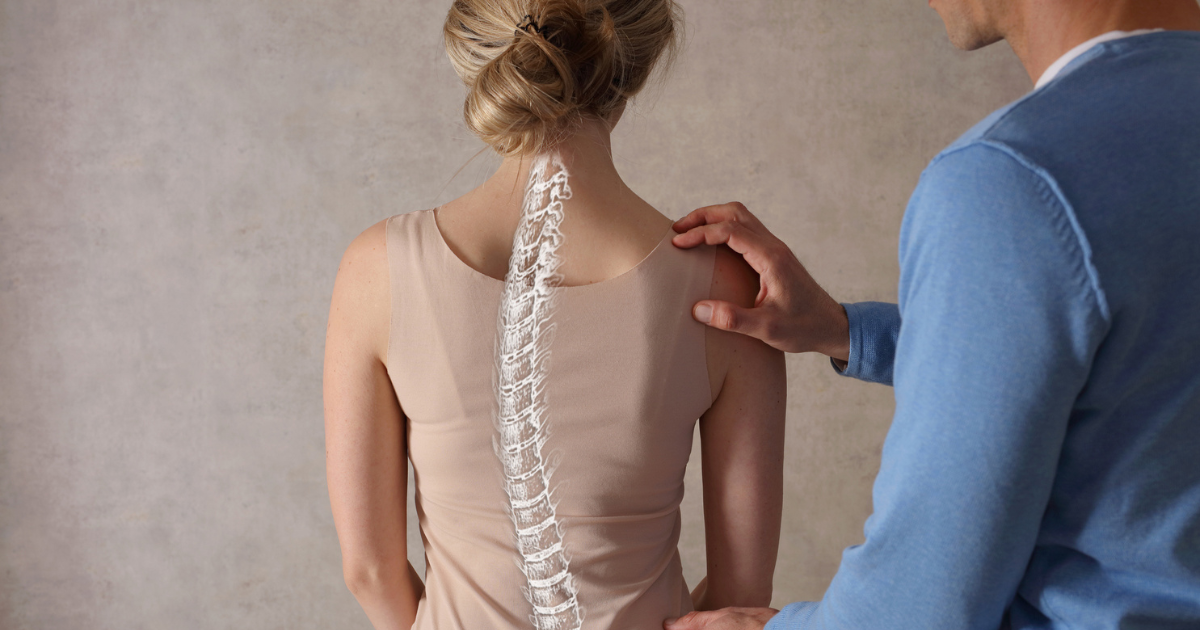
Millions of Americans have spines that curve sideways instead of running straight. This condition is called scoliosis, and it’s more common than you might think.
“Fundamentally, it’s a curvature in the spine,” says orthopaedic surgeon Chris Cornett, MD, a specialist with the Comprehensive Spine Program. “When we’re talking scoliosis, we’re talking about looking at someone from the front, and they have a curve from that view.”
Your spine naturally curves when viewed from the side. That’s normal. But when the curve from the front exceeds 10 degrees, doctors call it scoliosis. And according to Dr. Cornett, about a quarter of his adult patients have some form of it.
What causes scoliosis?
The causes of scoliosis vary between children and adults.
In children, genetic factors often play a role in what doctors call idiopathic scoliosis, meaning the exact cause remains unknown. Some children may also develop scoliosis due to neuromuscular diseases or congenital conditions present at birth.
For adults, two main types exist. The first involves curves that developed during childhood and persisted into adulthood. The second, called degenerative scoliosis, develops as arthritis breaks down the spine’s joints.
“Through the arthritis, the joints can break down asymmetrically, and the spine starts curving,” Dr. Cornett says. He compares this process to an arthritic finger that becomes increasingly crooked over time.
Some adults experience both types simultaneously when childhood curves worsen due to age-related arthritis.
How scoliosis is diagnosed
Children often receive scoliosis screenings during routine school physicals. These screenings usually don’t involve X-rays. Instead, health care providers have children bend forward to look for telltale signs.
“With scoliosis, there is a curvature, but typically there’s also a rotational component to it, or a twist,” Dr. Cornett says. This twist causes ribs on one side to become prominent when bending forward, making the condition visible even when it might not be apparent while standing upright.
For adults, diagnosis often occurs during X-rays taken for back pain or other issues. Some patients already know about their curves from earlier diagnoses, while others discover them for the first time as adults.
When treatment is necessary
Treatment approaches differ significantly between children and adults.
For children, the main concern involves growth spurts. A moderate curve in a 12-year-old could worsen dramatically during adolescent growth. Doctors may recommend bracing to hold the curve stable through these growth years.
“For kids, you’re trying to keep that curve down so it doesn’t really increase during growth spurt,” Dr. Cornett says.
Surgery becomes a consideration when curves reach approximately 50 degrees or more in growing children.
Adults face different considerations. For example, a 30-year-old with a 50-degree curve but no symptoms typically don’t need treatment because the spine is no longer growing.
“For adults, there are two main reasons we would treat it,” Dr. Cornett says. “One is we’re treating other things, like pinched nerves, spinal stenosis or back pain while also addressing the curve. The second reason involves curves that worsen significantly over time, causing severe forward or sideways leaning that requires corrective surgery.”
Managing symptoms without surgery
Most adults with scoliosis don’t require surgery. Conservative management forms the foundation of treatment for the majority of patients.
Dr. Cornett recommends lifestyle modifications including:
- Exercise.
- Maintaining a healthy weight.
- Quitting smoking.
- Using over-the-counter anti-inflammatories as needed.
“Most of the time, it doesn’t need fixed or corrected,” he says. “Usually, it’s not dangerous. Many times, you have a curve, but it’s not that big of a deal.”
Does scoliosis affect other body parts?
While scoliosis primarily causes back pain and fatigue, patients sometimes experience effects in other areas. Poor alignment can force the body to compensate through hips and other joints. The condition may decrease standing and walking tolerance or reduce overall activity levels.
Scoliosis can also occur alongside spinal stenosis, which causes nerve compression leading to pain, weakness or numbness. However, these are separate conditions that may or may not appear together.
Many patients worry about effects on vital organs. “A lot of people are concerned, and ask, ‘Is this going to affect my heart, my lungs?” Dr. Cornett says. “There’s not very good evidence for that, and the curve would have to be so severe to have that effect.”
He reassures younger female patients that scoliosis typically doesn’t affect pregnancy or childbirth.
Understanding surgical options
When surgery becomes necessary, patients should understand both benefits and limitations. Corrective surgery can straighten the spine and relieve compressed nerves, but it requires fusion with implants. This means a straighter but potentially stiffer back.
“Everything comes at a cost,” Dr. Cornett says, comparing it to knee replacement surgery. “It’s better than a really bad knee, but it’s not a normal knee.”
Surgery becomes more complicated for elderly patients with severe curves, particularly those with decreased bone density. The extensive nature of alignment correction surgery requires patients to be healthy enough to undergo the procedure safely.
Dr. Cornett emphasizes that major spinal surgery shouldn’t be taken lightly. “We only do it if we feel like it’s really worth it for you,” he says.
When to see a specialist
Anyone concerned about scoliosis progression should consult with a spine specialist for evaluation.
“It’s good meeting with a spine provider and just having some honest discussions,” Dr. Cornett says. “They can evaluate you to see what the risks and benefits would be, and whether you’d even be a candidate.”
For most people with scoliosis, the condition progresses slowly over time with age. With appropriate lifestyle management and regular monitoring, many patients can live full, active lives without requiring surgical intervention.