What you need to know about skull base surgery
Finding out you have a tumor or disease near the base of your skull can be frightening, especially when you hear terms like “complex” or “hard to reach.”
Nebraska Medicine has a team that was built for exactly these types of cases. The Skull Base Surgery Program is the only one in the region focused entirely on this part of the body.
“The skull base is a critical area that separates the structures inside the skull from the sinuses and ear,” explains Christie Barnes, MD, rhinologist and skull base surgeon.
Dr. Barnes says surgery traditionally has been considered challenging due to the difficult-to-reach nature of this location and the numerous critical nerves, blood vessels and brain structures surrounding it.
“Skull base surgeons are uniquely trained in fellowship to understand the anatomy of this area so that diseases in this location are treated safely and effectively,” she says.
The Skull Base Program has earned a Multidisciplinary Team of Distinction award from the North American Skull Base Society. Only a select number of programs across the country have received this honor.
Conditions treated
The skull base team treats a range of tumors and other conditions, including:
- Brain fluid leaks into the ears and nose.
- Cancers of the sinuses or ears.
- Head and neck cancers that involve the skull base.
A multidisciplinary approach
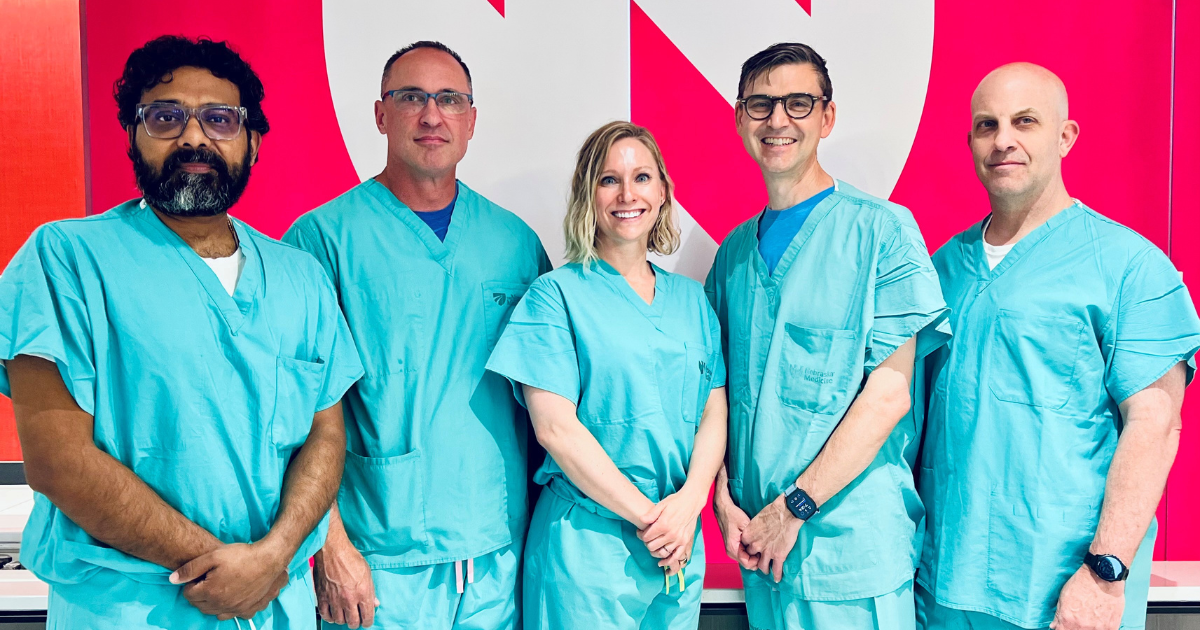
As a rhinologist and skull base surgeon, Dr. Barnes is just one of many experts on the team of skull base specialists.
“We work closely with neurosurgeons, endocrinologists and specially trained medical and radiation oncologists to customize patient treatments,” Dr. Barnes says.
Patient cases are reviewed in both a multidisciplinary clinic and a tumor board. This means specialists from different fields meet to review each case and decide the best course of treatment.
Minimally invasive when appropriate
When possible, the team works through the nose or other natural openings rather than making large cuts. Tiny cameras help them see clearly while protecting nearby tissue.
“We focus on treating these hard-to-reach conditions with the least invasive approach possible,” Dr. Barnes says. “Our goal is to help patients recover faster and feel better.”
For patients, this may mean:
- Shorter hospital stays.
- Less pain after surgery.
- Faster recovery times.
- Minimal visible scarring.
- Lower rates of surgical complications.
- Better preservation of neurological function.
When a more traditional approach is needed, the team uses the latest tools and monitoring to keep you as safe as possible.
What to expect at your first visit
You may need imaging tests before your first appointment. When you arrive, your care team will review your scans and health history. They will explain your condition clearly and walk you through your options. You will have time to ask all the questions you need.
Why choose Nebraska Medicine?
The Skull Base Program offers:
- Team-based, personalized care coordinated across multiple specialties.
- Advanced technology not available elsewhere in the region.
- Comprehensive management from diagnosis through recovery and rehabilitation.
- Access to clinical trials and innovative therapeutic approaches when appropriate.
- Outcomes that meet or exceed national benchmarks for complex skull base procedures.