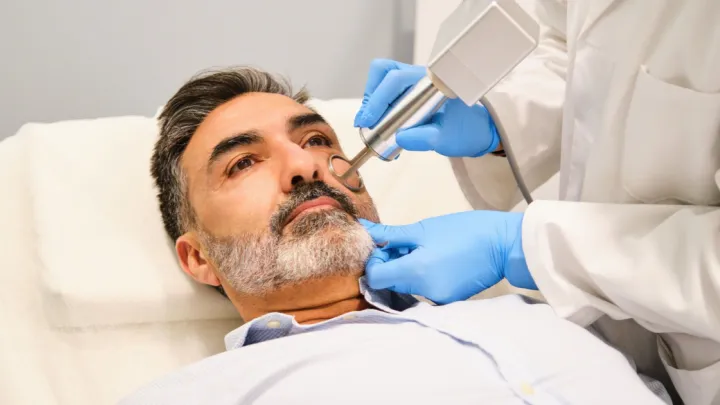
The Nebraska Medicine dermatology program offers three main options for laser resurfacing. Ronald Sulewski, MD, explains what you should know about each one.
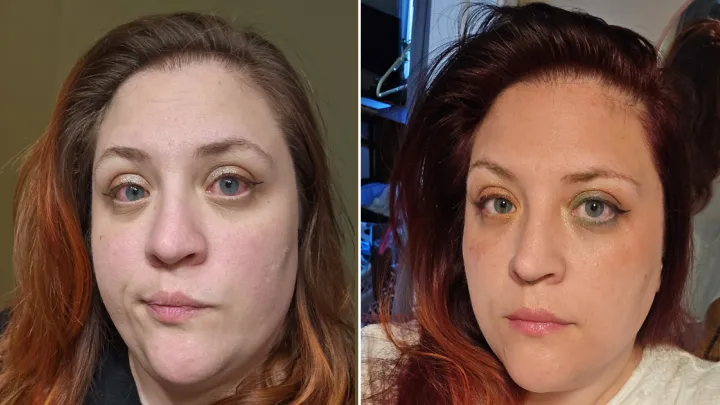
For nearly two decades, Erin Solheim struggled with persistent redness and irritation in her eyes. Visits to other eye care providers provided little help. Then she went to Truhlsen Eye Institute.
Nebraska Medicine neurosurgeon Mithun Sattur, MBBS, explains what vestibular schwannomas are, the symptoms to look out for, and how treatment is tailored to each patient.
Question: I heard that oral sex could cause throat cancer. Is that actually true? Answered by Elizabeth Bradford Bell, MD, otolaryngologist and head and neck surgeon.
Ophthalmologist Lauren O’Neill, MD, a fellowship-trained oculoplastic surgeon, explains the differences between upper and lower blepharoplasty and what patients can expect.
“Bigorexia,” also called muscle dysmorphia, is a condition in which the pursuit of muscle becomes an obsession. Leah Jesse, MD, child and adolescent psychiatrist, explains what it is, why boys are particularly vulnerable and what families should watch for.
Herniated discs are a common spinal condition that can cause severe pain. When other treatments do not offer enough relief, it may be time to consider a surgical option. Fortunately, open surgical approaches have evolved into safe, minimally invasive procedures.
Outpatient addiction treatment offers patients structured support for substance use disorders while maintaining connections to home, work, school and family life.
You’re about to leave the Nebraska Medicine website. The other site may collect information about your visit, including your IP address. Do you want to continue?