Mohs surgery for melanoma: Douglas's story
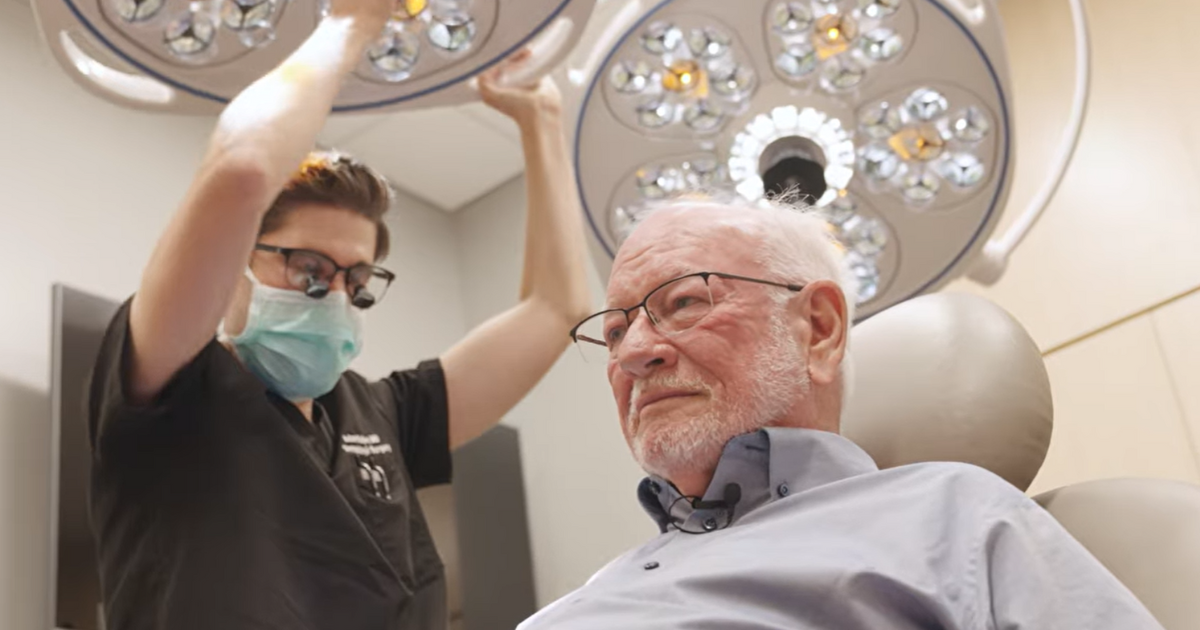
When Douglas Smith learned he had melanoma, he knew it was serious. At 78 years old, he’d already been through one surgery that didn’t fully remove the cancer. He was worried about what would come next.
Douglas was referred to Nebraska Medicine, where he met Adam Sutton, MD, MBA, a dermatologist and fellowship-trained skin cancer and Mohs surgeon.
“I was scared about the next steps,” Douglas says. “But from the first appointment to the last, it was really terrific.”
What is Mohs surgery?
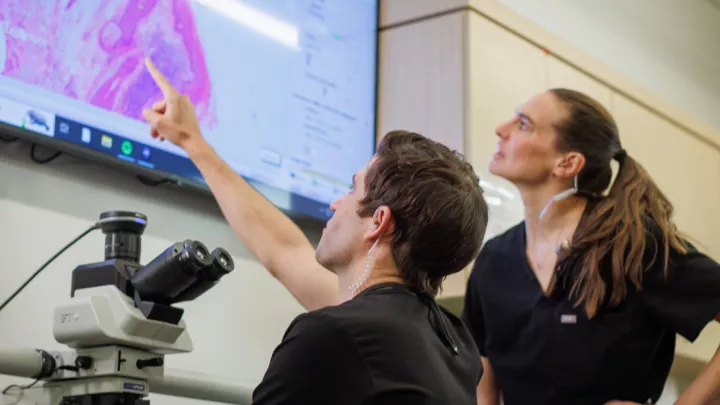
Mohs surgery is a precise way to treat skin cancer. During the procedure, the surgeon removes the cancer layer by layer and checks each layer under a microscope right away. This allows them to make sure all the cancer is gone while saving as much healthy skin as possible.
Mohs surgery has been used for many years to treat common skin cancers like basal cell carcinoma and squamous cell carcinoma. Within the last decade, it has also been shown to be highly effective for certain melanomas, especially those on the head, neck and other sensitive areas.
Mohs surgery for melanoma
Melanoma is a cancer that starts in the cells that give skin its color. One of the most important factors in treating melanoma is how deep it goes into the skin. That depth helps doctors decide how much tissue needs to be removed and if any additional testing or work-up may be required Nebraska medicine has a comprehensive melanoma team that is capable of managing melanomas of all types.
The Nebraska Medicine dermatologic surgery team uses specialized lab techniques during Mohs surgery that help identify melanoma cells more clearly. This allows the surgeon to carefully examine all the edges of the cancer in real time.
“Mohs surgery lets us look closely at every edge of the melanoma,” says Dr. Sutton. “That helps us make sure all of the melanoma cells are removed, which ultimately results in improved cure rates.”
For Douglas, Mohs surgery offered reassurance after his earlier experience. Dr. Sutton knew right away that Douglas was a good candidate for this approach.
“I knew he was in the right place,” Dr. Sutton says. “We had the tools and team to give him the best care possible.”
What patients can expect
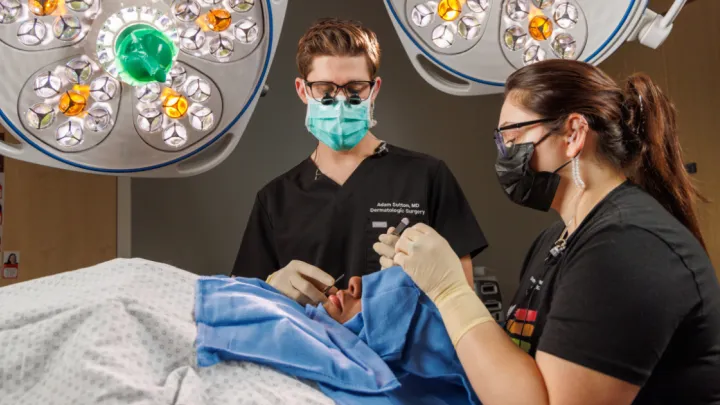
Mohs surgeries are done in the outpatient dermatologic surgery clinic under local anesthesia. Patients are awake during the procedure, which allows the clinical team and physician to communicate with them during each step of the process. This allows for a highly personalized and streamlined patient experience as the surgeon is removing the patient’s skin cancer.
“Our goal is help guide our patients through each step of their skin cancer care. A major part of this is helping our patients to feel calm, supported and informed,” Dr. Sutton explains.
Douglas noticed that difference right away.
“Everything is very upbeat,” he says. “Everybody’s on time, and they make you feel really good about the whole process.”
Life after treatment
Douglas’s surgery went smoothly, and all cancerous tissue was successfully removed. After healing, he returned to regular skin checks with his dermatologist, which are an important part of long-term care after a melanoma diagnosis.
Seeing patients recover is one of the most rewarding parts of Dr. Sutton’s work.
“To be able to tell a patient they’re cancer-free and fully recovered — that’s why we do this,” he says. “Our goal is always to help patients get back to living their lives.”
Douglas now encourages others not to ignore skin changes or skip routine checkups.
“If you’re not seeing your dermatologist regularly, you’re taking a big risk,” he says. “This is something you need to deal with.”
When to talk to a doctor
You may be at higher risk for melanoma if you:
Have a history of sunburns.
Have many moles or unusual-looking moles.
Have a personal or family history of skin cancer.
Spend a lot of time in the sun without protection.
If you notice a new or changing spot on your skin, talk to your doctor or dermatologist.
Expert melanoma care
Nebraska Medicine is one of the only medical centers in the region offering real-time Mohs surgery for melanoma. For more advanced cases, patients benefit from a team-based approach that brings together multiple skin cancer specialists.