Finding hope and independence with low vision care
Living with low vision can feel overwhelming. Many people wonder if they’ll ever be able to do the things they love again — reading, cooking, using their phone or staying independent. For some, it’s hard to know where to turn for help. Nebraska Medicine patients who come to the Weigel Williamson Center for Visual Rehabilitation have that uncertainty turn into hope.
“Can I ever do the things I did before?”
One of those patients was Twilla Westercamp. Her experience with age-related macular degeneration brought a lot of questions and fear.
“As much as I don’t want to admit it, I definitely have low vision,” she says. “Some people wonder, ‘Can I ever do the things I did before?’ and ‘How will I figure out how to do them?’ But many people have never heard of low vision centers.”
Some assume that once their vision changes, their independence is gone. But low vision centers offer hope and help.
What is a low vision center?
The Weigel Williamson Center for Visual Rehabilitation is the only comprehensive low vision center in the region. It helps people with vision loss make the most of their remaining sight.
“Our goal is to give patients the tools and training they need to use their remaining vision as safely and effectively as possible,” says Nebraska Medicine ophthalmologist and Weigel Williamson Center Director John Shepherd, MD.
Low vision services are designed for people whose vision cannot be fully corrected with glasses, contacts or surgery. Instead of focusing on eyesight, the team teaches patients how to function in daily life.
“We focus on understanding how vision changes affect a person’s ability to do the things they enjoy,” says Dr. Shepherd.
That care includes:
- A full evaluation of vision challenges.
- Instructions for using tools like magnifiers, special glasses and adaptive technology.
- Practical tips for everyday tasks.
- Personalized solutions for each patient’s goals.
Taking the first step is worth it
Understanding that you have low vision can be difficult. Westercamp explains that hesitation is normal and part of the process.
“It’s okay to go, even if you don’t want to,” says Westercamp. “Even if it’s hard to admit you have low vision. But once you go, it’s wonderful. You realize there are still so many things you can do.”
Pushing past the fear can open new doors. That sense of relief is something so many patients feel after their first visit.
Discovering new ways to live well
Patients often come to the Weigel Williamson Center for Visual Rehabilitation because everyday tasks have become difficult.
“Reading and driving are the most common reasons people come to see us,” says Dr. Shepherd. “But it could also be trouble sewing, paying bills, watching TV or seeing grandkids play sports.”
But Westercamp says low vision care isn’t about giving up, but rather, adapting.
“There’s no pill or surgery to fix it,” says Westercamp. “What you can do is learn to adapt and make the most of the vision you have.”
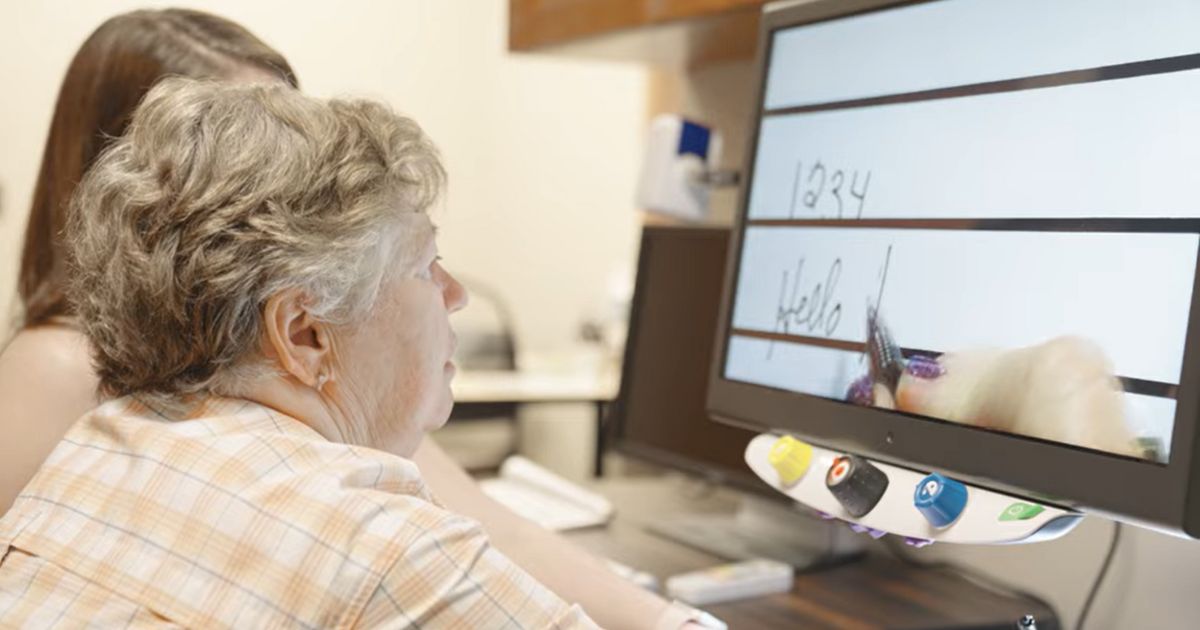
Patients work with magnifying tools, improved lighting and filters to find what helps them function best. Each patient receives a personalized rehabilitation plan, supported by occupational therapists. If patients live within the Omaha metro, occupational therapists can make house calls to better understand the visual challenges patients face at home.
“Seeing patients in their homes allows us to address safety and lighting issues,” says Dr. Shepherd. “They’ll often make specific recommendations so patients can live as safely as possible.”
You’re not alone
Westercamp shares how she encourages others to seek help.
“I actually belong to a Facebook group and ask others if they’ve been to low vision centers,” she says.
Sharing experiences can help others realize they don’t have to struggle in silence.
If you’re struggling with seeing clearly, even after surgery or new glasses, a low vision evaluation may help. The Weigel Williamson Center for Visual Rehabilitation helps patients stay independent, adapt to vision changes and improve quality of life. You might be surprised by what’s still possible.