You asked, we answered: Do laser caps work for hair growth?
Question:
What are your opinions on laser caps to regain hair loss?
Answered by dermatologist Ronald Sulewski, MD:
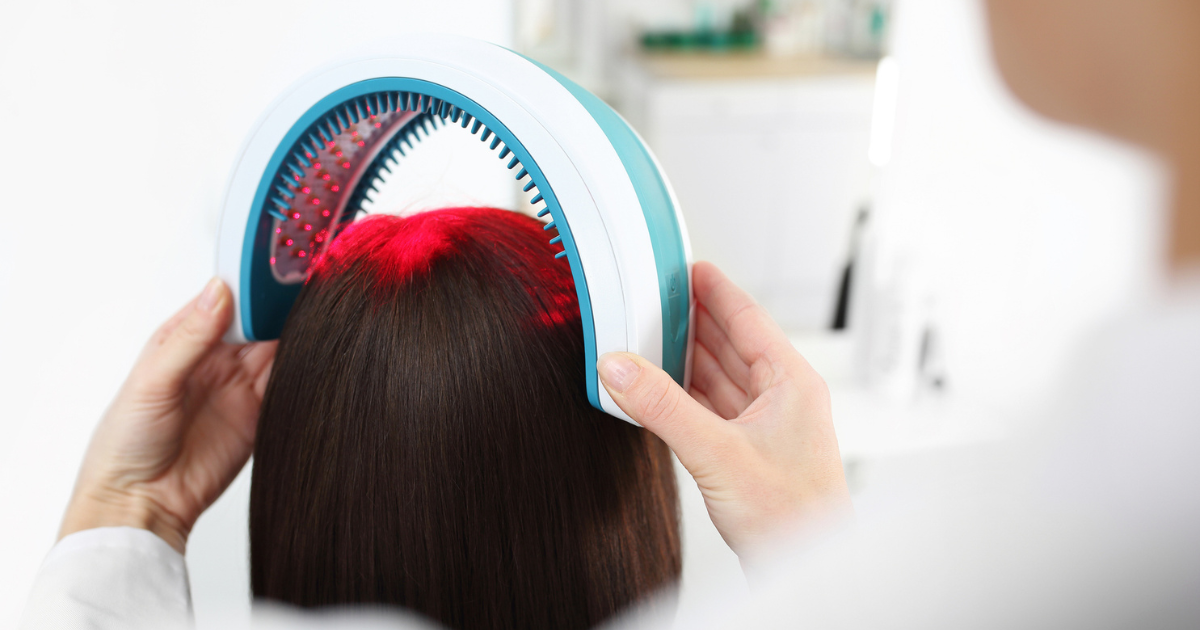
Various low-level laser light (LLLT) hair growth caps on the market are becoming popular options for regrowing hair. Companies claim this at-home treatment boosts hair growth by naturally stimulating hair follicles on the scalp. The idea is that concentrated LLLT exposure stimulates cellular activity and may have anti-inflammatory effects.
There seems to be a low risk of side effects from the various devices sold as casual baseball caps, helmets, combs and bands. Minimal dryness, itching, warmth or tenderness have been reported.
The devices are FDA-cleared, which confirms safety but not rigorous proof of effectiveness. So far, the science is mixed, and the data are limited. Some studies have shown mixed positive results, but the evidence is not yet considered very robust or conclusive. The devices are not heavily regulated, and more research is needed.
The caps may help some people, but if you decide to try one, it is important to know its limitations. Laser caps are likely most suitable for people with androgenetic alopecia (male or female pattern hair loss), as the devices seem to work best on hair follicles that are still active.
Before you invest in an LLLT device, consult a dermatologist first to properly diagnose the type of hair loss and rule out any underlying conditions that may require more targeted treatment. Many patients use the term alopecia to refer specifically to alopecia areata, an autoimmune condition that can lead to complete loss of hair and parts of the body.
Patients with scarring alopecia or inflammatory forms of hair loss will not see benefits from these devices. Laser caps are also ineffective for conditions such as lichen planopilaris and discoid lupus erythematosus, which destroy hair follicles.
Proven treatment options used by dermatologists may include:
- Topical minoxidil.
- Oral finasteride: A DHT blocker that prevents follicular shrinkage.
- Spironolactone: An anti-androgen medication.
- In-office platelet-rich plasma (PRP) injections.
- Surgical hair transplant.
- Tailored options.
Make an appointment with one of our expert dermatologists. Call 800.922.0000, schedule online or schedule a video visit.