Considering a VBAC? A midwife shares her personal birth story
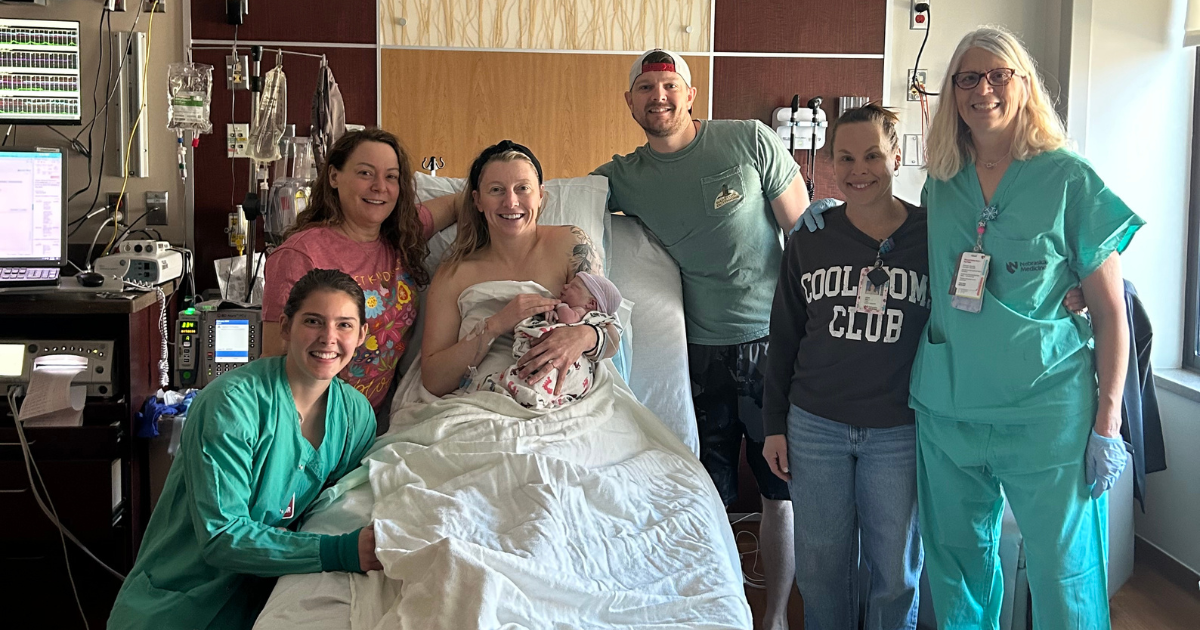
When Alyssa Fischer, APRN-CNM, found out she was pregnant with her second baby, she faced a deeply personal decision.
As a Nebraska Medicine certified nurse midwife, Alyssa had helped guide many patients through pregnancy and birth. But this time, she was the patient, and her first birth experience had been anything but easy.
Her story offers a real look at what it means to consider a VBAC (vaginal birth after cesarean) and how the right support can make all the difference.
A long and difficult first birth
Alyssa’s first pregnancy in 2023 started out smoothly, but her labor did not go as planned.
After going past 41 weeks, she was induced. What followed was a long, exhausting labor that lasted several days.
“I got to four centimeters and never really made change,” she says.
Eventually, Alyssa needed a C-section. After delivery, things became even more challenging. She developed multiple infections and had to be readmitted to the hospital more than once.
Considering a VBAC: Heart vs. head
When Alyssa became pregnant again, she didn’t immediately know what she wanted to do.
“As a midwife, my heart told me I wanted to try for a vaginal birth,” she says.
But her mind wasn’t so sure.
Given her past complications, Alyssa worried about the risks of going through labor again, especially if it ended in another C-section.
What helped most was time and support. Her care team made it clear that the decision was hers, and she didn’t feel pressured one way or the other.
“I felt like I had the whole pregnancy to think about it,” she says.
As her pregnancy progressed, one thought kept coming back:
“I knew I would regret not trying.”
Trusting her team and herself
For Alyssa, confidence came from knowing where she would deliver and who would be there. She would be cared for by colleagues she works with every day.
“I knew if anything emergent were to happen, I would be very, very well taken care of,” she says.
The Nebraska Medicine midwife team strongly supports VBAC when it’s a safe option. That support showed up in both big and small ways – from honest conversations to encouragement in the final weeks.
“It’s really important to have a good support team around you,” Alyssa says.
A long labor and a surprising turn
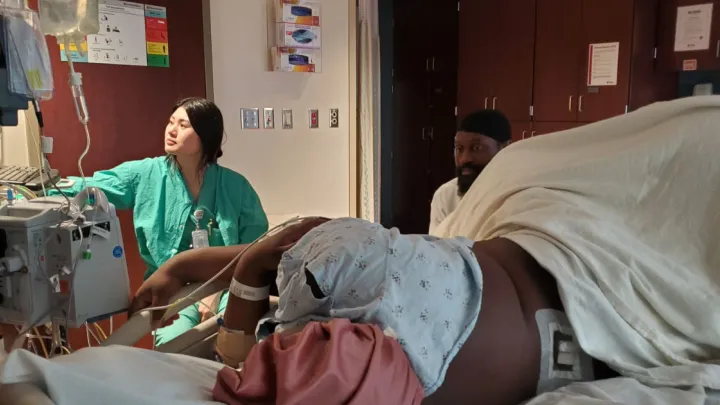
Like her first birth, Alyssa’s labor was not easy. She was induced again and spent hours in labor with little progress. At one point, she began preparing herself for another C-section.
But then everything changed.
Just a couple of hours later, her care team checked her again, and she was fully dilated.
“I only pushed for four minutes,” she says.
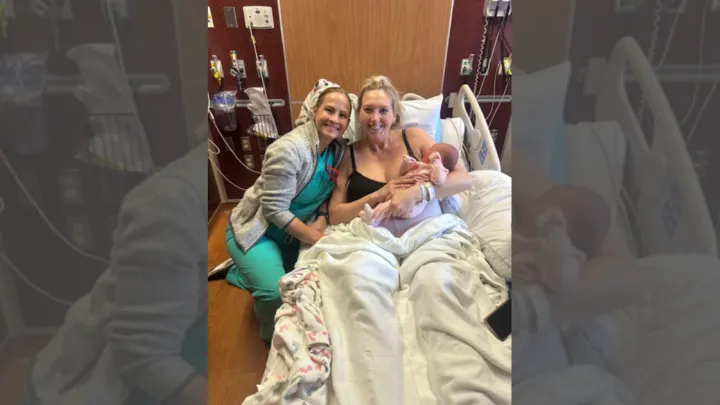
Her daughter, Rowyn, was born shortly after.
“It was amazing,” she says. “I can still hardly believe it.”
A very different recovery
One of the biggest differences came after delivery.
With her first birth, Alyssa was separated from her baby and faced weeks of complications and hospital stays. This time, she was able to hold her baby right away.
“I got to experience pushing and reaching down and grabbing her,” she says.
Her recovery was also much smoother. At home, she felt well enough to care for both her newborn and her toddler.
“Recovery has been a dream,” she says. “I was up walking around very shortly after Rowyn was born.”
Seeing care from the other side
As a midwife, Alyssa is used to supporting patients. Experiencing care from the other side gave her a new perspective.
She saw firsthand the dedication of the nurses, her midwife partner and providers who stayed by her side, helping reposition her and monitor her progress.
What she wants other moms to know
Now, Alyssa brings both personal and professional experience to her patients. She understands that there’s no one “right” choice when it comes to birth after a C-section.
“I don’t think there’s any right or wrong decision,” she says.
For women considering a VBAC, it’s normal to feel unsure.
“It’s okay to be nervous,” she says. “What matters most is having the information, support and care you need to make the decision that’s right for you.”
Considering a VBAC? You have options
VBAC isn’t the right choice for everyone. But for many women, it can be a safe and meaningful option.
The Nebraska Medicine team of midwives, nurses and physicians will work with you to understand your risks, benefits and preferences.
The goal is simple: to help you feel informed, supported and confident in your care.