After years of severe dry eye symptoms, a patient finally finds relief
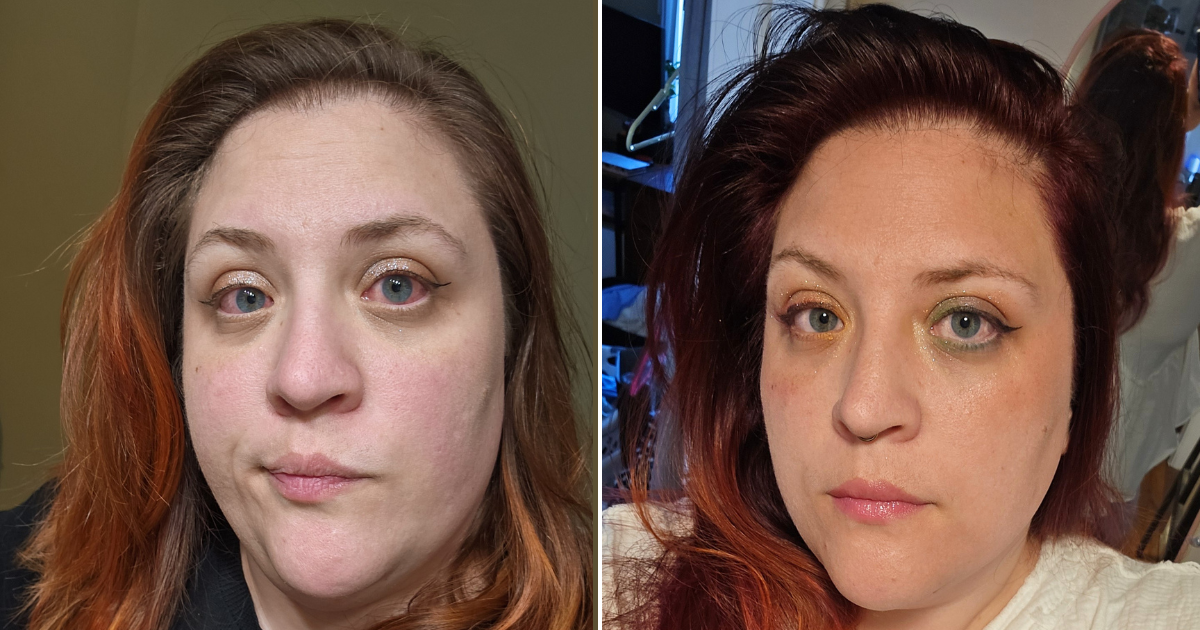
For nearly two decades, severe dry eye affected Erin Solheim’s comfort, confidence, and daily life. With a very high nearsighted prescription in both eyes, she already struggled to see the world clearly. Persistent redness and irritation made things even harder.
“When I was teaching, my students would often ask me if I was OK,” says Solheim, a web design strategist at Clarkson College and former school librarian with Omaha Public Schools. “Consistently red, bloodshot eyes made it look like I was crying. Strangers would ask me if my eyes hurt. It was not a good look.”
Solheim sought help from several eye care providers in the Omaha area, but says she often received the same advice: Use eye drops and wear glasses. Neither solved the problem. Eye drops did not relieve her symptoms, and wearing glasses caused vertigo, especially while driving.
“No one seemed to take it seriously when I raised concerns,” she says. “My concerns were minimized. I didn’t know what else to do, and I felt unseen.”
What can help dry eye symptoms?
At a friend’s suggestion, Solheim made a same-day, urgent-care appointment at the Truhlsen Eye Institute. There, she met optometrist Desinee Drakulich, OD, and began a personalized treatment plan. Solheim started a course of antibiotics and a stronger prescription eye drop. She also found a contact lens brand that gave her clear vision without feeling too tight or uncomfortable.
“Dr. Drakulich listened to my concerns, and we worked together to find something to address the problem while also considering my needs,” Solheim says. “And I improved.”
Just as importantly, Solheim felt comfortable asking questions she had previously been nervous to voice. She says the thoughtful care extended throughout the clinic, from check-in to testing and treatment.
“Their kindness has made all the difference,” she says. “From my first appointment, I felt like a person first, rather than just another patient.”
How is glaucoma diagnosed and treated?
Solheim’s trust in the team became especially important when she developed fainting spells after a medication change. During the episodes, her vision would narrow and darken. Her left eye dimmed more than her right, as though a tinted screen were blocking part of her view, and the change lasted longer.
Although Solheim was unsure whether the symptoms were an emergency, she knew she could turn to providers at Truhlsen Eye Institute. An examination found high pressure inside her left eye and led to an early glaucoma diagnosis. She began treatment and continues to have the condition monitored by a glaucoma specialist and care team.
“I’m glad I went, and we caught glaucoma early," Solheim says. “Thanks to early intervention, any worry I could have of permanent vision loss is nonexistent.”
Finding a team that listened changed not only Solheim’s dry eye symptoms, but also how she approached new concerns about her vision.
“I’m so glad I took a chance on Truhlsen Eye Institute,” she says. “I’d trust no one else for my eye care needs.”
Frequently asked questions
What should I do if dry eye treatments are not helping?
If symptoms continue, an eye care provider can identify the type of dry eye you have and recommend a personalized treatment plan. Truhlsen Eye Institute offers intense pulse light therapy, or IPL, for dry eye patients who experience increased tear evaporation due to blocked oil glands.
When should I seek care for changes in my vision?
Contact an eye care provider if you notice new dimming, narrowing, blurriness, or other changes in your vision. Sudden vision changes, severe eye pain, or halos around lights require urgent evaluation.
Can glaucoma be cured?
Glaucoma cannot be cured, but treatment can lower eye pressure and help prevent or slow further vision loss. Regular monitoring is important.