Program protects new mothers from dangerously high blood pressure
A new program uses technology to monitor new mothers' blood pressure at home, helping prevent life-threatening complication after delivery. It is also making care more accessible for women across rural Nebraska.
The Systematic Treatment and Management of Postpartum Hypertension (STAMPP-HTN) program uses technology and regular check-ins to monitor mothers who had high blood pressure during pregnancy. The program aims to catch dangerous blood pressure spikes after delivery before they become life-threatening.
Why the postpartum period is so risky
Many people think the risks of pregnancy end once the baby is born. That’s not true, especially for women who had preeclampsia or high blood pressure issues during pregnancy.
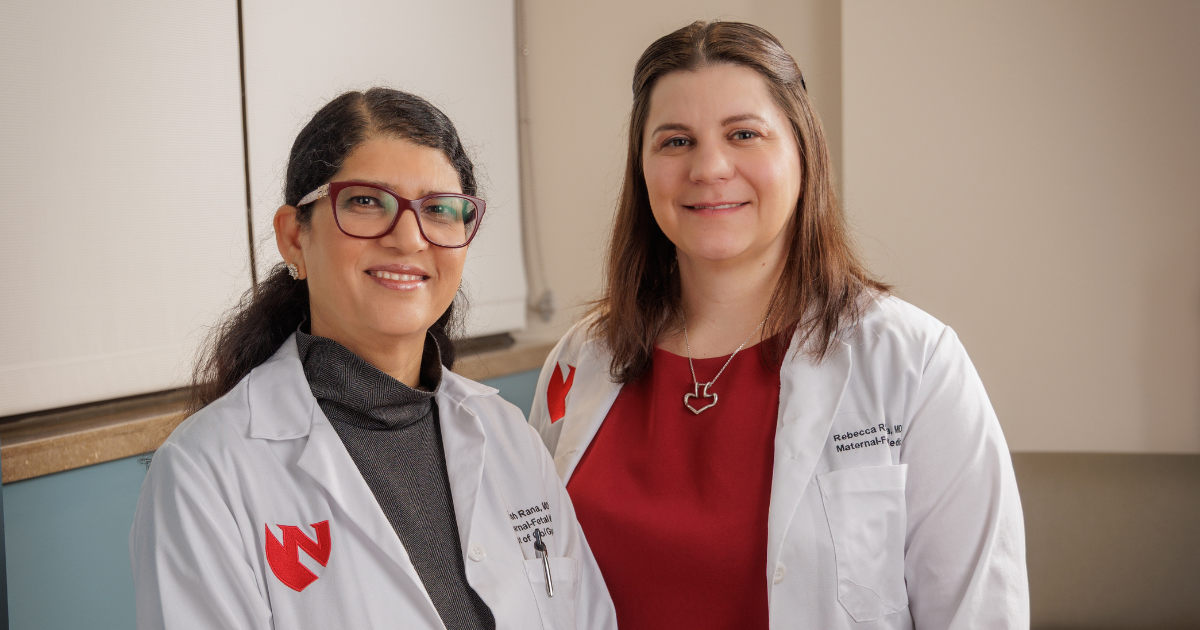
“Patients can get really, really sick postpartum,” says Sarosh Rana, MD, maternal and fetal medicine specialist and creator of the STAMPP-HTN program. “They can even die postpartum.”
The problem is made worse because many women don’t get the follow-up care they need after leaving the hospital.
“Most care is just designed for pregnancy care and labor care, and there’s not much attention given to moms after they give birth,” Dr. Rana says. “So, while your risk is high, there’s actually very poor or ineffective follow-up in the postpartum period.”
Nationally, fewer than 30% of women come back for a blood pressure check after delivery. The rates are even lower for Black women, who already face higher risks of serious complications.
How the program works
STAMPP-HTN takes a different approach. When women with high blood pressure give birth at Nebraska Medical Center, they will receive:
- Education about warning signs.
- A special alert bracelet.
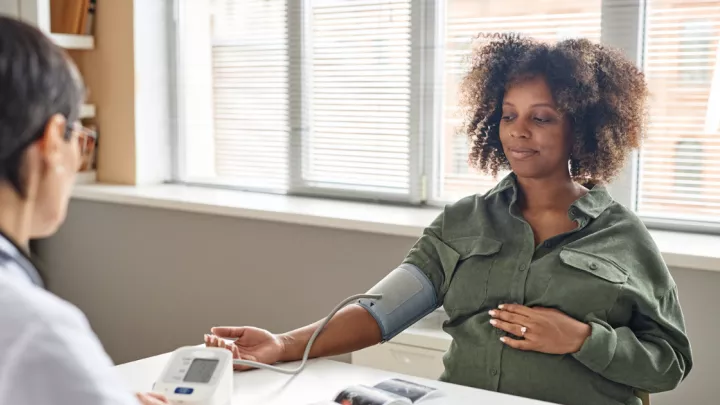
- A Bluetooth-enabled blood pressure monitor.
- Downloadable app that tracks blood pressures.
The monitor connects to an app on the patient’s phone, which links to a central hub. Women check their blood pressure at home and answer questions about symptoms twice a day.
“The beauty about this program is that once the patient checks their blood pressure, the blood pressure goes through a 24/7 monitoring system,” Dr. Rana says.
If a reading is too high or a patient reports dangerous symptoms like severe headaches, the system automatically alerts nurses. They can then contact the doctor right away to decide if the patient needs to go to the hospital or adjust her medication.
Rebecca Rimsza, MD, a maternal and fetal medicine specialist who will lead STAMPP-HTN, says the goal is to make care easier for new mothers.
“A lot of medicine adds extra work for people to do – come to more appointments, do more monitoring,” Dr. Rimsza says. “We want to create a program that works for patients. They can do this from home; it’s very easy to do. Our visits will be mostly telehealth.”
Proven results
Dr. Rana created and tested the program while working at the University of Chicago in 2018. The results were dramatic.
Before STAMPP HTN, only 30% of Black women and 53% of white women came back for blood pressure appointments after giving birth. After launching remote monitoring and telehealth visits, those numbers jumped to 81% and 88% for Black and white women respectively.
The program also nearly eliminated the gap in care between Black and white patients.
“It’s an extremely powerful program,” Dr. Rana says. STAMPP-HTN now runs in 17 states and 14 different health systems across the U.S.
Getting started in Nebraska
Nebraska Medicine plans to begin enrolling patients in January, with plans to include all eligible women by March.
Women who qualify for the program include those with:
- Preeclampsia.
- Gestational hypertension.
- Chronic high blood pressure.
- High risk for developing blood pressure problems after delivery.
The program monitors patients for six weeks after delivery. Patients will have a telehealth appointment within one week of giving birth, where providers will review their blood pressure readings and adjust medications if needed.
Reaching rural communities
The program could be especially helpful for women in rural Nebraska who live far from medical centers.
“We have people in rural Nebraska who might travel an hour or more for their prenatal visits and to deliver,” Dr. Rimsza says.
The telehealth appointments and home monitoring mean women don’t have to make long trips back to the hospital for follow-up care.
“Being rural shouldn’t be a disadvantage,” Dr. Rimsza says. “People should receive the same level of care no matter where they live.”
Nebraska Medicine plans to expand the program to partner hospitals, including Community Connect facilities and critical access hospitals across the state.
What patients should know
The most important message for new mothers is that they still face serious health risks after giving birth.
“Often people think that preeclampsia happens in pregnancy, and it gets treated by delivery,” Dr. Rana says. “In fact, it’s the opposite. People with hypertensive disorders are at significantly increased risk of having adverse outcomes after delivery.”
Dr. Rana encourages women to ask their doctors about plans for managing blood pressure after birth.
Important questions include:
- Should I check my blood pressure at home?
- When should I come back for a visit?
- What medication should I take?
- What are dangerous blood pressure levels?
- What symptoms should I watch for?
Dr. Rimsza says education is crucial, even for women who aren’t part of the monitoring program yet.
“It’s good for everyone to know more about postpartum preeclampsia and the warning signs so they can be on the lookout for it,” she says.
The program is not a research project but a new way of providing care that will be covered by insurance. All appointments and documentation will be part of patients’ regular medical records.
For women enrolled in STAMPP-HTN, the close monitoring has already saved lives in Chicago. Dr. Rana recalls one patient whose blood pressure spiked at home.
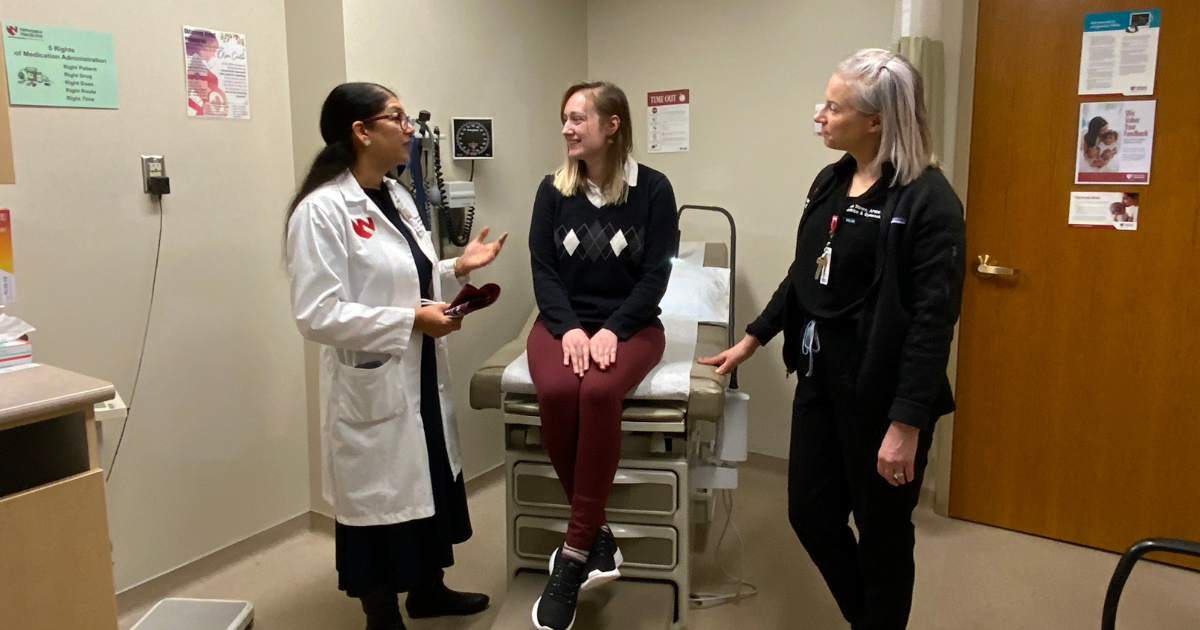
“The patient said that one time, she had her cuff on at home and her blood pressure was high,” Dr. Rana says. “She said even before she could take the cuff off, she received a phone call from the care provider.”
That quick response allowed doctors to bring the patient back to the hospital for treatment before serious complications developed.
A study conducted by Dr. Rana using patient surveys found that new mothers enrolled in the STAMPP-HTN program who used this technology reported overwhelmingly positive responses. Close to 90% reported they were “definitely able” or “somewhat able” to improve their blood pressure management with the use of remote patient monitoring.
“I hear this over and over when patients are readmitted, they say, ‘Thanks for having this program so that you could catch it.’” Dr. Rana says.
The Nebraska Medicine Olson Center for Women's Health offers comprehensive, personalized health and wellness care before, during and after pregnancy.
Consider scheduling a new pregnancy appointment online or call 402.559.4500 to schedule a preconception counseling visit to assess your risk.