Can amblyopia (lazy eye) be corrected?
Amblyopia, commonly known as lazy eye, is one of the most common causes of vision problems in children. Naturally, many parents ask: Can amblyopia be fixed?
The encouraging answer is yes. Lazy eye can often be improved, and sometimes significantly, especially when it’s diagnosed and treated early. Understanding how lazy eye develops, how it’s treated and why timing matters can help families take action.
How to tell if your child might have amblyopia
Amblyopia can be difficult to spot because children often don’t realize one eye is seeing worse than the other. Signs parents should look out for can include:
- One eye that drifts inward or outward.
- Squinting or frequently closing one eye.
- Tilting or turning the head.
- Complaints of blurry vision in one eye.
- Trouble with depth perception.
- Failing a school or pediatric vision screening.
What is amblyopia?
Amblyopia is reduced vision in one or both eyes that occurs when normal visual development is disrupted during early childhood. Vision develops as a child grows, and the brain learns to process clear, equal images from both eyes. When that process is interrupted, the brain may begin to favor one eye over the other.
“Amblyopia happens when one eye sends a blurry or unequal image to the brain,” says Nebraska Medicine ophthalmologist Ahmad Halawa, MD. “The brain naturally favors the stronger eye, and the weaker eye’s vision doesn’t fully develop.”
Although it’s often called lazy eye, amblyopia doesn’t mean an eye itself is weak or lazy. It’s a problem with how the brain and eye work together.
What causes amblyopia?
Several conditions can interfere with visual development and cause amblyopia. The most common cause is misaligned eyes, known as strabismus. If the eyes don’t line up properly, the brain may ignore input from one eye to avoid double vision. Over time, vision in that eye becomes weaker.
Refractive errors (nearsightedness, farsightedness or astigmatism) can cause amblyopia if one eye has a stronger prescription than the other. Cloudiness of the eye from infantile or developmental cataracts can also block clear images from reaching the brain. This is the most severe form of amblyopia.
“Even if an eye looks normal, reduced vision can still be present, which is why routine vision screenings during well-child visits are so important,” says Dr. Halawa.
Can amblyopia be corrected?
In many cases, lazy eye can be improved and even corrected when treated early. Treatment includes teaching the brain to use the affected eye so normal visual pathways can develop.
“The earlier the treatment begins, the more successful it will be,” says Dr. Halawa.
The brain is most adaptable during infancy and early childhood. During this time, the visual system is still developing and can respond well to treatment.
How is amblyopia treated?
If lazy eye is caused by refractive errors, treatment usually starts with eyeglasses. In some cases, contact lenses or refractive surgery may be considered. If cloudiness or a cataract is present, surgery might be recommended. Strabismus may also require surgery.
Once vision is corrected as much as possible, treatment typically involves forcing the brain to use the weaker eye by:
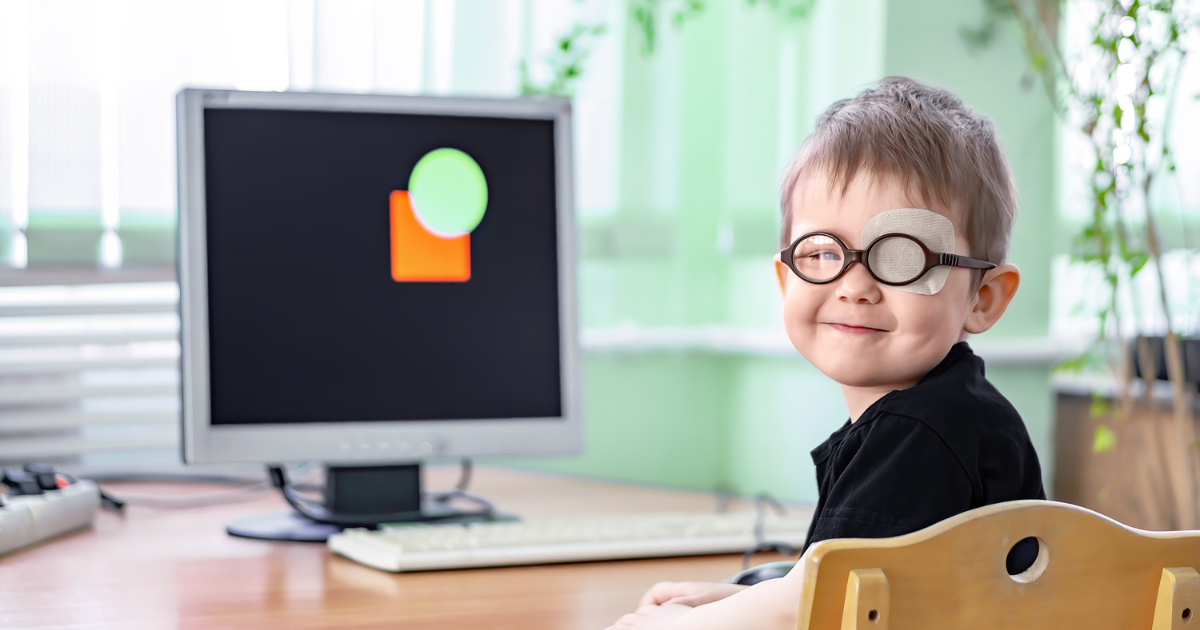
- Patching the stronger eye.
- Temporarily blurring vision in the stronger eye with drops.
This helps the brain recognize and process information from the weaker eye, allowing vision to improve.
“Treatment may include glasses, covering the stronger eye with a patch or using eye drops to encourage the weaker eye to work harder,” says Dr. Halawa. “When treatment starts early, vision can improve significantly. Without treatment, the vision loss can become permanent.”
Treatment often continues for months or even years to help maintain the improved vision.
What if amblyopia is diagnosed later in life?
While early childhood is the best time to treat lazy eye, older children and some adults may still benefit from treatment. Results depend on the severity and cause. Vision improvement may be more limited after the visual system has fully developed, but treatment can still help maximize remaining vision.
When is the best time to treat amblyopia?
The best time to treat lazy eye is during infancy or early childhood, before age 9, when the visual system typically finishes developing. Regular vision screenings during pediatric well-child visits are essential.
If there’s a family history of amblyopia, children should be evaluated as early as possible by an ophthalmologist.
Lazy eye is a serious but often treatable childhood vision condition. When caught early, treatment can lead to meaningful improvements in vision.
If you have concerns about your child’s vision or notice eye misalignment, squinting or favoring one eye, an eye exam can make a big difference.