Misconceptions about adult brain cancer

A cancer diagnosis is scary--but hearing you have brain cancer is especially scary. Still, as with any complex medical issue, knowing the facts can help you better understand and deal with your diagnosis. Unfortunately, persistent misconceptions about brain cancer continue to exist. Let’s clear a few of them up.
Misconception #1: Every brain cancer patient needs anti-seizure medication
Brain tumors--whether benign or malignant--can rub against certain areas of the brain and cause seizures. However, in recent years, providers have learned that gliomas –– a specific type of brain tumor –– have a substance called isocitrate dehydrogenase or IDH. This chemical can make seizures more likely.
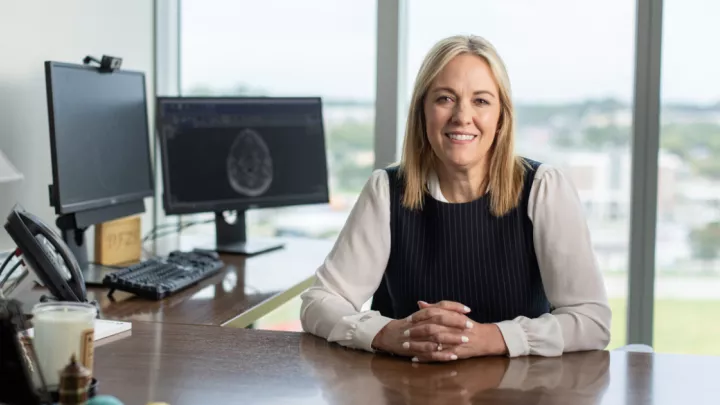
"Because of this mutation, many providers have a misconception that anyone with a brain tumor or cancer needs to be on anti-seizure medication," says medical oncologist Nicole Shonka, MD. "However, there have been four randomized trials that looked at this issue and showed patients didn't benefit by being on anti-seizure medications unless they've already had a seizure."
While it may seem wise to take an anti-seizure medication if you have a brain tumor, there are side effects to these medications and some can even negatively impact your treatment. "Sometimes anti-seizure drugs have interactions with chemotherapy medications that can be difficult," says Dr. Shonka.
Possible effects of anti-seizure medications interacting with chemotherapy include:
- Drowsiness.
- Brain fog.
- Trouble dealing with anger.
“Due to these possible side effects, we try to minimize using these medications and limit them to patients who really need them," says Dr. Shonka.
Other misconceptions about seizures
People often believe all seizures occur as portrayed by Hollywood: they envision someone losing consciousness, control of their bladder, or shaking all over their body. "But seizures can be very different from this depiction and quite subtle," says Dr. Shonka. "For example, when a seizure irritates the area of your brain that helps form words, you may have a seizure that only causes speech arrest."
One key aspect of seizures is noticeable symptoms with a definitive beginning and end. So, if you can't get words out or your right hand goes numb, note when that starts and when things return to normal. "If you ever have a particular incident and can clearly identify a beginning and end point, be suspicious it may have been a seizure," says Dr. Shonka.
Misconception #2: All low-grade gliomas are harmless
Gliomas—derived from astrocytes, or ependymal cells--are the most common brain tumors in adults, though they still represent approximately 1% of all adult cancers. So, overall, they're rare.
Importantly, a glioma doesn't travel to other parts of the body. "So, unlike prostate or breast cancer, they aren't staged," says Dr. Shonka. "If you have breast or prostate cancer that moves to the brain, that's stage 4, but the staging doesn't work with gliomas."
Instead, gliomas are graded:
- Grades 1 and 2: Low-grade gliomas.
- Grades 3 and 4: High-grade gliomas.
But despite the term low-grade, grade 2 gliomas are still malignant.
"A lot of patients are told , when diagnosed, that it's just a low-grade glioma," says Dr. Shonka. "This is unfortunate because it doesn't give patients a true understanding that it's still a disease that's going to shorten their life expectancy. The average survival for a low-grade oligodendroglioma or astrocytoma is one to two decades."
Accordingly, if a provider diagnoses a low-grade glioma it's serious—and it needs the right care.
How a proper diagnosis could impact the treatment of a low-grade glioma
A low-grade glioma is not the same as a benign tumor. "It's a slower-growing malignancy and we treat them differently," says Dr. Shonka. "This difference is why it's vital in neuro-oncology to have good neuropathologists who can provide an accurate diagnosis. Then, we know how to treat that patient best and how aggressive to be."
That’s why a proper diagnosis is so important. For example:
- A glioblastoma has an average survival rate of about one year.
- A grade 2 oligodendroglioma might have a life expectancy of 20 years.
Treating brain tumors
As mentioned, brain tumors are rare compared to other types of cancer. "This rarity makes it even more important that patients seek care at a large, academic medical center that sees a significant volume of brain cancer patients with providers who sub-specialize in the cancers they have," says Dr. Shonka.
The choice is yours
When diagnosed with cancer, you want the best treatment team behind you. Backed by the state’s only NCI-designated cancer center, patients know that by going to any of the Fred & Pamela Buffett Cancer Centers they have access to nationally recognized specialists, tailored treatment plans and clinical trials. Where you seek cancer care matters. Learn more.