Melanoma vaccine: Phase 3 trial offers hope to patients with high-risk melanoma
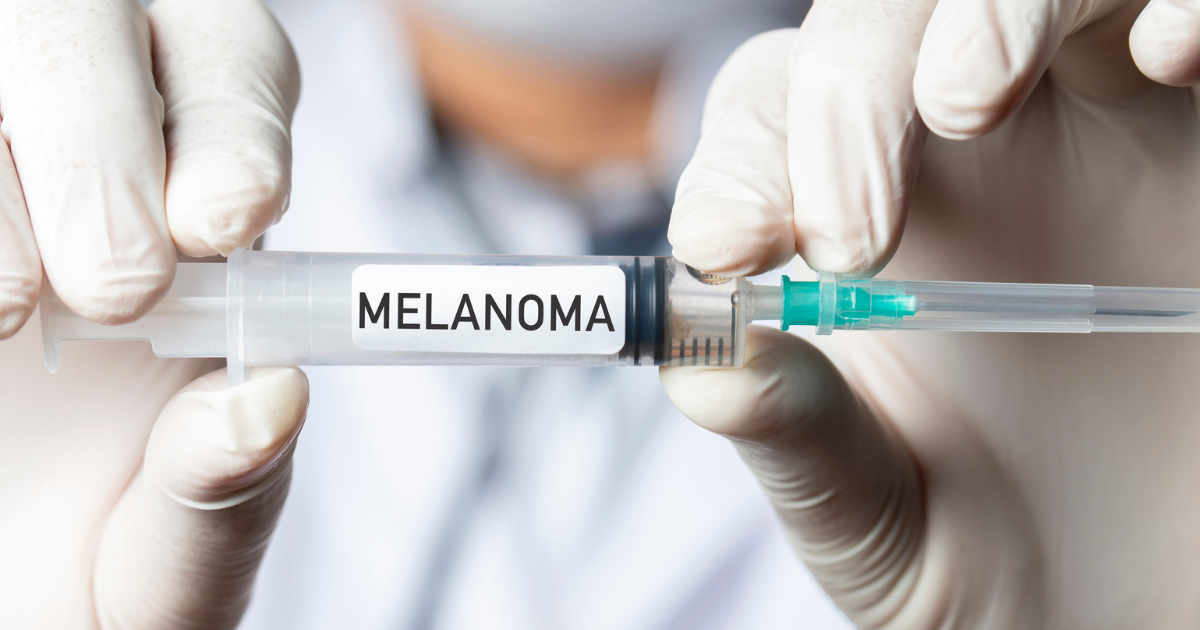
The lifetime melanoma risk for Americans stands at about 2% and is rising, especially in young people. About 15% of patients with melanoma develop metastatic disease (cancer that has spread outside its original location). Melanoma is one of the deadliest as well, causing the majority of skin cancer deaths.
When a promising new treatment possibility emerges, it’s definitely exciting news.
Hope for people with advanced, resected cutaneous melanoma
The experimental cancer vaccine – based on messenger RNA (mRNA) technology – has shown evidence of working for patients with high risk melanomas in phase 1 and 2 trials. Moderna and Merck have recently advanced their potential cancer therapy into further phase 3 trials.
In phase 2b, researchers found that combining the personalized mRNA cancer therapy (intismeran) with pembrolizumab (an immunotherapy medication) was shown to:
- Maximize the body’s immune response to fight cancer cells
- Be associated with:
- A 49% lower risk of melanoma recurrence or death
- A 59% lower risk of distant metastasis or death
Most recently, the Phase 3 late-stage trial has met two key endpoints:
- Recurrence-free survival: The combination of intismeran and pembrolizumab showed a reduction in the risk of melanoma recurrence or death. The vaccine plus pembrolizumab showed a 79% risk reduction compared to 62% with pembrolizumab alone.
- Distant metastasis-free survival: This measures the time before cancer spreads to another part of the body or death. The vaccine combined with pembrolizumab showed a 92% increase compared to 77% with pembrolizumab alone.
“This is a therapeutic, not preventative, vaccine intended to reduce cancer recurrence and spread,” says dermatologist and Mohs surgeon Adam Sutton, MD, MBA. “Melanoma is highly curable when caught early, but advanced stages carry a high risk of disease and death. This vaccine is intended for advanced, resected cutaneous melanoma, stage 2B or higher.”
As phase 3 trial results are encouraging and ongoing, more information is needed to understand how much the combination could improve melanoma treatment.
“The management of malignant melanoma has made significant strides over the past decade, and those advancements continue,” adds medical oncologist and melanoma specialist Alissa Marr, MD. “Checkpoint inhibitors, such as PD-1 inhibitors, have significantly improved the recurrence rates for patients with high-risk melanoma. Vaccine strategies may offer an additional layer of immune protection and potentially could improve long-term disease control. Early data is certainly quite encouraging. As with any research, longer follow-up is needed to ensure that this then translates into meaningful long-term benefit.”
How the melanoma vaccine works
The melanoma vaccine is customized individually to each person’s specifications. Think of it as a treatment based on a person’s own unique tumor mutation – like a fingerprint.
“One of the most remarkable aspects of this vaccine is that it is tailored to the unique mutational fingerprint of an individual patient's tumor, bringing truly personalized cancer therapy from concept to clinical reality,” explains Dr. Marr. “Melanoma has historically been a proving ground for innovation in immunotherapy. The success reported in this melanoma vaccine could potentially have implications for management of other types of cancer.”
The mRNA vaccine was developed from 34 specific proteins (neoantigens).
Here’s how it works:
- A person's resected tumor is analyzed to identify its unique proteins formed when mutations occur in tumor DNA
- An mRNA vaccine is created, specific to that person's neoantigens
- The vaccine is injected into a muscle and then trains the immune system to recognize and attack the cancer cells
The vaccine is not a single, one-dose vaccine, however. It is designed to be given several times alongside pembrolizumab.
What a vaccine could mean for patients
Before 2014, there were few good options for patients who had metastatic melanoma.
“The early 2010s really started a revolutionary time for patients with melanoma and other types of cancers,” says Dr. Sutton. “Melanoma, like many other cancers, is really smart. It can hide from our immune system. We found that medications allowing our immune system to attack the cancer cells can really help with advanced stages of melanoma and reduce the risk of progression and death.”
Now the enthusiasm is about how to provide even more effective, personalized cancer care.
“If you had high-risk melanoma that was surgically resected, in most cases, you’d need immunotherapy with PD-1 inhibitors,” adds Dr. Sutton. “These new results are exciting in our effort to improve outcomes for our patients even further.”
Doctors anticipate Food and Drug Administration (FDA) approval as early as 2027, pending more data and regulatory steps. Once approved, a multidisciplinary cancer program will manage the vaccine, and medical oncology will administer it.
“As a melanoma medical oncologist, Dr. Marr views cancer vaccines as one of the most promising next steps in immuno-oncology. “The ability to generate a personalized immune response against tumor-specific targets may help us move closer to a future where more patients remain disease-free after initial treatment. While important questions remain regarding durability, accessibility, and long-term benefit, the progress seen thus far represents a significant advance in the effort to prevent melanoma recurrence. We are excited to be able to offer this vaccine to eligible patients at the Fred and Pamela Buffet Cancer Center in the coming year.”
Who may be a candidate for the vaccine?
To be clear, trials to date focus on stage 3B and above, with disease surgically resected, receiving vaccine plus pembrolizumab versus pembrolizumab alone. Researchers have not yet studied unresectable metastatic melanoma; future studies may include this patient group.
Is the vaccine safe?
Many questions remain, including how much additional benefit the vaccine may offer compared with current treatments.
“We need to complete the phase three trial to really understand the full safety profile of the vaccine,” says Dr. Sutton. “One of the key endpoints that we look at is grade three adverse reactions. So far, grade three risk was 25% with the vaccine and the PD-1 inhibitors, and it was 18% with the PD-1 inhibitors only. So there is a slight trend towards more significant adverse reactions. This is something we need to learn more about.”
The Nebraska Medicine comprehensive skin cancer program
Skin cancer experts work closely with a multidisciplinary team that includes specialists in medical oncology, dermatology, surgical oncology, Mohs surgery, head and neck oncology, plastic and reconstructive surgery, pathology, and radiation oncology.
“There’s a subset of patients who develop multiple skin cancers throughout their lifetime,” adds Dr. Sutton. “In certain patients we view skin cancer as a chronic disease and apply holistic management strategies in taking care of complex, high-risk patients. How we implement prevention, early detection and intervention, and treatment for more advanced disease matters in moving the needle. We’re hoping this development will help us do that.”