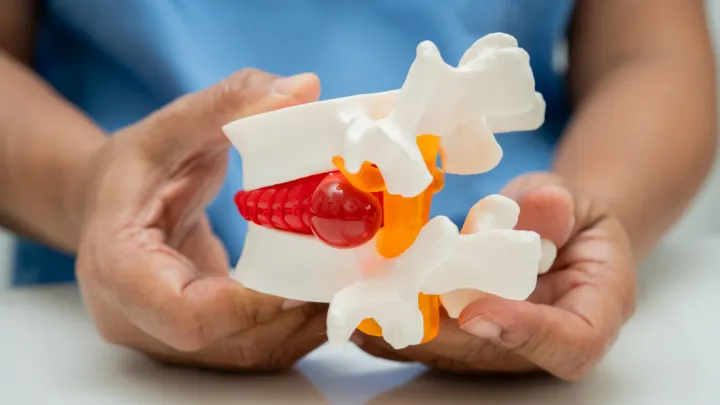
What is the Intracept® procedure for back pain?

From sitting through a meeting to standing in line and even doing simple chores around the house, chronic low back pain can affect all aspects of daily life. For some people, the pain doesn’t go away, even after trying physical therapy, medication or injections.
If you’ve tried other treatments without any relief, you may have heard about a newer option called the Intracept® procedure.
Nebraska Medicine anesthesiologist Marshall Ladd, DO, explains what the procedure is, who it’s for and what patients can expect.
What is the Intracept procedure?
The Intracept procedure is a minimally invasive treatment designed to help with a specific type of chronic low back pain.
“Basivertebral nerve ablation, or BVNA, uses heated electrode to deaden the nerves that transmit bone pain in the low back,” says Dr. Ladd.
In simple terms, the procedure uses heat to stop certain nerves in the spine from sending pain signals to the brain. These nerves don’t control movement; they only carry pain signals. Turning them off can provide long-term relief.
“It’s theoretically permanent, but currently published data only verifies five years of lasting pain relief,” Dr. Ladd adds.
What kind of back pain does it treat?
Not all back pain is the same. The Intracept procedure treats a specific kind of back pain called vertebrogenic low back pain.
“BVNA is typically performed for low back pain, which is the result of bony inflammation in the spine,” says Dr. Ladd.
The pain comes from inflammation inside the bones of the spine, not the muscles, joints or nerves being pinched. Because of that, it often doesn’t respond well to common treatments.
What is vertebrogenic back pain?
To understand this type of pain, it helps to know a bit about how the spine changes over time.
“Vertebrogenic low back pain results from inflammation and breakdown of the vertebral bodies in the spine,” says Dr. Ladd.
As we age, the spinal discs can naturally wear down.
“The discs of the spine often bulge or lose height with age, and this doesn’t necessarily cause pain,” he explains. “However, in some cases, disc disease causes inflammation in the nearby bone, which causes vertebrogenic pain.”
The inflammation deep in the spine is what triggers ongoing pain.
Why is this type of back pain hard to diagnose?
Vertebrogenic pain can often be missed or misunderstood because it can feel like other types of back pain.
“This kind of low back pain is very hard to differentiate from others, frequently mistaken for joint or muscle pain,” says Dr. Ladd.
That’s why many patients go through multiple treatments before getting a correct diagnosis. Because the pain starts deep in the bones, it doesn’t improve with treatments aimed at muscles or joints.
“It is resistant to treatments other than BVNA,” he adds.
What symptoms should you look for?
There isn’t one clear symptom that confirms vertebrogenic pain, but there are some common patterns.
“Signs which would lead me to suspect vertebrogenic pain include notable pain with leaning forward and pain with both prolonged sitting and standing,” says Dr. Ladd.
Who is a good candidate for the Intracept procedure?
The right candidates usually have a combination of symptoms, imaging results and treatment history.
“Anyone who has an MRI of the low back demonstrating inflammation in the vertebral bodies associated with disc disease, low back pain and has failed more conservative treatment is a candidate,” says Dr. Ladd.
This means:
- Chronic low back pain.
- MRI showing inflammation in the spine.
- Other treatments that haven’t worked.
When should someone consider this procedure?
The Intracept procedure is usually not the first step. It’s considered after other options haven’t worked.
“Patients have often already had injections for those types of pain which do not result in much relief,” says Dr. Ladd. “When treatments like this have failed, and there is MRI evidence that BVNA would be appropriate, it can be considered.”
BVNA is performed in an operating room with some anesthesia, but it’s minimally invasive and uses small instruments. There are no large incisions, stitches or implanted hardware.
The benefits of Intracept
“Relief is often immediate after the procedure, but some patients may not experience full benefit for a few weeks,” says Dr. Ladd.
For people living with chronic back pain, even small improvements can make a big difference.
“Quality of life can be drastically improved,” says Dr. Ladd. “Patients can stand for longer, tolerate long car rides better and do household chores without pain.”