What is the MILD® procedure for back and leg pain?

If you’ve noticed pain, numbness or weakness in your legs when you walk or stand – and relief when you sit down – you’re not alone. You may be dealing with a condition called lumbar spinal stenosis (LSS).
For some, this pain may not improve with tried-and-true methods such as physical therapy, medications or injections. When that happens, a minimally invasive option called the MILD® (minimally invasive lumbar decompression) procedure may help.
What is the MILD procedure?
The MILD procedure is a safe, effective outpatient treatment performed through a tiny incision. It relieves pressure on nerves in the lower spine.
“MILD is x-ray-guided thinning of ligaments that have become overgrown due to arthritis and inflammation,” says Nebraska Medicine anesthesiologist Marshall Ladd, DO. “These ligaments can become so thick that they compress nerves in the spine.”
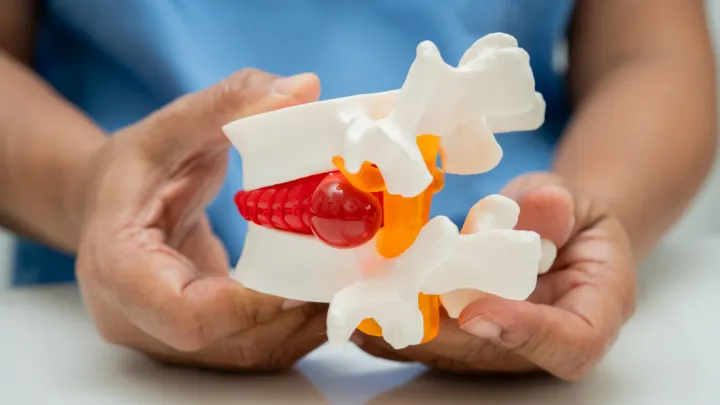
Over time, normal wear and tear can cause certain ligaments in the spine to thicken. When that happens, they can crowd the space where nerves travel.
The MILD procedure removes small portions of thickened tissue to create more room for the nerves, helping reduce pain and improve movement.
What kind of pain does it treat?
Even though the procedure is done in the lower back, the symptoms are often felt in the legs.
“The pain that it treats is usually in the legs,” says Dr. Ladd. “This pain can be felt in the low back, hips or all the way down the legs and usually comes on when walking or standing and is relieved with sitting down.”
This pattern is sometimes called “shopping cart sign.” People feel better leaning forward or sitting, and worse when standing upright. Other symptoms include:
- Tingling or numbness in the legs.
- Weakness when walking.
- Needing to stop and rest often.
What is lumbar spinal stenosis?
LSS is the condition the MILD procedure is designed to treat.
“LSS is the narrowing of the central canal in the lower back where the nerves originate,” says Dr. Ladd.
Think of your spinal canal like a tunnel. Nerves travel through that tunnel from your back down into your legs.
When the canal is narrow enough, the nerves can be squeezed, causing pain, numbness and weakness,” says Dr. Ladd.
Arthritis, disc bulges and thickened ligaments can cause this narrowing. The MILD procedure specifically targets thickened ligaments.
When should someone consider the MILD procedure?
The MILD procedure is often not the first-line treatment.
“This procedure should be considered when someone has symptoms from spinal stenosis that have not improved with physical therapy, medications or epidural steroid injections,” says Dr. Ladd.
If those treatments haven’t worked and imaging confirms spinal stenosis caused by thickened ligaments, this may be the next step.
It can also be a good option for those who want to avoid, or may not be able to undergo, open back surgery safely.
“Because there’s no large incision and no significant recovery period, people who are considered high risk for an open surgery can still undergo MILD,” Dr. Ladd adds.
What happens during the procedure?
The MILD procedure is performed in an outpatient setting using imaging for precision. The goal is to take pressure off the nerves.
“Patients are under anesthesia, and it involves very small incisions that do not even require suture to close,” Dr. Ladd says.
During the procedure:
- X-rays are used to locate the problem area.
- A small opening is made in the skin.
- A needle is inserted.
- Tiny tools remove part of the thickened ligament.
Once the pressure is reduced, the nerves can function normally again. Many patients notice improvement quickly and can return to normal activities within a day.
“Relief can last for years, but thinning these ligaments doesn’t guarantee that stenosis will not occur again,” says Dr. Ladd.
Most patients notice they can walk for longer periods of time, stand for longer and do household tasks without resting frequently.
We can help. Call 800.922.0000 or schedule an appointment online for an evaluation with our Comprehensive Spine Program specialists.