A transplant dietitian’s role: Serving organ donors and transplant patients throughout their journey

There are many reasons a person may need a life-saving organ transplant. With more than 100,000 people on the waiting list, organ donors give others the gift of a longer, healthier life.
Whether a person is a living donor or a transplant recipient, both need a multidisciplinary team of experts to care for them. This is where a transplant dietitian comes in.
What does a transplant dietitian do?
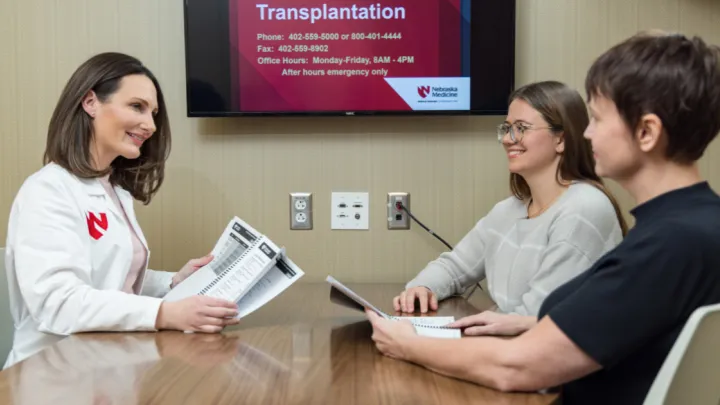
A transplant dietitian works with living donors and transplant recipients to optimize nutrition throughout the transplant journey. A critical part of the multidisciplinary team, they see patients multiple times.
Living donor candidates meet with a transplant dietitian as part of their evaluation. Transplant recipients also work with them before transplant, in the hospital, and after transplant.
“We have several dietitians on our team that focus on abdominal transplants, with two of us focusing on kidney transplants,” says transplant dietitian Ashley Brabec, MS, RD. “A big part of what I love about this work is that I get to support the most selfless person choosing to do something so life-saving for someone else. Then I get to witness that person go from being very sick to thriving after transplant.”
See how Ashley Brabec helped Sushma achieve her weight goals and become eligible for a kidney transplant.
What does nutritional support look like before and after a transplant?
Transplant dietitians work to optimize each person’s health and nutrition to help achieve the best possible outcome.
Before transplant
Pre-surgery, the goal is to ensure patients are healthy enough for transplant surgery.
- Assess weight, identify caloric needs, and identify areas of concern. A scan, using an InBody machine, provides additional information about body composition, including muscle, fat, and body water that isn’t captured by weight or BMI alone.
- Establish weight goals, whether loss or gain is needed
- Assess the ability to adhere to diet goals and restrictions
- Assess functional status using measures such as strength exercises and a six-minute walk test. These assessments help the team identify frailty or functional limitations that may affect a patient’s ability to tolerate surgery and recover after transplant.
Appointments include an initial visit, plus follow-up visits every three to six months for nutrition-related concerns, and yearly visits for waitlist patients. For significant weight loss needs, transplant dietitians also work with the bariatrics team for additional assistance.
After transplant
After surgery, the focus shifts to recovery support, maintaining strength, and maximizing long-term health.
- Ensure patients get adequate nutrition essential for healing and recovery. This means the right amount of supportive calories, protein, and fluids (critical for kidney function).
- Provide food safety education to manage infection risk from immunosuppressive medications
- Manage medication side effects. Specific foods must be avoided due to interactions with anti-rejection medications.
“Getting adequate nutrition after transplant sounds so simple, but when you're still on pain medication, haven't gained back your strength after a surgery, or you're on new medications that just make food taste funny, it can be really hard to do,” says Brabec. “Sometimes we have to get creative to help them reach their protein, calorie and fluid goals. We’re here for them as long as they need.”
Appointments include in-hospital education, a two-week follow-up (which can be via telehealth), and individualized visits as needed.
How important is weight to be a donor or receive an organ?
People assume they need to be a certain weight to donate a liver or kidney or be eligible for a transplant. The answer depends on many factors.
For potential donors
A donor needs to have a body mass index (BMI) of 32 or less for surgical safety. However, transplant dietitians can work with potential donors to reach their goals. After evaluating all health factors, some may be surprised to learn they qualify.
For potential recipients
“For recipients, weight is an important consideration, but we don’t look at it in isolation; we look at the patient’s full picture,” says Brabec. “Two people can have the same BMI, but have extremely different amounts of muscle, body fat, or functional status. We focus on each patient, their history, and their overall health rather than just a number.”
Dealing with kidney or liver disease can make nutrition complicated and discouraging. The transplant team collaborates to improve a patient’s candidacy, such as referrals to dietitians, bariatric specialists, and physical therapists. “If there is a barrier to transplant that is nutrition-related, we continue to work with that patient to help ensure that they meet goals and get to transplant safely,” adds Brabec.
After surgery, weight loss or gain can happen, making follow-up an essential part of the journey. The team addresses both proactively with guidance on healthy eating and activity.
- Weight loss can occur due to medication intolerance or increased calorie and protein needs during recovery
- Weight gain is common due to improved appetite and lifted dietary restrictions
The Nebraska Medicine transplant team
Nebraska Medicine has a robust living donor and transplant program. Along with dietitians, the team includes physicians, nurse coordinators, financial coordinators, social workers, pharmacists, psychologists, and other specialists who work together to assess and develop a personalized plan for each patient.
Interested in donation?
Learn more about living organ donation and the myths surrounding organ donation. Get answers to financial and other commonly asked questions.
Wondering if you’re a candidate for a transplant?
For more information about the Nebraska Medicine transplant program, call 800.401.4444. To become a patient and refer yourself for a transplant, start by filling out this form.