Hip replacement surgery gets Nebraska runner back on her feet
Michelle Chastain has always been active. Born and raised in Omaha, Nebraska, she was a competitive gymnast from ages 3 to 16 and has spent the past 16 years running half-marathons, 5Ks, 10Ks and trails.
Michelle and her husband moved to Blair, Nebraska, in 2009, and raised two children. Enjoying outdoor activities and staying fit have always been a big part of her life.
Around age 48, Michelle began to notice hip pain. By November 2025, her pain had increased significantly, impacting her daily life. It became apparent to her that she needed a medical evaluation.
“I started noticing my hip popping and began to realize that the increasing pain was keeping me from the activities I really enjoy,” says Chastain. “Before I was able to sort of ignore it and keep going, but at this point I knew that I needed to do something about it.”
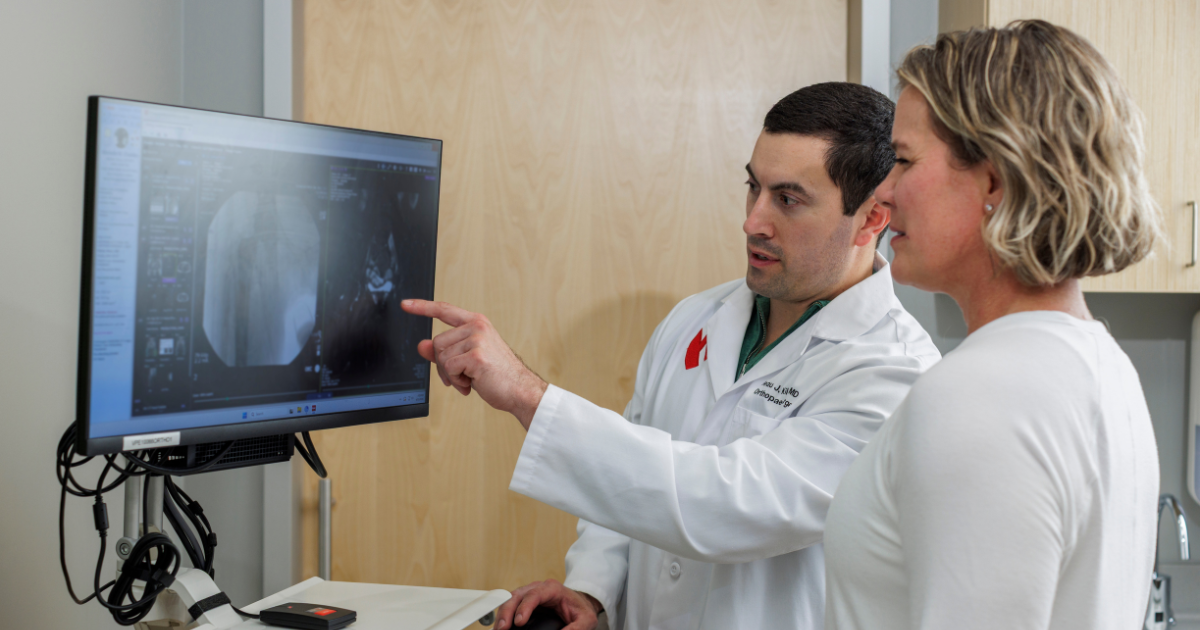
Michelle met with the Nebraska Medicine orthopaedics team. After some imaging, she consulted with orthopaedic surgeon Beau Kildow, MD.
After discussing options, Michelle chose to move forward with an anterior hip replacement. This approach accesses the hip joint from the front, allowing the replacement to be performed with no disruption to the muscles or tendons.
“It didn’t take me long after meeting Michelle to realize she was very active, highly motivated and committed to doing the work to recover,” says Dr. Kildow. “We discussed that an anterior hip replacement was appropriate for her and best aligned with her goals for fast recovery.”
As soon as Michelle scheduled her surgery, she began preparing by doing hip and glute exercises with weights and resistance bands to strengthen her muscles and support her recovery for the best possible outcome.
“I was super impressed with how the team prepared me for surgery,” says Chastain. “Dr. Kildow explained things in terms I understood, including why a hip replacement was the best option for me. Everything I needed to do was laid out for me. The preoperative instructions, a meal plan, what to do and what to expect before, during and after surgery. I received quick answers to all of my questions and was given every tool I needed for a successful outcome. I felt very prepared!”
On the morning of March 20, 2026, Michelle underwent a successful surgery.
From hip replacement to swift recovery
“I remember after I came out of anesthesia, the nurses were so gentle and caring,” recalls Chastain. “When I first stood up, I was amazed that not only was I standing, but I started walking with a walker right away. It was an odd sensation knowing I just had a major joint replaced and now I was walking down the hallway.”
Michelle was doing so well that she went home the same day and was ready to get on with her recovery.
“I was fully motivated to do what I needed to do to get my body back to what it could do before, if not even better,” she adds. “Moving about was better than I expected, and my pain was managed well.”
Once home, Michelle worked on putting weight on her new hip. She had a limp at first, but once she was comfortable on her feet, she put the walker away about a week and a half in. Just over two weeks after surgery, she was walking with a normal gait and stride. At three weeks, she was walking three miles regularly and feeling good.
“Honestly, the more intense pain was muscular, which subsided by week five or six,” says Chastain. “I was able to gradually increase my walking, mileage and the number of days I was doing it. Recently, I had my first successful four-mile walk-and-run session, completely pain-free.”
Michelle feels like the good base strength she built before surgery helped her recover much faster, and she isn’t finished yet. Her sights are on another 5K when she’s ready.
“We know that being in good shape and having a determined mindset accelerates recovery,” adds Dr. Kildow. “Michelle is a beast. She took on the issue decisively, and her recovery is impressive.”
Nebraska Medicine orthopaedic care team: “Smooth from start to finish”
Looking back on her experience, Michelle would recommend Nebraska Medicine every time.
“I’m super impressed with the whole process,” says Chastain. “Everything was like a well-oiled machine; smooth and seamless from start to finish. I couldn’t have asked for a better experience or care team.”
For people who may be having hip pain but are hesitant to consider surgery, Michelle has some advice.
“As my doctor told me, the pain is not going to get better and will probably get worse until you decide to intervene. In my case, I knew the lifestyle I wanted, and the only way to get back there was to have the surgery. Also, follow the instructions and use the tools the team gives you. It really helps.”
Hip replacement surgery increasingly common at younger ages
Hip replacement surgery has become increasingly common for younger people.
“We see patients in their 30s and 40s with hip conditions other than the most common wear and tear arthritis,” says Dr. Kildow. “These patients often times are candidates for joint reconstructive surgery. Modern biomaterials show essentially no wear over 20 years, making replacement appropriate even for younger patients. We do not see hip replacements “wear out” like before. Based on the data, they may likely last a lifetime.”
Dr. Kildow advises that if you have significant hip pain, don’t wait to seek out a consultation with a Nebraska Medicine orthopaedic specialist. They can help you understand your candidacy and explain the risks and benefits.
“Many patients, after receiving the hip replacement, regret waiting so long to have it done,” adds Dr. Kildow. “So often it provides rapid pain relief, significantly impacts their lives and carries a low risk of complications. Our team goes the extra mile to ensure your questions are answered, and you feel confident throughout the process. Great outcomes are a team effort, and our team is devoted to exceptional care, education and reducing anxiety.”