Pancreatic cyst symptoms, diagnosis and treatment

A pancreatic cyst is a small pocket of fluid in the pancreas. Cysts can form in any organ in the body. Most pancreatic cysts are found incidentally during a CT scan or MRI done for another reason.
Pancreatic cysts are quite common. Studies suggest that up to 30% of abdominal CT scans or MRIs in the population show a small pancreatic cyst.
“We don't know what causes pancreatic cysts. It’s just the way some people develop,” says gastroenterologist Shailender Singh, MBBS. “Most pancreatic cysts are very small and don’t cause any symptoms at all. They’re simply found incidentally on scans.”
The reason pancreatic cysts cause concern is that some types have a small risk of turning into cancer over time.
How do I know if I have a cyst?
Most pancreatic cysts do not cause symptoms. They’re usually small and are found when someone has imaging for:
Abdominal pain.
Kidney stones.
Gallbladder problems.
Other unrelated issues.
Symptoms are uncommon but can happen if a cyst grows larger. A large cyst may cause:
Pancreatitis (inflammation of the pancreas).
Jaundice (yellowing of the skin or eyes).
Abdominal discomfort.
Can a pancreatic cyst turn into cancer?
This is the biggest concern for most patients. While some pancreatic cysts have the potential to become cancerous, the overall risk is low.
“Patients often read their scan report, see the word ‘cyst,’ and get concerned about cancer,” says Dr. Singh. “Yes, some cysts are precancerous, but the risk of cancer is very, very low.”
Here are the key points patients should know:
1. Very small cysts rarely turn into cancer.
Cancer risk increases only if a cyst:
Grows larger over time.
Develops a solid component inside.
Shows other concerning features on imaging.
CT scans and MRIs can usually detect these warning signs.
2. There are different types of cysts.
Pancreatic cysts are divided into two main categories:
Non-mucinous cysts:
Do not turn into cancer.
Often require little or no long-term concern.
Mucinous cysts:
Have a small risk of becoming cancerous.
Often need monitoring or further testing.
“If a cyst is non-mucinous, there’s usually nothing to worry about,” Dr. Singh explains. “If it is mucinous, we look more closely and decide on the best surveillance plan.”
How are pancreatic cysts diagnosed and monitored?
Because most cysts are found on imaging, the first step is usually reviewing a CT scan or MRI.
Nebraska Medicine patients can be enrolled in a pancreas cyst surveillance program. This program includes a team of:
Gastroenterologists.
Radiologists.
Surgeons.
Each case is reviewed in a dedicated pancreas cyst conference.
“The pancreatic cyst surveillance program takes an individualized and interdisciplinary approach,” says Dr. Singh. “Once patients are enrolled, we take responsibility for their follow-up. We don’t just tell a patient to get a scan in six months — we arrange it.”
Surveillance may include:
Repeat CT scans.
Repeat MRIs.
Endoscopic ultrasound with biopsy
Regular follow-up visits.
Monitoring schedules vary based on:
Cyst size.
Type of cyst.
Patient age.
Family history.
Overall health.
Most small cysts (less than 15 millimeters) only need imaging every one to two years.
When is an endoscopic ultrasound needed?
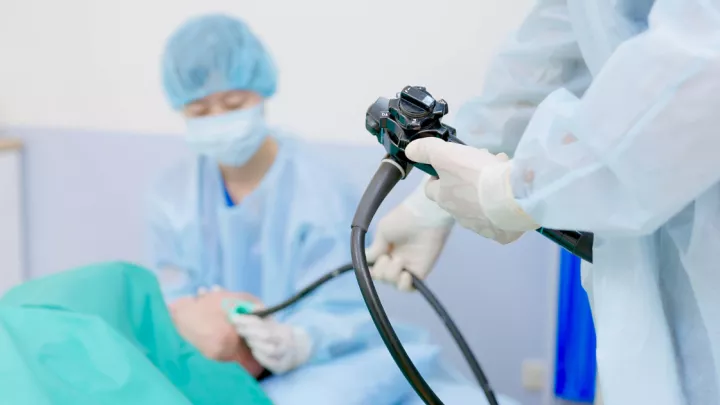
If a cyst grows larger — typically around 25 to 30 millimeters (about 1 inch) — doctors may recommend an endoscopic ultrasound (EUS).
This is a minimally invasive outpatient procedure. A small scope with an ultrasound device is passed through the mouth to look closely at the pancreas.
With EUS, doctors can:
Examine the cyst for signs of cancer.
Evaluate the pancreatic duct size and relation to the cyst.
Take a small fluid sample from the cyst (biopsy).
“We only consider biopsy when cysts reach a larger size,” Dr. Singh says. “With smaller cysts, the risk of cancer is so low that we don’t do biopsies.”
The fluid can also be tested for genetic changes that may increase cancer risk.
When is surgery needed?
Surgery is recommended only when there are strong signs that cancer is present or likely to develop. Doctors look for “high-risk stigmata,” which are imaging features linked to cancer risk.
If cancer develops during surveillance, early surgery offers the best chance for a cure. However, most patients will never need surgery.
When should you see a specialist?
You should consider seeing a specialist if:
A pancreatic cyst is found on your imaging.
Your cyst is growing.
Your scan shows concerning features.
You have a family history of pancreatic cancer.
“We encourage patients not to worry,” Dr. Singh says. “If you’re enrolled in a proper surveillance program and being monitored, it’s very unusual to miss a cancer.”
With modern imaging and expert monitoring, pancreatic cysts can be safely followed in most cases.
Take the next step
Early evaluation and proper surveillance can provide peace of mind and ensure you receive the right care at the right time.