Clinical trials: Opening doors to better cancer care

Every cancer treatment available today started as a clinical trial. For patients facing cancer, choosing a center deeply involved in research can mean access to tomorrow’s treatments today.
Understanding clinical trials
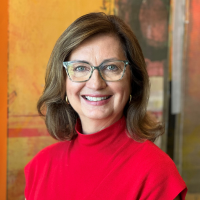
“A clinical trial is a carefully designed treatment plan using investigational treatments,” says Susan Blumel, RN, BSN, manager of the Clinical Trials Office at the Fred & Pamela Buffett Cancer Center. “The goal is to improve cancer care.”
These studies test new drugs, treatment combinations or approaches before they become widely available. They’re heavily regulated and monitored, with strict safety measures in place. “Patients are much more closely monitored because we have a lot of checkpoints to ensure that their care is safe,” Blumel says.
The Fred & Pamela Buffett Cancer Center maintains over 200 active clinical trials. Some trials help patients who have a new diagnosis or whose treatment has stopped working, while others target rare cancers with few existing therapies.
Some trials are “investigator-initiated trials,” or physician-led research that addresses specific patient needs.
“‘Investigator-initiated’ means that our physicians actually come up with the idea and the plan and write a protocol,” Blumel says. “It’s based on science, evidence and need.”
Safety and protection
Clinical trials aren’t rushed experiments. Before any treatment reaches human testing, it undergoes laboratory research and animal studies. “Clinical trials are based on years of research before they even touch a person,” Blumel says.
Human trials follow careful phases:
- Phase 1 studies focus on safety, starting with low doses and gradually increasing them.
- Phase 2 examines how well treatments work.
- Phase 3 compares new treatments to current standard care.
Patients will never receive only a placebo instead of cancer treatment. “That is not ethical,” Blumel says. “When placebos are used, patients always receive treatment plus either the experimental drug or placebo.”
Multiple safeguards protect patients. An Institutional Review Board provides ethical oversight, reviewing every aspect of a study.
“If it’s not safe or not working, we’re going to stop,” Blumel says. “If the patient wants to stop, they can stop at any time.”
Why choose a research center?
Cancer centers involved in clinical trials offer patients more treatment options. Expert oncologists at these centers know both standard treatments and experimental options, ensuring patients receive comprehensive information about all possibilities.
As an NCI-designated cancer center, the Fred & Pamela Buffett Cancer Center must maintain a well-rounded portfolio of trials. The center’s membership in the Big Ten Cancer Research Consortium further expands access to national trials, giving patients opportunities they might not find elsewhere.
“We don’t have a cure for cancer,” Blumel says. “Clinical trials are standard of care, or should be, until we find cures for everyone.”
A partnership for hope
Clinical trial participation creates a partnership between patients, physicians, research coordinators and behind-the-scenes researchers. Even when treatments don’t work for an individual patient, the knowledge gained helps future patients.
However, after 30 years in clinical research, Blumel observes that “most patients are helped.”
Patients should ask their doctors about clinical trial options.
“If you decide not to participate in a trial, that’s okay,” Blumel says. “At least you know what’s out there.”