Teammate to lifesaver: How a Facebook post inspired a living kidney donation
Chrissy Zbylut never expected that a high school softball teammate would one day save her life.
“Emily was a senior when I was a freshman,” Zbylut recalls. “We played varsity softball together, and she was always such a leader. She could take a tough moment in a game and help everyone relax and take a breath. I definitely looked up to her.”
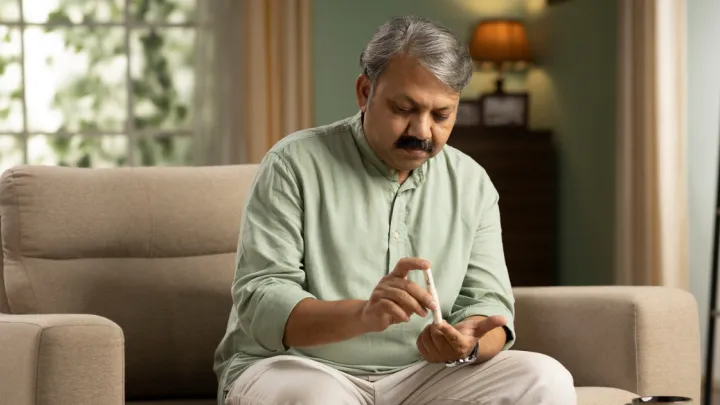
Nearly 20 years later, Zbylut, now a physician recruiter at Children’s Nebraska, found herself fighting for her life. A type 1 diabetic since age 4, Zbylut had always known the risks to her kidney health. But it wasn’t until her pregnancy that things took a serious turn.
“My husband and I tried for almost seven years to get pregnant and went through three miscarriages before we had our son, Brock,” she explains. “My pregnancy was smooth, my blood sugars were perfect and then I went in for a routine checkup at 32 weeks and noticed I was retaining water.”
Tests showed her kidney function had dropped quickly. Doctors admitted her right away and delivered Brock that day.
Before pregnancy, Zbylut had stage 3a kidney disease with no major problems. But after giving birth, her kidney function never recovered. By summer 2024, she was preparing for a kidney transplant. That fall, her kidneys were functioning at just 12%.
Zbylut knew she needed to find a living donor. With a 1-year-old at home, it was her best chance without having to spend years on dialysis.
So she posted her story on Facebook.
A Facebook message that changed everything
Emily Crowe, Zbylut’s former teammate, saw the post and felt she had to help.
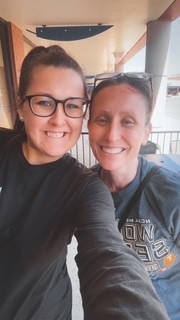 “I knew she had type 1 diabetes, but didn’t realize how bad her kidneys were,” says Crowe. “I’m a physical therapist – I see what dialysis does to people. I couldn’t imagine doing that while caring for a toddler.”
Crowe, a mom of two, started the testing process to see if she was a match. She didn’t have Zbylut’s number, so she messaged her on Facebook.
“I was at work when I saw the message,” Zbylut says. “I just started crying. I had to calm down before I could even call her. It was a shock, but in the best way.”
She added, “I told her ‘thank you’ could never be enough. But I also made sure to say that just because she was a match didn’t mean she had to go through with it. She told me, very confidently, she had already talked to her family and her job, and she wanted to do it.”
The journey to transplant
The process moved quickly, despite a few delays.
“I only waited about a month and a half before Emily found me,” Zbylut says. “I know that’s rare, and I’m so grateful.”
Crowe’s evaluation involved blood tests, a physical, 24-hour urine collection, a kidney ultrasound, an abdominal CT scan, blood pressure checks and visits with a mental health professional, a dietitian, a social worker and a case manager.
“I also connected with living kidney donor groups on social media,” Crowe says. “They gave me a heads-up on what to expect and what recovery might be like. That helped me prepare.”
The surgery was delayed twice. First, Crowe caught the flu. Later, Zbylut’s kidney function got worse, and she had to start dialysis immediately.
Finally, everything lined up, and the transplant took place.
Recovery and renewal
“Recovery as a recipient is actually easier than for the donor,” says Zbylut. “I was walking the hospital halls the same evening. The worst part was not being able to lift my son for several weeks.”
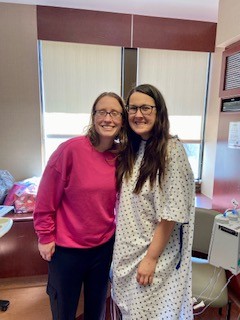 Crowe agrees that recovery was tough but worth it.
“They told me it would be harder on me than Chrissy, and it was,” Crowe explains. “Your organs shift after surgery. The gas pain was intense, and I had to log-roll to get out of bed. Just walking two houses down was exhausting those first two weeks.”
By the third week, both women were feeling stronger.
“I had more energy,” Zbylut recalls. “I wasn’t retaining water anymore. I even joked that I had ankles again! To be honest, I was probably more active than my doctors would’ve liked.”
“I was back to myself by the time I returned to work,” says Crowe. “Mentally, it was still exhausting, but physically, I felt good. I eat healthy, stay hydrated and haven’t had any problems since.”
A reconnected friendship
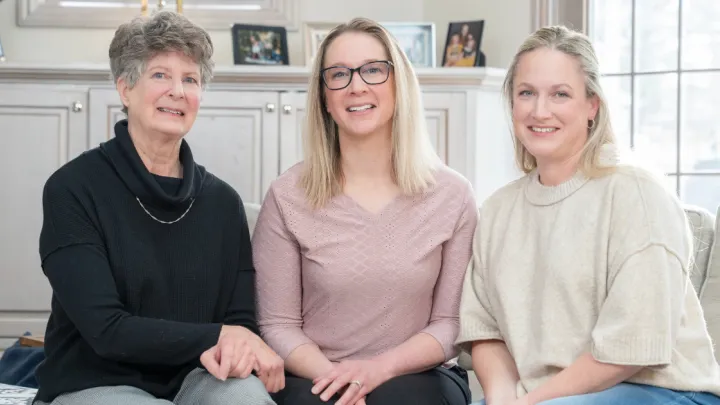
Today, Zbylut and Crowe stay in touch.
“We try to get together every month,” Zbylut says. “It’s so special to have reconnected in a meaningful way. Emily gave me the ability to be the mom I want to be for Brock. I didn’t miss out on this time with him because I was too sick. That’s something I’ll always be grateful for.”
For Crowe, the decision to donate was simple.
“I had support at home and work, and I just felt like I could do it. So I did.”
A message of hope and leadership
As a living donor, Crowe showed the same leadership she had as Zbylut’s former teammate. Now, both women raise awareness for living organ donation.
“I use social media to share our story, to show that donation really does save lives. I want to give people hope.”
Zbylut has advice for potential donors:
“It’s a deeply personal choice, but if it feels right to you, you can change someone’s life. If you’re searching for a donor, don’t give up. Share your story, talk to everyone. There are good people in this world. You never know who might step forward – or come back into your life.”