What parents should know about fifth disease
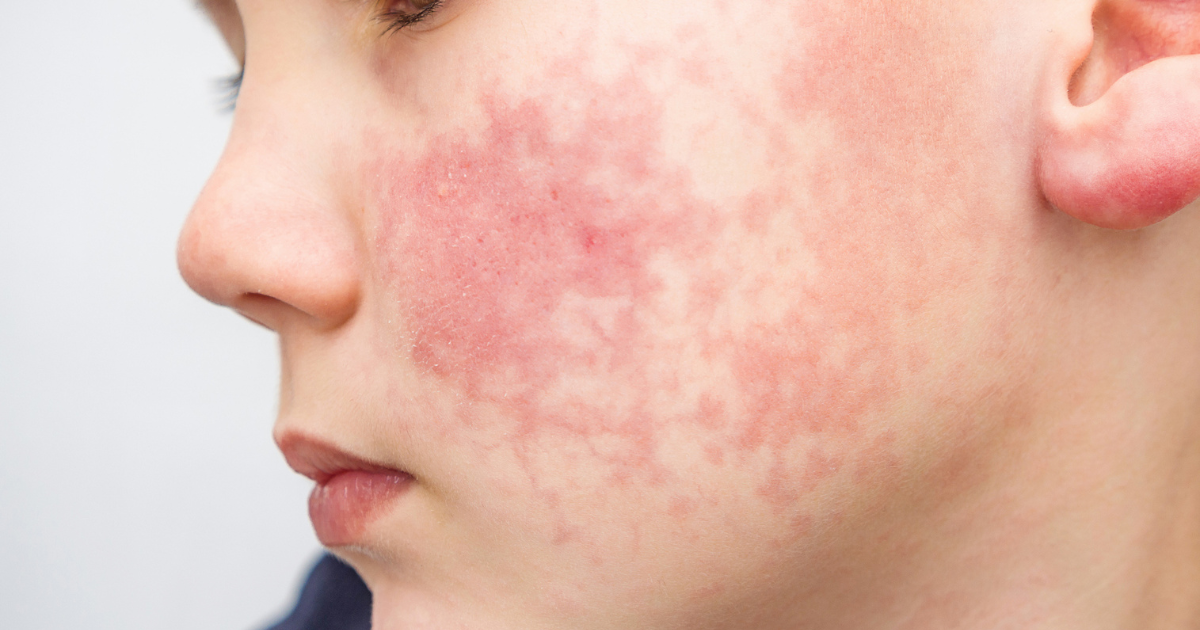
If your child suddenly has red cheeks, you might think they spent too much time outside. But there could be something else going on. That bright red rash may actually be a sign of fifth disease, also called “slapped cheek syndrome.”
Nebraska Medicine pediatrician Amissabah Kanley, MD, explains what parents need to know about this common childhood illness.
What is fifth disease?
“Fifth disease is a mild viral infection caused by human parvovirus B19,” says Dr. Kanley. “It gets the nickname ‘slapped cheek syndrome’ because of the bright red rash that appears on the cheeks — it really looks like a slap across the face.”
The name “fifth disease” comes from its place on an old list of common childhood rashes described by doctors: measles, scarlet fever, rubella, Duke’s disease and fifth disease. It’s most common in children between the ages of 3 to 10 and tends to spread more often in the winter.
How does it spread?
Like many viruses, fifth disease is most contagious before you know your child has it and before the rash appears.
“It spreads through respiratory droplets, so coughing, sneezing and even sharing utensils or touching contaminated surfaces can pass it along,” says Dr. Kanley.
Because children are most contagious early on, fifth disease can spread easily in daycares and classrooms.
Symptoms to look for
At first, fifth disease can be hard to spot because of the mild symptoms. They can look like a common cold.
“Kids may have a cough, congestion, runny nose, headache, low-grade fever or just seem a little more tired than usual,” says Dr. Kanley.
The signature red rash usually appears a few days later. It’s not painful or itchy for most children.
“The rash might look like eczema or a heat rash,” Dr. Kanley adds. “But the bright red cheeks are pretty characteristic of fifth disease.”
How it’s diagnosed
Fifth disease is usually diagnosed based on how the rash looks and the symptoms.
“We don’t typically need blood tests,” says Dr. Kanley. “A good physical exam and a look at the rash is usually enough to make the diagnosis.”
When to keep kids home
One of the most common questions parents have is whether their child can return to school when the rash appears.
“The good news is, by the time the rash shows up, your child is no longer contagious,” Dr. Kanley says. “They can go back to school once they’ve been fever-free for at least 24 hours and feel well enough to participate in normal activities.”
Treatment and comfort measures
There’s no antiviral medication for fifth disease, but most kids recover on their own without complications.
“Supportive care is the best approach,” says Dr. Kanley. “Make sure your child stays well hydrated, and you can use acetaminophen or ibuprofen if they have a fever or feel generally unwell.”
Rest and fluids are usually all that’s needed. The rash may linger 5 to 10 days before fading.
When to call the doctor
Fifth disease is mild for most children, but check in with your pediatrician if:
- Your child has a high fever (above 102°F).
- They seem very unwell or unusually tired.
- The rash spreads rapidly, is swollen or painful.
- You are pregnant or have a weakened immune system and have been exposed to a child with fifth disease.
Fifth disease may look alarming, especially with the bright red cheeks. For most children, it’s a mild, temporary illness. With supportive care and rest, kids are usually back to their normal selves within a week.
“If you’re unsure, don’t hesitate to check in with your child’s doctor,” Dr. Kanley reassures. “We’re here to help and make sure your child is on their way to recovery.”