What is a detached retina, and how does it happen?

A retinal detachment is a serious condition that can happen suddenly and may lead to blindness unless treated quickly.
Understanding how the eye works
The eye works like an old-fashioned camera. In the front is the lens, and behind it is the film, which in the eye is the retina.
Between the lens and the retina lies a gel-like substance called the vitreous. As people get older, the vitreous liquefies and is reabsorbed by the body. The leftover gel becomes unstable. Since the gel is firmly attached to the retina, it can affect the retina’s stability.
“As we age and move our eyes, gravity affects it more, and the gel starts pulling on your retina,” says ophthalmologist Ivey Thornton, MD.
How retinal detachment occurs
The gel pulling on the retina creates flashes, called photopsia. If the gel continues pulling, it can cause a tear in the retina. Because the retina is a tissue, a tear can enlarge and pull the entire retina off, causing a retinal detachment.
“When your retina detaches, you will lose vision completely because it’s like taking the film out of a camera,” Dr. Thornton says. “You cannot take photos when the film is not in a camera.”
Warning signs to watch for
Symptoms of retinal detachment include:
- Flashing lights.
- Floating objects in your field of vision.
- A “curtain” moving across your field of vision.
When retinal detachment occurs, vision loss begins.
“It’s like a curtain coming down,” Dr. Thornton says. “You’ll generally start by losing your peripheral vision, which becomes gray or black, and as your retina falls, you start losing your central vision, eventually leading to blindness.”
If any of these symptoms occur, see an ophthalmologist right away.
How doctors diagnose retinal detachment
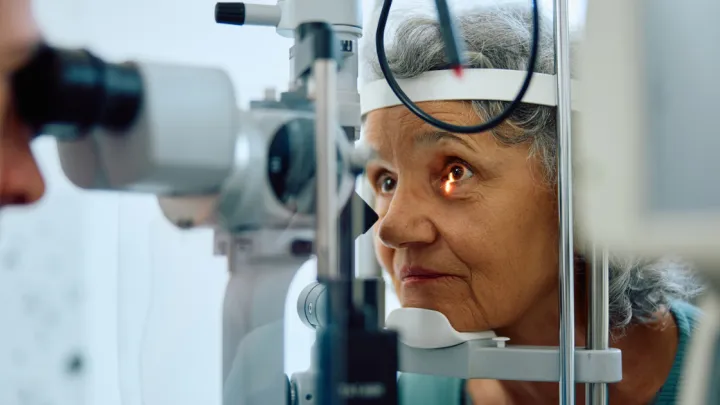
Doctors diagnose a detached retina through an eye exam.
“We dilate your eyes and look at your peripheral and central retina,” Dr. Thornton says. “Then we use an indirect ophthalmoscope to examine the peripheral retina in detail to see any tears or detachment.”
How is a detached retina fixed?
A detached retina is generally repaired through surgery and quick treatment is critical.
If you have surgery before losing your central vision, surgeons can reattach your retina to the back of your eye, preserving your eyesight.
However, if central vision is already lost, surgical results are less favorable.
“I have seen patients who’ve been blind for a prolonged period,” Dr. Thornton says. “When they finally come in, it’s hard to perform retinal detachment surgery, because scar tissue develops.”
Surgery for a detached retina is typically an outpatient procedure, though vision improvement can take weeks to months. Some patients may not regain their full vision depending on how long the retina was detached and whether central vision was affected.
Get help quickly
If you experience any potential symptoms of a retinal tear or detachment, contact your ophthalmologist as quickly as possible.