Cardiac stress test: What is it, and who should get one?
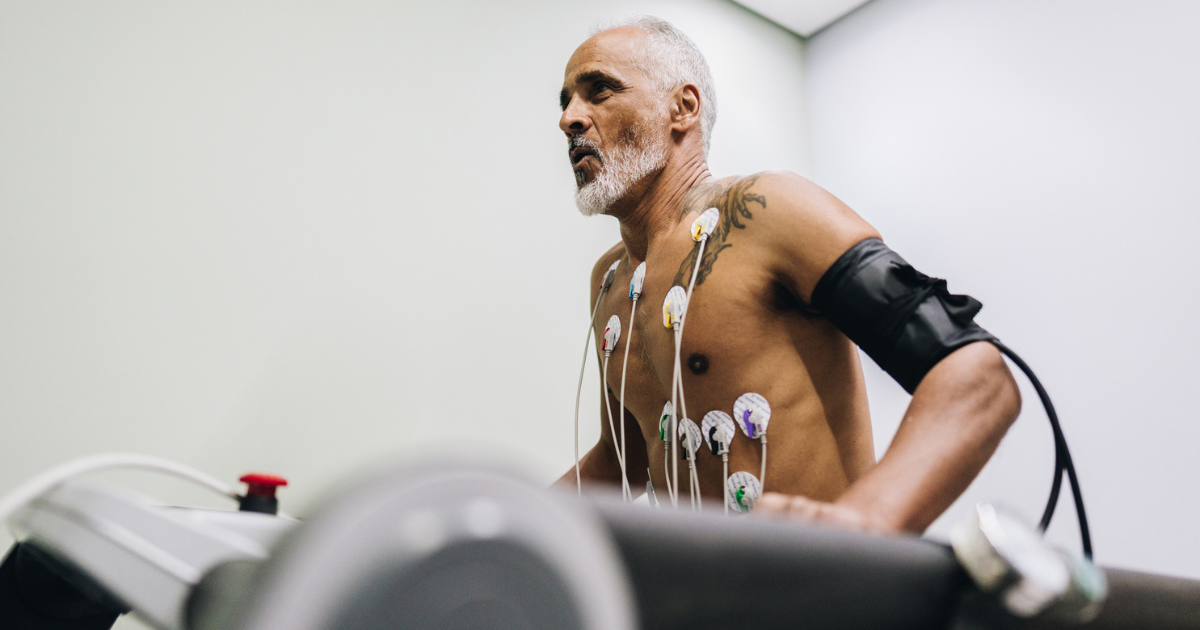
A healthy heart can keep up with what the body demands, whether it’s climbing stairs, going for a walk, running errands or exercising. But sometimes heart problems only show up when your heart is working harder. That’s where a cardiac stress test comes in.
A cardiac stress test helps doctors see how well your heart works during physical activity or simulated exercise. It can help identify blocked arteries, abnormal heart rhythms and other problems before they worsen.
“A cardiac stress test is a supervised study that shows how the heart functions when it is working harder,” says Nebraska Medicine cardiovascular fellow, Suma Pusapati, MD. “In simple terms, it helps doctors identify how your heart performs in response to stress.”
Stress tests are one of the most common tools doctors use to look for symptoms such as chest pain or shortness of breath. They can also help determine whether someone is at risk for heart disease or if a current treatment is working.
What does a cardiac stress test measure?
During a stress test, doctors closely monitor how the heart responds as it works harder. The test measures:
- Heart rate
- Blood pressure
- Heart rhythm
- Electrical activity through an electrocardiogram (EKG)
- Symptoms such as chest pain, dizziness or shortness of breath
“If imaging is added, it can also show how well different parts of the heart are moving and whether any areas are not getting enough blood,” says Dr. Pusapati.
Details like these can help doctors see whether the heart gets enough oxygen-rich blood during activities.
Why would someone need a cardiac stress test?
Stress tests are often ordered when someone has symptoms pointing to a heart problem. Common symptoms may include:
- Chest pain or pressure
- Shortness of breath
- Heart palpitations
- Dizziness
- Fainting
- Fatigue during activity
- Lowered exercise ability
“A doctor may order a stress test to look for signs of coronary artery disease, explain symptoms, check how serious a known heart condition is or see whether treatment is working,” says Dr. Pusapati.
Doctors may also recommend stress tests for those who have risk factors for heart disease, even if symptoms are mild. Some risk factors can include high blood pressure, high cholesterol, smoking, diabetes and a family history of heart disease.
Stress tests are sometimes used before surgery as well.
“Sometimes a doctor needs more information about how the heart performs during physical stress for anesthesia clearance before major surgeries,” says Dr. Pusapati.
How much can a stress test detect?
While a stress test can’t actually see blocked arteries, it shows signs that blood flow to the heart may be reduced. When arteries become narrow or blocked, the heart muscle may not receive enough oxygen during exercise. This can cause symptoms or changes on the test that show doctors there’s a possible problem.
However, stress tests aren’t perfect.
“A normal test does not completely rule out heart disease,” says Dr. Pusapati.
Other symptoms, medical history and risk factors are considered when deciding if additional testing is needed.
One of the main goals of testing is to determine if symptoms are related to the heart. For example, if a patient develops chest pain during exercise and the test shows changes in heart function at the same time, it may indicate coronary artery disease or another heart condition.
Stress tests can also help doctors understand whether symptoms are caused by something else, such as lung disease, deconditioning or anxiety.
Types of cardiac stress tests
There are several different types of stress tests. The right one depends on someone’s symptoms, health history and exercise ability.
“The goal is to use the simplest test that will still give reliable information,” says Dr. Pusapati.
Nuclear stress test
This test uses a small amount of radioactive tracer and special imaging to show blood flow through the heart muscle.
“A nuclear stress test adds imaging to show how blood flows through the heart muscle,” says Dr. Pusapati.
This type of test can provide more detailed information about blocked arteries or areas of reduced blood flow.
Stress echocardiogram
This test combines exercise with ultrasound imaging of the heart to evaluate how well the heart muscle squeezes and moves during stress.
Medication-based stress test
Some people can’t safely exercise due to mobility issues, arthritis or other medical conditions. In those cases, doctors can use medications that temporarily make the heart work harder, similar to exercise.
Bike stress test
Some patients use a stationary bike instead of a treadmill.
“This may be easier, safer or more comfortable for some patients,” says Dr. Pusapati.
What should patients expect during a stress test?
Before testing, patients may be asked to avoid caffeine, smoking, food or certain medications for several hours.
During the test, sticky patches called electrodes are placed on the chest to monitor the heart’s electrical activity. Blood pressure and heart rate are checked throughout the test.
Patients then exercise gradually on a bike or treadmill while a medical team carefully watches for symptoms or changes in heart function.
“The exercise part is usually about 10 to 15 minutes, but the whole appointment may take longer because of preparation and recovery,” says Dr. Pusapati.
If imaging is included, more time may be needed.
When more information is needed
An abnormal stress test doesn’t always mean someone has heart disease. It simply means doctors may need more information.
“We may recommend additional imaging, medication changes or sometimes a cardiac catheterization depending on the findings and symptoms,” says Dr. Pusapati.
Additional testing may be recommended if symptoms continue despite a normal test result.
Seek medical attention
Certain symptoms should never be ignored.
“Chest pain, chest pressure, worsening shortness of breath, fainting, severe palpitations or symptoms that happen at rest should always be taken seriously,” says Dr. Pusapati.
These symptoms may require immediate medical attention rather than a routine outpatient stress test.
Prevention prevails
Stress tests can help identify heart problems, but prevention remains one of the most important parts of heart care. Dr. Pusapati recommends lifestyle changes that can lower heart disease risk:
- Quitting smoking
- Eating a heart-healthy diet
- Exercising regularly
- Maintaining a healthy weight
- Managing blood pressure and cholesterol
- Controlling diabetes
- Taking medications as prescribed
“These steps can lower future heart risk, whether the stress test is normal or abnormal,” she says.