Supportive services help NICU babies grow and thrive
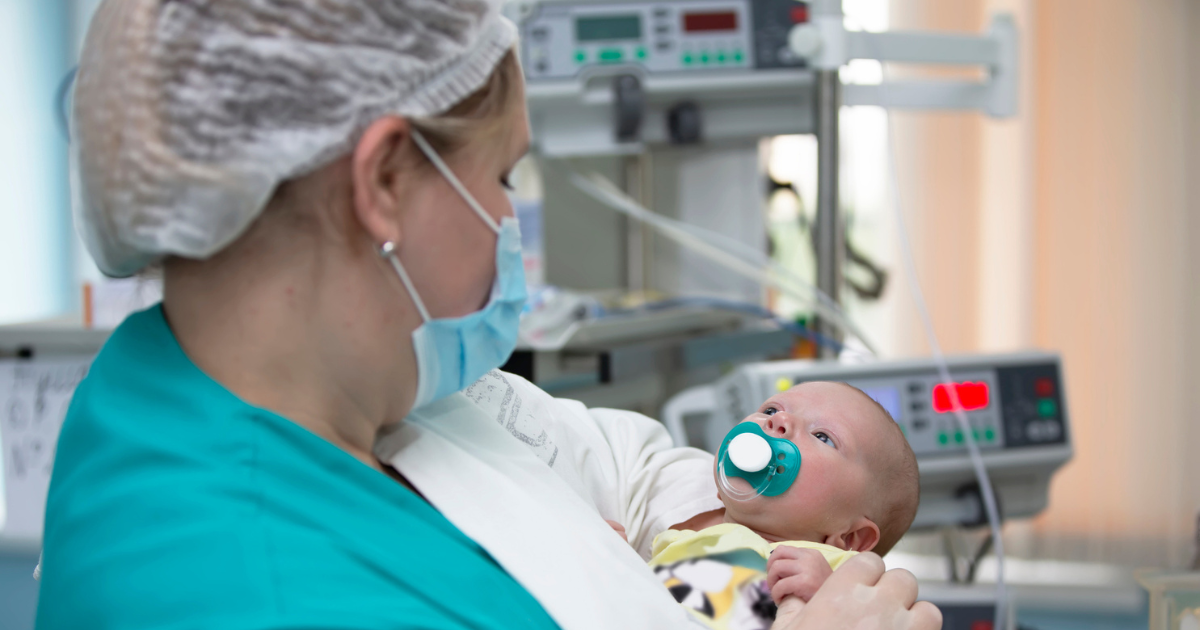
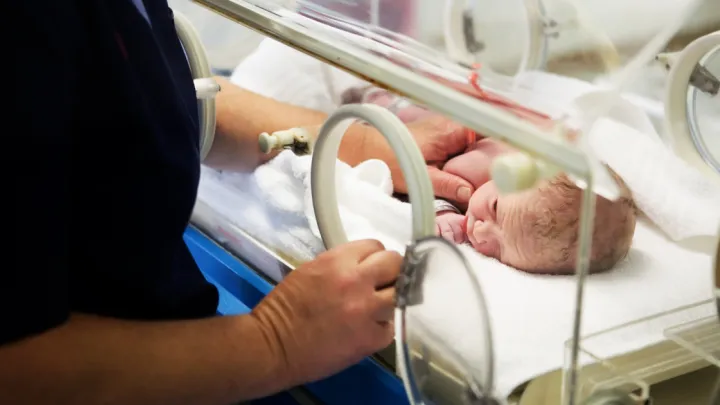
If your baby is born premature or with medical challenges, starting life in the neonatal intensive care unit (NICU) can be a very stressful time. Nebraska Medicine’s NICU team is specially trained to care for these fragile babies in a developmentally supportive environment to help them grow and thrive. Parents also learn the skills they need to care for their infant and support development beyond the NICU.
Premature infants or those with medical complications often face challenges with neurological development, sensory regulation, motor skills and social and emotional growth. These struggles can delay early developmental milestones like sucking and feeding, reaching and grasping, adjusting to light and sound and bonding.
“Early intervention and support from our NICU team play a critical role in helping infants develop essential skills, setting the stage for the best possible start before discharge,” says Chelli Westengaard, OTR/L, BCP, PCSP, pediatric occupational therapist and occupational therapy director at Munroe-Meyer Institute, UNMC.
“We closely monitor and actively support developmental care to all of our NICU babies born before 32 weeks or those with medical issues affecting their growth. We often start with a baseline motor assessment and then develop a plan based on their needs and deficits.”
The team includes occupational therapists, physical therapists and speech-language pathologists who help special newborns develop important skills like:
- Promoting optimal postural alignment.
- Reducing the risk of deformities or asymmetries.
- Encouraging appropriate sensory processing.
- Monitoring and supporting motor milestones.
- Supporting oral motor skills and feeding.
- Building head control, midline orientation and movement against gravity.
- Addressing muscle tone, strength and coordination.
- Facilitating early active movement and motor play.
- Teaching safe handling, positioning and feeding techniques.
- Empowering families to continue developmental care at home.
- Using standardized tools to assess neurobehavioral and motor status.
“We’ve found that early initiation of therapy leads to higher-quality developmental outcomes by addressing challenges as soon as they arise,” says Westengaard. “Research shows that specialized care in the NICU is associated with shorter hospital stays, fewer complications, improved weight gain, enhanced feeding abilities and stronger parent-infant bonding.”
“Supporting and educating parents, while fostering early bonding with their baby, is a key priority for the NICU team,” notes Westengaard. “These infants are often in a highly fragile state, which can be overwhelming for parents and caregivers,” she explains.
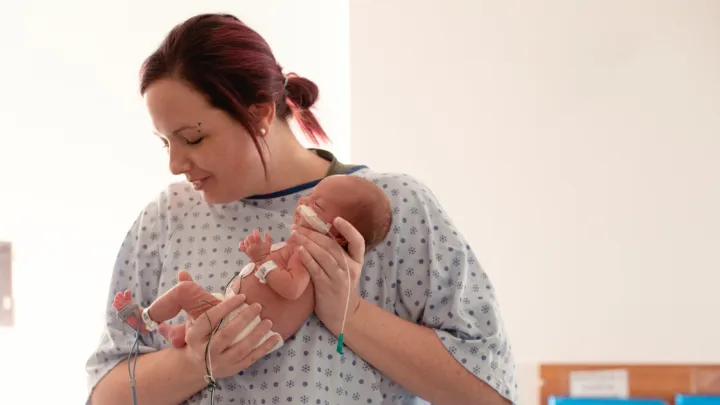
“From the beginning, we get caregivers involved in their baby’s care as much as possible, even if it’s little things like preparing the baby’s bottle, changing their diaper or holding their baby while tube feeding.”
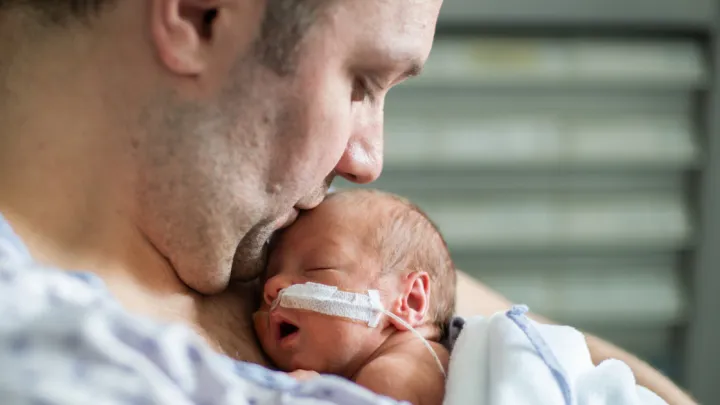
Skin-to-skin contact, or kangaroo care, is encouraged whenever possible. This can have a positive impact on a baby’s brain development and overall well-being.
Physical therapists and occupational therapists work with parents to help them learn how to respond to their baby’s cues and adjust their surroundings if the baby seems overstimulated. For instance, if a baby is getting upset when feeding, they may need to be swaddled more tightly, the lights may need to be turned down or the noise level lowered.
As babies get older, parents and caregivers are encouraged to help them practice motor skills like reaching, grasping and rolling.
Although the roles of NICU physical therapists, occupational therapists, and speech-language pathologists may overlap in certain areas, each discipline plays a vital role in supporting infants as they achieve key developmental milestones, explains Westengaard.
- Physical therapists work on posture, strength and movement abilities to promote the development of functional motor skills like head control and rolling.
- Occupational therapists address any musculoskeletal deformities with your baby, including hand and arm movement and hand-eye coordination. They also promote the development of your baby’s central nervous system by helping them learn to adjust to environmental stimuli.
- Speech-language pathologists (SLPs) help provide care to NICU babies who are experiencing feeding and swallowing difficulties. They assess infants use their mouth and throat muscles to suck, swallow and breathe. They also educate caregivers on how to position and feed their baby safely and effectively.
If a baby has trouble coordinating these skills, SLPs may recommend NTrainer therapy. This tool uses gentle pulses through a pacifier to teach proper sucking skills.
“Our goal is to provide a smooth transition home,” says Westengaard. “We want parents to feel comfortable and confident in continuing the developmental progress and care of their babies when it’s time to go home. We will do a final assessment and provide a developmental plan for parents to follow at home when their baby is discharged.”
If parents or caregivers would like to continue to receive help at home, Westengaard recommends contacting the Nebraska Early Developmental Network. This program, offered by the Nebraska Departments of Education and Health and Human Services, supports young children with disabilities and their families.
If your baby needs specialized care after delivery, Nebraska Medicine is here to guide and support your family every step of the way. Learn more about the Nebraska Medicine’s Newborn Intensive Care Unit.