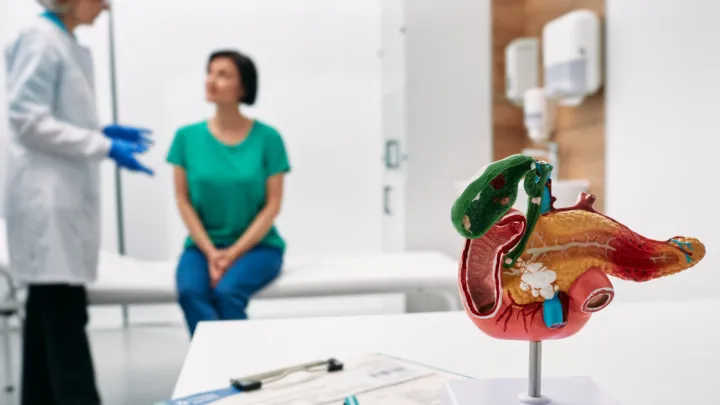
When cells are resistant to insulin, the pancreas (the organ that produces insulin) produces more and more to overcome that resistance. Over time, the pancreas begins to tire out. It’s no longer able to produce enough insulin to overcome the resistance.
There is no symptom which is specific to pancreatic cancer and many patients do not develop any symptoms of the disease. Pancreatic cancer can be found by chance on tests done for other reasons
Pancreatic cancer is a tough disease to beat, with only 11.5% of patients surviving more than five years. But Nebraska Medicine researchers are working hard to find new ways to boost survival.
When Kim Bate went to an appointment with his family physician in October 2018, he didn't consider the worst-case scenario. Bate had a rash, but nothing too extreme. Still, when Kim's doctor informed him that he believed Kim had an undiagnosed cancer and they'd need to run more tests, it wasn't a complete surprise.
A recent study showed rates of pancreatic cancer in women under age 55 rose 2.4% between 2001 and 2018. In May, E-News correspondent Maria Menounos, 44, revealed she was diagnosed with a rare form of pancreatic cancer earlier in the year, a high-profile case that seems to reflect the study’s disturbing trend.
Through ongoing research, Nebraska Medicine is exploring innovative approaches to treating pancreatic cancer, including novel combinations of existing therapies and new strategies.
The pancreas connects to the small intestine and is located in the upper abdomen. It drains digestive enzymes into the small intestine to break down carbohydrates, proteins and fats. It also produces hormones and releases them into the blood.
Pancreatic cancer is a genetic disease caused by changes or mutations in segments of DNA called genes. Genes carry the code or the instructions which tells the cells in the body how to grow and function. Mutations in certain genes can allow cells to grow in an uncontrolled way.
At Nebraska Medicine we have an expert team that will help guide you and your family through the treatment. Below I have compiled a list of questions I recommend all my patients with pancreatic cancer ask their oncology team.
You’re about to leave the Nebraska Medicine website. The other site may collect information about your visit, including your IP address. Do you want to continue?