Tiny treasures: NICU nurse helps families navigate loss with keepsakes

When Nebraska Medical Center Newborn Intensive Care Unit nurse Claire Christensen found out she was expecting a baby boy, she had a feeling she would being seeing the NICU from a different perspective.
“My body, my brain just knew he was going to be early,” Christensen says. “I just knew he was going to be in the NICU.”
Christensen discovered she had a large uterine fibroid in 2024 and planned to have it surgically removed. During her pre-op appointment, doctors discovered she was pregnant.
“That was in itself complicated and had a lot of anxiety with it,” she remembers. “Those of us who work in NICU say it’s a blessing and curse. We know so much about pregnancy complications and early births, but also, we may know too much when it becomes personal.”
Because of the fibroid, Christensen dealt with abdominal pain and spent time in and out of the hospital. But as she was planning to travel to Florida to celebrate her 30th birthday with her family, the pregnancy took an even more drastic turn. An unbearable bout of pain brought her to the hospital, where doctors discovered she was already in labor, despite being 26 weeks into her pregnancy.
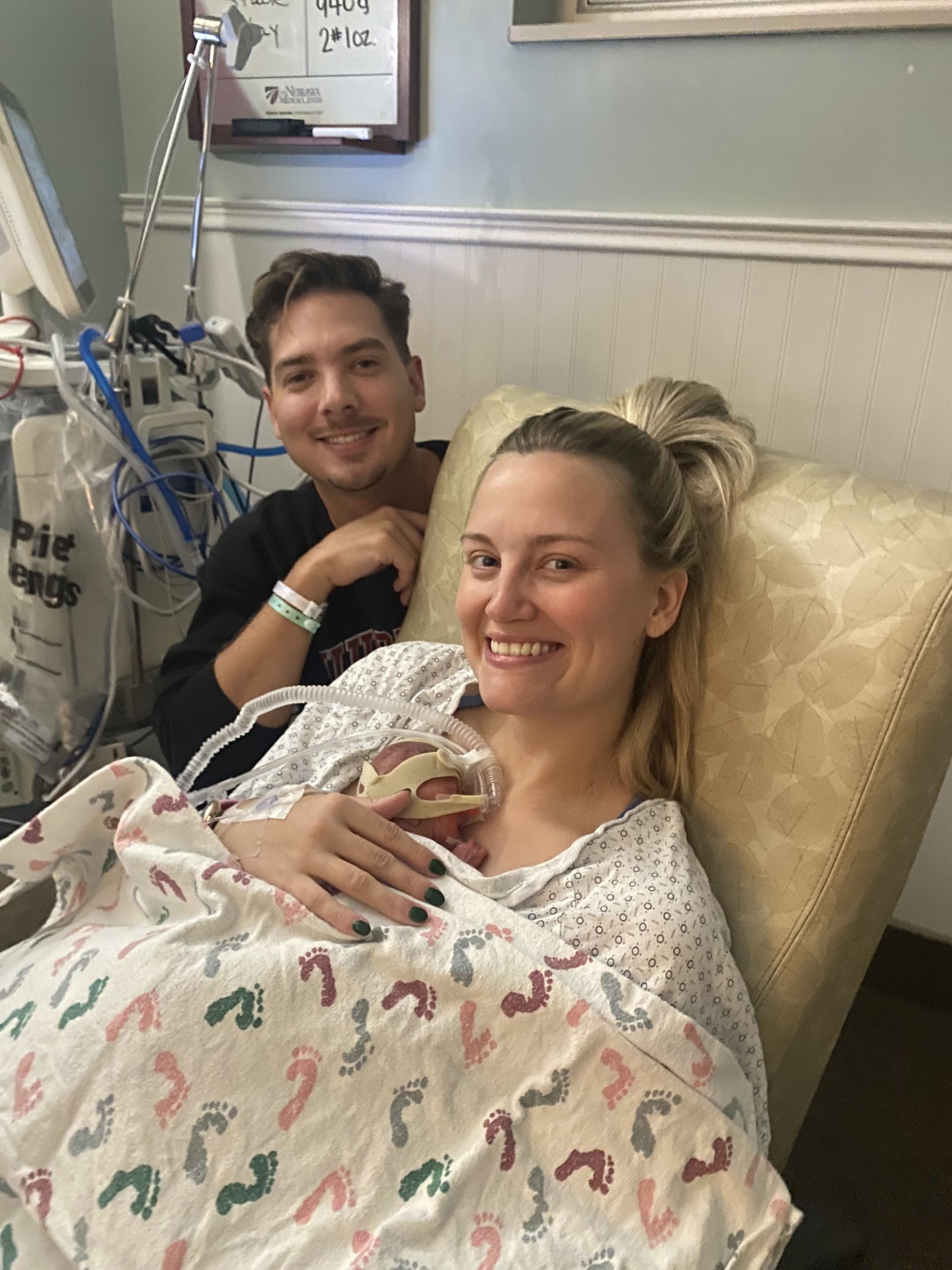
“And by 2 a.m. I had a baby,” Christensen says. “It was a whirlwind and like an out of body experience, even just thinking about it, it’s like someone else’s life or a movie.”
Baby Wesley was born weighing just over two pounds, the size of many of the babies Christensen cared for in her career.
“I was like I do this every day. This is fine,” she remembers telling herself. “Really had no concerns because I’ve sent this same baby home a million times.”
But it soon became clear Wesley wouldn’t be going home, as he grew sicker and sicker.
“He fought really hard,” says Christensen. Wesley was just 10 days old.
Coming back to work in the NICU wasn’t easy, but when she did, Christensen did it with new perspective.
“There has to be some reason that I’m in this position,” she thought. “Something has to come out of this.”
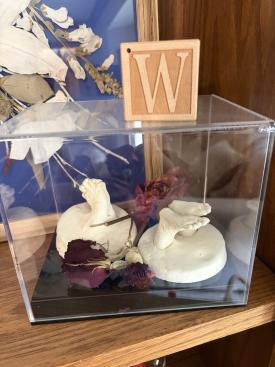
Christensen began working with the unit’s bereavement team. One of the ways the team helps grieving families is by creating molds of their baby’s hands and feet, giving them a permanent way to remember their child. She keeps Wesley’s plaster molds in a clear box, underneath a wooden block with the initial “W” inscribed.
“Wesley’s molds turned out really beautiful,” she explains. “But they are so incredibly fragile.”
Through Christensen’s experience, the NICU team worked to find a better way for parents to honor their babies. That involved partnering with the 3D Printing and Training Center at Clarkson College to find a better way to create the molds.
“Knowing that our work can bring comfort during one of the most difficult times in a family's life is both humbling and rewarding,” says Trish Weber, director of innovation Strategies for Clarkson College. “It reminds us that innovation is not just about technology, but about positively impacting people.”
For Christensen’s team, the project was personal.
“Within the NICU, coworkers often become much more than colleagues—we become family,” says Tara Boyer, NICU nursing professional development specialist, “We share in the joy of welcoming new lives and the heartbreak that sometimes comes with loss. Coming together to gather the funds needed for a 3D scanner became more than simply acquiring a piece of equipment. It became a way of supporting our families, honoring Wes, and creating something that could provide comfort to other families for years to come.”
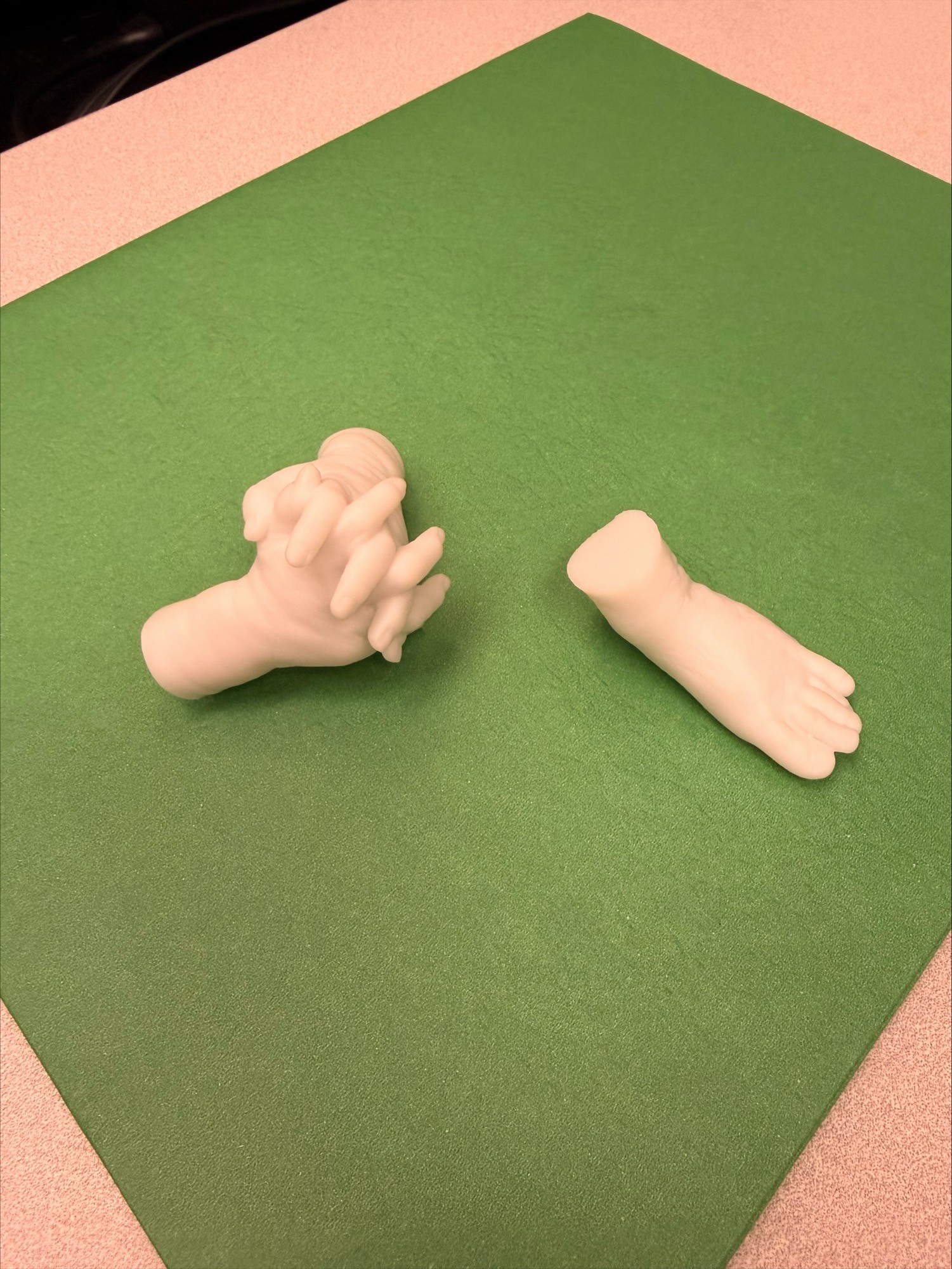
The 3D printing program, known as Tiny Treasures, allows the NICU team to present families with a more durable resin keepsake that doesn’t chip, crack, or break like plaster.
“Another advantage is the level of detail and consistency we can achieve. The digital workflow allows us to accurately capture and preserve tiny features that are especially meaningful to families,” says Weber. “In addition, because a digital file is created, a keepsake can be reproduced in the future if needed, providing families with an added level of reassurance that these tiny treasures can be preserved for years to come.”
Eighteen months after giving birth to Wesley, Christensen and her husband Quentin welcomed daughter Iyla. As she’s gotten back into the NICU routine, Christensen carries Wesley’s memory with her every day. And she’s grateful to have a tangible reminder of the time they shared.
“You can see all the little wrinkles and the little toenails,” she says. “It’s such an overwhelming emotional thing to have a piece of your baby. Wesley wasn't with us long, but this is proof that he was real and he was ours.”
And through her family’s experience, now others will have a reminder that will last forever.