Innovation Design Unit celebrates one year of transforming patient care
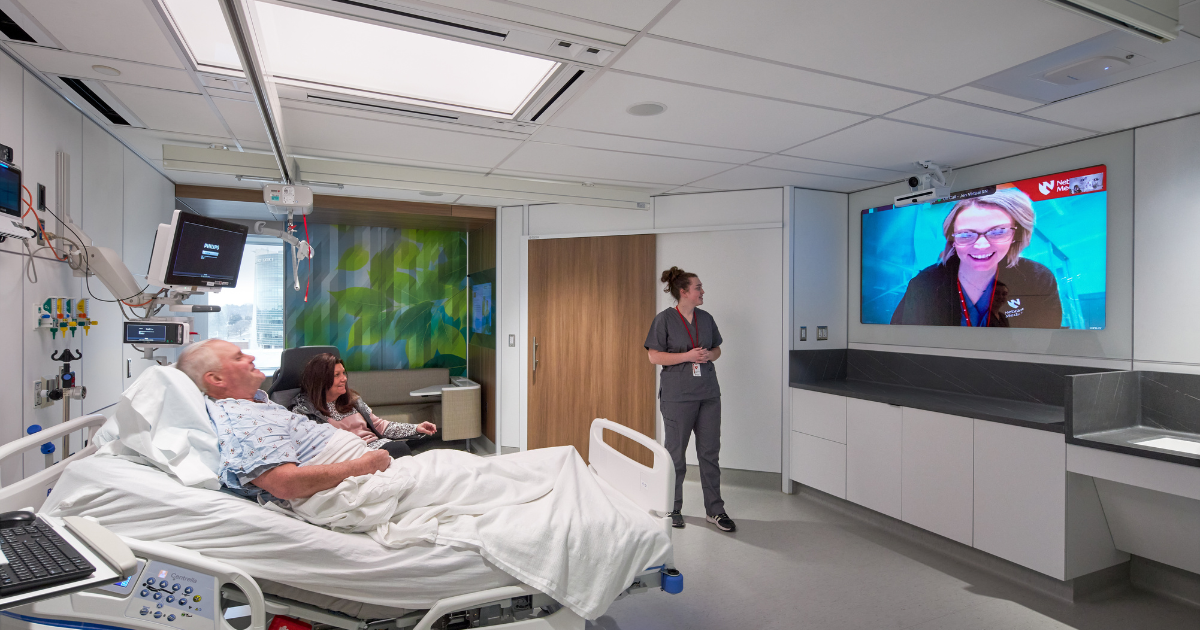
The Innovation Design Unit (IDU) opened its doors at the Nebraska Medical Center in January 2025. Since then, the 17-bed unit has become a living laboratory where technology, design and patient feedback shape the future of health care.
“The IDU is focused on a human-centered design,” says Bethany Lowndes, PhD, MPH, CPE, scientific director of the IDU. “We’re designing for the people working within that system, including the work that patients are doing to heal and recover.”
Technology allows patients to take control of their environment. They can adjust the room temperature, lighting and blinds with an iPad. They can view their care plan on a digital whiteboard, check when they last received pain meds and video call family members during provider visits.
“When patients come into the hospital, they may feel like they lose control over everything,” says Kara Tomlinson, DNP, MBA, RN, NEA-BC, executive director of System Care Delivery and Innovation. “We wanted to give control back to the patients and have them actively participate in their care.”
The unit has also tested new ways to keep patients safe and help staff work more efficiently. Virtual nursing allows a remote nurse to help the bedside care team with tasks like admissions, discharges and patient education. Ceiling lifts help staff safely move patients and even allow some patients to shower when they otherwise couldn’t.
“In our first week, we were able to get a patient into the bathroom to shower using the ceiling lift, which the patient was very appreciative of,” Dr. Lowndes said.
The rapid pace of learning in the first year has exceeded expectations.
“Technology is moving fast, but we’re also moving fast as an organization to lean in on technological advances to improve the care of our patients,” says Michael Hasselberg, PhD, chief transformation and digital officer. “The IDU is helping us set the blueprint for what health care in this country is going to look like.”
Looking ahead, the IDU will keep testing new ideas to improve patient care. For example, the team is exploring AI technology that can detect when patients might be at risk of falling and alert nearby staff members.
“The unit and program will continue to evolve with the rapid changes in health care. We owe that to our patients and the communities we serve,” Tomlinson says. “While this is a novel, cool space, it must also feel comfortable, safe and familiar. A place where patients can heal in dignity and confidence.”