How to achieve successful breastfeeding with your NICU baby
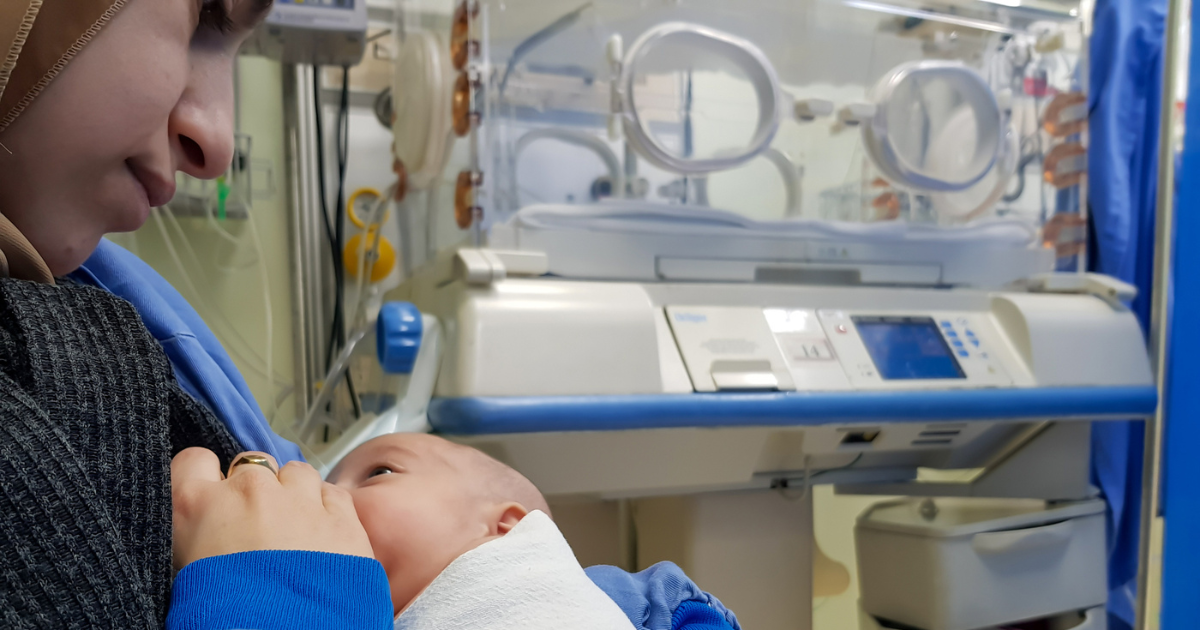
Breastfeeding offers numerous benefits for both new babies and their moms. If your baby starts life in the neonatal intensive care unit (NICU), you may be wondering how to give them the best start possible. Breastfeeding can provide that extra boost. Not only does breast milk provide the perfect balance of nutrition your newborn needs, but it also increases immunity, which reduces the risk of illnesses and diseases.
“Mothers who have premature babies or newborns with medical complications, may think they are not able to breastfeed,” says Valerie Deacon, BSN, RN, IBCLC (International Board-Certified Lactation Consultant), Nebraska Medicine NICU lactation consultant. “But with a little encouragement and instruction, it is very doable. We are there to support the family (moms, dads or partners) during their NICU stay to help make this process as easy and successful as possible.”
Even if mothers do not plan to breastfeed long-term, starting their newborn’s life with breast milk is valuable (even more so for premature babies). And just as important, mothers reap many benefits from breastfeeding as well.”
Breast milk changes with baby’s needs
“Breast milk is considered a live and active form of nutrition because it has live stem cells and antibodies in it that changes as your baby grows to meet their developmental needs,” says Teresa Lapham, RN, BSN, IBCLC, Nebraska Medicine NICU lactation consultant.
Colostrum, the nutrient-dense milk that is released the first few days after childbirth, has many protective antibodies that it acts like a vaccine, notes Lapham. “It is considered even more protective to baby than it is nutritious,” she says.
Breastfeeding benefits for babies:
- Provides important antibodies to boost immunity and protect against illnesses like ear infections, respiratory infections, diarrhea and preterm necrotizing enterocolitis.
- Has just the right amount of fat, sugar, water, protein and vitamins to meet baby’s changing needs.
- Improves health and function of upper gastrointestinal tract by priming it with good bacteria, which can reduce GI issues like colic, gas and constipation.
- Lowers the risk of diseases like obesity, diabetes, asthma and sudden infant death syndrome.
- Promotes brain and nervous system development.
- Improves overall better health outcomes for NICU babies.
Breastfeeding benefits for mothers:
- Speeds recovery from childbirth by helping the uterus contract and reducing vaginal bleeding.
- Improves bonding with the baby.
- Lowers the risk of postpartum depression.
- Stimulates the release of hormones that encourage relaxation and bonding.
- Is efficient, less time-consuming and free.
- Reduces the risk of breast cancer, ovarian cancer, type 2 diabetes and heart disease.
How to begin breastfeeding in the NICU
Most NICU babies are premature or have medical issues that may prevent them from breastfeeding early on. That’s where breast pumping comes in.
“We start the breastfeeding process on day one with a breast pump,” says Lapham. “The breasts must be stimulated to begin producing milk, so we encourage moms to pump within an hour after delivery or as soon as possible.”
Feeding NICU babies usually starts with oral care. This involves putting drops of mom’s colostrum onto a swab and twirling it inside the baby’s mouth. Unused colostrum is frozen for later use.
Once the baby begins sucking, they may advance to a pacifier dipped into colostrum or milk, or may even begin to attempt to nurse. If your baby is slow to develop the sucking reflex, a speech therapist can help encourage sucking along with the music therapist. This entails playing music while the baby sucks and stopping the music when they stop, resuming again when the sucking restarts. This helps to encourage sucking while also developing oral musculature.
Skin-to-skin contact
“Direct breastfeeding starts with skin-to-skin contact and is always promoted when possible,” says Deacon. ‘We encourage moms to hold baby skin-to-skin often, which can eventually lead to breastfeeding.”
Skin-to-skin contact promotes also bonding and encourages passive immunity. This is when good bacteria (the mother’s microbiome) is passed onto the baby, which has been shown to help to fight infections, explains Deacon. As the baby’s needs change, this close communication helps the mother’s body respond by producing antibodies needed for protection.
As early as 28 weeks, babies can begin practicing breastfeeding directly and may partially or fully breastfeed by 36 weeks.
Before the baby is ready to breastfeed on its own, mothers are encouraged to breast pump at least eight times a day to establish an adequate milk supply. “This can be a challenging time for mom,” notes Lapham. “Not only is this time-consuming, but it can be difficult to get a good supply without the natural stimulation of a nursing baby. We try to help moms get at least an hour of skin-to-skin contact with baby daily along with pumping, which will help stimulate breast milk production.”
Support for mothers
During this time, family and friends are very important and encouraged to help and support moms, says Lapham. “Mothers can feel stressed and overwhelmed and need whatever support and help they can get in caring for their baby. This might entail washing breastfeeding supplies and giving them breaks for sleep and rest.”
Stress can impact milk supply. Moms are encouraged to continue their pumping efforts and get rest and sleep. Some suggestions to ease stress when pumping include guided imagery or watching a favorite TV show. These distractions often help in the collection of more milk, notes Lapham.
For those moms who choose to continue breastfeeding long-term, the goal is to have baby and mom confident in breastfeeding as much as possible before they are ready to go home, says Lapham.
The connection between a mother and her newborn, especially in the first days and weeks, is vital for the baby’s physical and emotional development, and for the mother’s overall well-being. Breastfeeding and skin-to-skin contact are vital parts to nurturing this bond and giving NICU babies everything they need to thrive.
“We focus on supporting moms during their NICU stay to get them off to the best start possible in their breastfeeding journey,” says Deacon.
If your baby needs specialized care after delivery, Nebraska Medicine is here to guide and support your family every step of the way. Learn more about the Nebraska Medicine’s Newborn Intensive Care Unit.