College athlete to brain surgery patient: Shan’s story of resilience
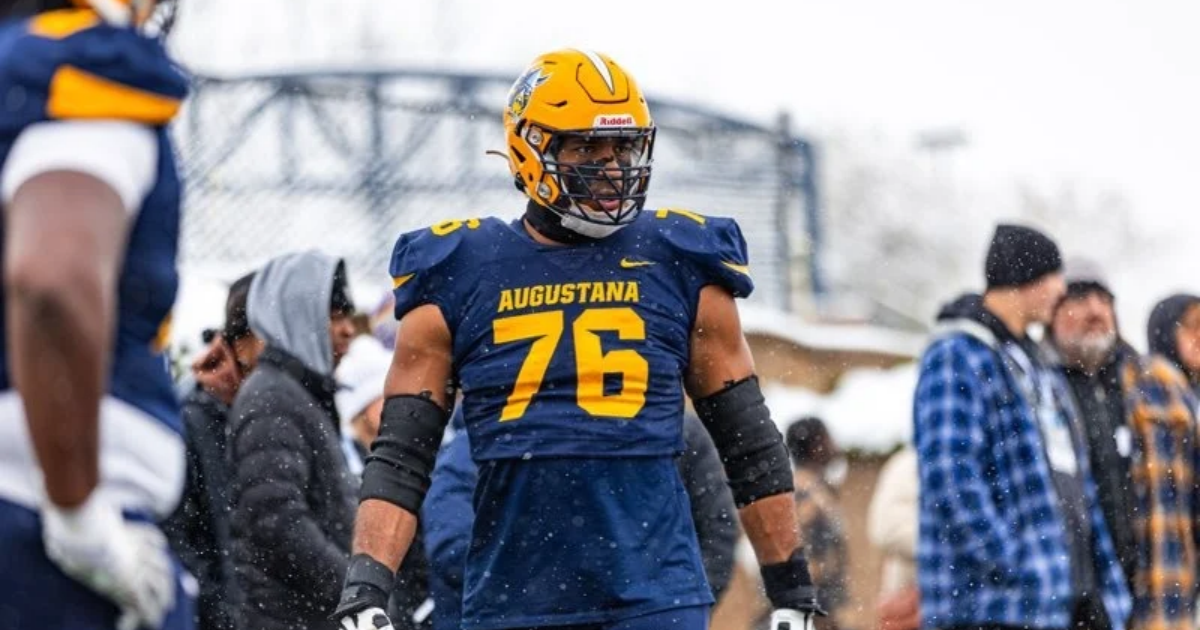
Shan Acharya of Omaha, Nebraska, has always been athletic. At 22 years old, he's a college football offensive lineman at Augustana University in Sioux Falls, South Dakota, and he knows how to face opposition.
Shan’s parents, Sunil and Mridula, moved from Kathmandu, Nepal, to the United States before Shan was born. “My Dad came to this country at 18 years old to work and get an education, having to adjust in every way to a new culture,” says Shan. “Both parents overcoming their challenges continue to inspire me every day. Whenever I think I have it rough, I realize how fortunate I really am.”
At 6 feet, 5 inches tall and over 300 pounds of muscle, Shan has always known he's bigger than most. In fact, he was the first person of full Nepalese descent to receive Division I football offers right out of high school.
“I’ve always known I was bigger than your typical Nepalese person,” recalls Shan. “Around eight years old, I really started to grow fast. At one point, I even wore the same shoe size as my dad. But I remember thinking I was just blessed with just a little something extra.”
It wasn’t until May 2025 that Shan noticed unusual symptoms while jogging with his girlfriend, Norah. Concerned, he made an appointment with a Sioux Falls physician, who ordered tests.
“Here I am, one day a high-performing collegiate athlete, now in total panic mode about my health,” Shan says. “One day I’m jogging, and the next we’re talking about a serious health issue. I didn’t know what to think.”
The lab results showed unusually high human growth hormone (GH) levels. Suspecting he needed more testing, Shan’s doctor advised him to see specialists who could dig deeper.
A medical journey leading him back to his Omaha birthplace
After his spring football season, Shan sought further evaluation with Nebraska Medicine. It was there that he received treatment for an 11-millimeter, GH-secreting pituitary tumor at the base of his brain.
The tiny pituitary gland is about the size of a pea, but it plays a major role in regulating hormones throughout the body.
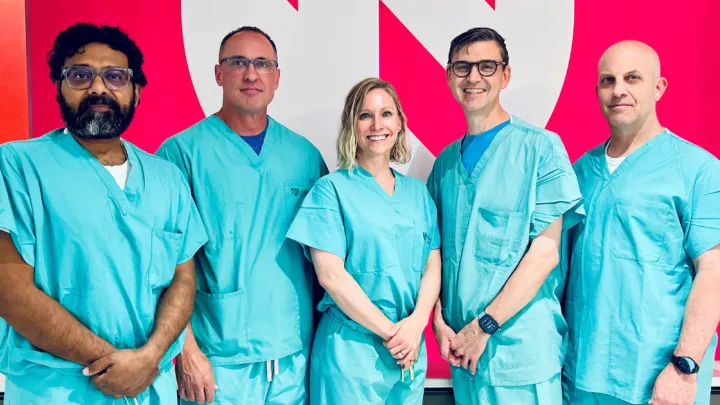
Endocrinologist Andjela Drincic, MD, whom Shan affectionately nicknamed his “second mother,” confirmed the hormonal imbalance and ruled out other pituitary dysfunction. After discussing treatment options, Dr. Drincic explained why surgery with otolaryngologist and head and neck surgeon Christie Barnes, MD, and neurosurgeon Daniel Surdell, MD, was his best option.
“About 60% of pituitary tumors don’t overproduce hormones,” Dr. Barnes adds. “Most are prolactinomas and, less commonly, growth hormone-secreting tumors. Shan’s tumor overproduced only growth hormone. Because there is no effective medical management for this type, surgery became our primary focus. Thankfully, we have much less invasive ways to accomplish this now, using a transnasal endoscopic approach.”
Surgery was scheduled for July 30, 2025.
“I was really nervous hearing that I needed brain surgery,” Shan recalls. “Mentally, I was struggling and fearing what would happen next. I never had to think about my health like this before. I couldn’t have made it through that dark time without my parents, my brother Soren, and Norah’s support.”
Shan’s football coaches also fully supported him and, wanting the best for him, had no expectations that he would play the following season.
Still, the diagnosis and surgery plan did not deter Shan. With his medical team’s approval, he spent an especially challenging summer juggling work, a weekly commute to Omaha for lab tests, and continuing weightlifting and workouts. He wanted to be there for his team, even though his health meant he wouldn’t play that year.
“I was really grateful my family instilled a work ethic in me and encouraged me to focus on controlling what I could control. It was because of this mindset that I didn’t give up and kept pushing during this tough time.”
Unfortunately, surgery day brought unexpected setbacks due to concerning platelet levels. To reduce risk, surgery had to be postponed so Shan could consult with a hematologist. After determining that he had a familial platelet disorder that could be managed, the team was better prepared to set a new surgery date.
Although frustrating in the moment, Shan is thankful the team postponed surgery.
“Looking back, I wasn’t emotionally ready anyway. I was a wreck and so scared. I think someone from above was looking out for me. Holding off was a good thing.”
“With surgery postponed, I still wanted to explore the possibility of playing football despite having a brain tumor, even if the idea seemed a little crazy at first,” Shan adds. After waiting for his doctors to review his labs and scans, he received the news two days before fall practices began. He was medically cleared to play the 2025 season if he felt comfortable. Without hesitation, Shan called his coaches to let them know he would be back on the field.
“It blows my mind that I could play the entire 2025 season with a brain tumor, but with the support of my doctors, family, and friends, I did it. We ended up being a top five team in the country that season.”
Brain surgery, recovery, and a new perspective on life
After the football season, the new surgery date arrived on Dec. 10, 2025. Dr. Barnes and Dr. Surdell worked together to remove the tumor by opening the sinuses through the nose to access the pituitary gland. Achieving a biochemical cure, they successfully normalized Shan’s GH levels with no complications.
“We knew Shan was understandably anxious and concerned about playing football his senior year, but everything went as planned,” adds Dr. Barnes. “He’s a fun guy–nicknaming me the “cool auntie.” He’s very grateful, respectful, and loves his family and his team. We are so happy with his successful outcome.”
One of the biggest lessons Shan says he learned through his journey is to never take anything for granted.
“The initial recovery days were tough, but the staff was incredible during those five days in the Neuro ICU. Everyone, from the lab techs to the nurses, was so patient and treated me like family. They do so much unseen work and deserve so much credit – they reminded me of an offensive line!”
By Dec. 15, Shan went home, just in time to celebrate Christmas with his family. A month later, he headed back to school.
Dr. Barnes was impressed by Shan’s great sense of personal accountability and hard work. Although weight and workout restrictions limited him for several months, Shan showed up for his team anyway and did what he could.
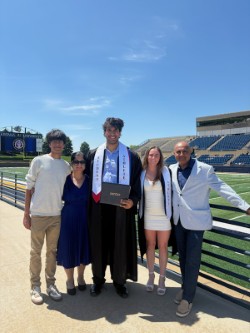
Around March, he returned to spring practice, grateful he could play for his senior year. On top of that, Shan earned his undergraduate degree on time.
“I used to think that the things in life I should feel fortunate for were getting to play college football or getting a college degree, which are substantial parts of my life,” Shan says. “But I learned from this experience to be more grateful for the little things, like being able to open my eyes every morning or walk on my own. Nothing gives perspective like going through difficult things and seeing that your situation could always be worse. I left the hospital with a brand-new perspective on life and never want to take life for granted. The other things? Those are just the cherry on top.”
Thankful for the past. Hopeful for the future.
Shan credits Norah and that jogging session with setting things in motion that ultimately led to finding the tumor. He’s especially grateful for everyone who cared for him throughout his medical journey.
 The Nebraska Medicine Skull Base Surgery Program is the only one in the region focused entirely on this part of the body. According to Dr. Barnes, pituitary tumors are relatively common, and most are benign. “But when they cause symptoms, it’s important to have a multidisciplinary team of experts looking out for you to ensure the best outcome.”
“Dr. Barnes, Dr. Surdell, Dr. Drincic and their teams are my miracle workers,” Shan adds. “No one should have to go through something like this, but I’m so glad I could walk through it with their guidance. So many people were invested in my care; I’m amazed at how blessed I’ve been throughout.”
Shan’s follow-up appointments have been going well. Nearly a year out from surgery, he continues to feel good. After concluding his football career this season, he looks forward to graduating again, this time with an accelerated MBA.
As to Shan’s plans for the future? “I want to begin my career and do all the grown-up things, but more importantly, I want to be a light for others. I want to encourage people to stay in the fight and remember who they are. Setbacks are discouraging, but nothing has ever beaten the strength of the human spirit.”