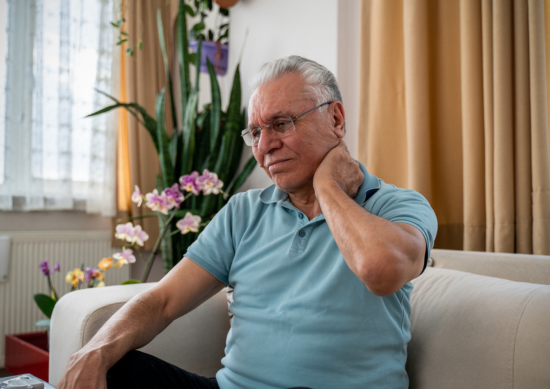
Chronic pain remains one of the most complex and costly conditions physicians manage. Patients often cycle through imaging, procedures, medications and specialist visits with little sustained improvement. The Nebraska Medicine Chronic Pain Management Program was designed specifically for this population—patients whose pain persists despite traditional treatment and whose needs extend beyond a single specialty.
The program takes a comprehensive, interdisciplinary approach that integrates physical therapy, psychology, nursing and physician oversight. Rather than focusing on a single intervention, the team addresses the full biopsychosocial context of pain.
“It is managing chronic pain through a holistic lens rather than just the biomedical model,” explains psychologist Meghan Fruth, PsyD. “We’re an entire team working together rather than just one provider providing care.”
Why chronic pain requires a different model
Acute pain and chronic pain are fundamentally different clinical entities. While acute pain typically resolves with tissue healing, chronic pain often persists long after structural recovery. For these patients, central sensitization, fear-avoidance behaviors and psychosocial factors frequently perpetuate symptoms.
From a rehabilitation standpoint, traditional approaches can be ineffective if they fail to address those drivers.
“When treating chronic pain compared to acute, you have to go a lot slower than you would think,” says physical therapist Airon Seitz, DPT. “Yes, they might get stronger or more flexible, but that alone doesn’t actually achieve what many patients are wanting.”
Patients with chronic pain commonly develop fear of movement, anticipating that activity will worsen symptoms. The program emphasizes graded exposure to movement paired with education about pain physiology and nervous system sensitization.
“We help them understand nothing is broken,” Seitz explains. “We change it from a perceived threat to, ‘Yes, I hurt, but I can still move.’”
Structure of the program
The four-week outpatient program runs Monday through Friday from 8 a.m. to 3:30 p.m. Patients participate in group education, individualized therapy and supervised exercise.
Each referred patient undergoes multidisciplinary screening evaluations in nursing, psychology and physical therapy to determine appropriateness and readiness for participation.
The program’s daily structure is intentional. Consistency allows patients to build sustainable habits and reinforce behavioral change.
“They’re here every day for about 20 days,” Seitz notes. “They’re completing exercises, doing their workouts, and it shows they can be consistent. They’re feeling better when they do it.”
Group participation also creates peer accountability and support, which can significantly improve engagement and adherence.
What makes this program different
Unlike procedure- or medication-focused pain management models, the Nebraska Medicine program centers on functional improvement and self-management skills rather than elimination of pain.
“We’re focused on the management part of it,” says Dr. Fruth. “There’s not going to be a surgery or magical medication that makes it all go away. We’re looking at the whole person—physically, mentally and socially.”
The goal is not to cure, but to restore quality of life.
“We are not a fix-your-pain program,” Seitz emphasizes. “We’re here to help patients with chronic pain function in a way where they feel happier and more fulfilled.”
This distinction is critical for referral success. Patients who enter expecting complete pain elimination may struggle with engagement, whereas those motivated to improve function tend to achieve better outcomes.
Indicators a patient may benefit
Physicians often ask when referral is most appropriate. Several clinical scenarios suggest a patient may be a strong candidate:
- Pain lasting longer than six months.
- Limited progress despite standard therapies or procedures.
- Fear of movement or avoidance behaviors.
- Repeated health care utilization without sustained relief.
- Patient interest in non-procedural management approaches.
Patients should also be physically able to participate in active therapy. Baseline functional requirements include walking five consecutive minutes, climbing a flight of stairs and getting up and down from the floor.
Certain situations may warrant delaying referral, such as active suicidality, unmanaged self-harm behaviors or major safety concerns that would limit safe participation.
Clinical outcomes and benefits
While individual goals vary, measurable improvements often emerge during the program. Patients may demonstrate increased range of motion, improved endurance and reduced muscle guarding within weeks.
“By the second week, you’ll see them moving freer and relaxing their body instead of holding tension,” Seitz says.
Psychological outcomes are also significant. Screening data frequently shows reductions in depressive symptoms and emotional distress after completion.
“We typically see a significant decrease in mental health symptoms,” Dr. Fruth reports.
Another key outcome is improved health care utilization. The program equips patients with practical skills to manage pain flares and daily challenges, reducing reliance on emergency visits or repeated consultations.
“We want to make healthcare utilization more effective and efficient for chronic pain patients,” Dr. Fruth says, “so they’re not constantly going from doctor to doctor.”
Evidence from similar interdisciplinary programs suggests participants can decrease overutilization of medical services for chronic pain, a benefit relevant to both patient well-being and system-level costs.
Why interdisciplinary care matters
For patients with chronic pain, no single discipline can address every contributing factor. The program’s team-based structure allows real-time collaboration between providers.
“If I notice anxiety with certain movements, I can talk to their psychologist,” Seitz explains. “That collaboration helps us meet each patient’s needs.”
Daily team meetings ensure coordinated care planning and allow adjustments based on patient progress or barriers.
This integrated model mirrors growing clinical consensus: Chronic pain is rarely purely physical, purely psychological or purely social. It typically involves all three.
Setting expectations for referral
One of the strongest predictors of success is patient readiness. Providers can help by discussing program goals before referral.
“I would ask any patient considering this program, ‘Is this something you want to do?’” Seitz advises. “The person who wants to be here is the one who succeeds.”
Even if patients are uncertain, referral can still be worthwhile. The team can screen candidates, provide education and help them decide whether participation is appropriate.
“Sometimes a patient isn’t ready yet,” Seitz notes, “but a year later they call back and say, ‘I think I’m ready now.’”
Referral and next steps
The Chronic Pain Management Program has been in operation for more than 50 years and continues to evolve alongside emerging research and clinical practice.
For patients whose pain has become chronic, complex and resistant to traditional approaches, referral to an interdisciplinary program may offer a meaningful next step — one focused not just on reducing pain, but on restoring function, independence and quality of life.
Physicians interested in referring a patient or learning more can contact the program directly at 402.559.4364. The team is also available to meet with departments to provide education and discuss referral pathways.