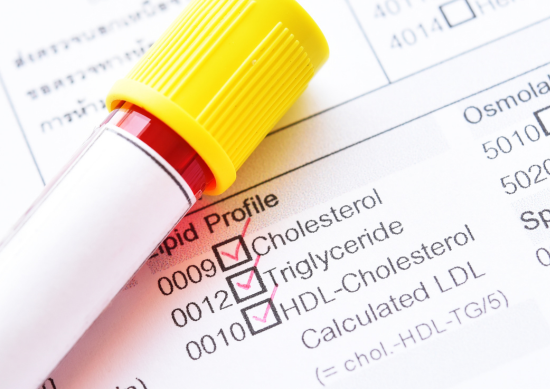
A lipid panel remains a foundational tool for determining cardiovascular risk and treatment planning. While the test itself is simple, interpreting its components--and applying evolving guidelines—often requires a nuanced clinical approach. Nebraska Medicine endocrinologist Clifton Davis, MD, shares insights on how providers can use lipid results more effectively.
Key components of a lipid panel and what they mean
A standard lipid panel includes:
- Total cholesterol.
- Low-density lipoprotein cholesterol (LDL-C).
- High-density lipoprotein cholesterol (HDL-C).
- Non-HDL-C.
- Triglycerides.
These metrics provide the basis for diagnosing dyslipidemia, assessing cardiovascular risk (ASCVD) and monitoring a patient’s response to lifestyle or pharmacologic therapy.
- Elevated LDL-C and triglycerides, along with low HDL-C, are associated with higher ASCVD risk.
- The panel is also essential for evaluating the effectiveness of lipid-lowering therapy and deciding when intensification is necessary.
How lipid values guide treatment decisions
For primary prevention, clinicians use lipid values with global risk factors to estimate a patient’s likelihood of experiencing a cardiovascular event. This risk estimate helps set individualized goals for diet, activity and medication.
Certain lipid abnormalities can also suggest specific metabolic or genetic disorders:
- Very high triglycerides: increased concern for pancreatitis or fatty liver disease.
- Low HDL-C and high waist circumference: can show insulin resistance or metabolic syndrome.
- Very high LDL-C in younger patients: raises concern for familial hypercholesterolemia.
“These patterns give us clues,” says Dr. Davis. “They help us identify who may need more aggressive intervention or further evaluation.”
Why interpretation varies
Age, sex and comorbidities significantly influence clinical decision-making when it comes to lipid value interpretation.
“Young patients with elevated LDL-C are more concerning because prolonged exposure accelerates plaque formation,” says Dr. Davis.
Before menopause, estrogen confers a more favorable lipid profile in most women. After menopause, this can shift. Total cholesterol, LDL-C and triglycerides typically rise, and HDL-C can become less protective.
Conditions such as diabetes, hypertension, chronic kidney disease, smoking and inflammatory diseases increase ASCVD risk. For these patients, LDL-C targets should be lower with a more aggressive therapy.
“Very high LDL-C at any age or a strong family history should make you think about genetic dyslipidemia,” says Dr. Davis.
Guideline trends
Screening intervals vary slightly, but most guidelines recommend follow-up testing within four to 12 weeks of initiating therapy and then every three to 12 months.
- ACC/AHA guidelines prioritize percentage reduction in LDL-C.
- ESC/EAS guidelines set specific LDL-C targets by risk category.
With increasing risk, the thresholds drop.
“For the highest-risk patients, those with prior cardiovascular events, we’re targeting LDL-C levels as low as 55 mg/dL,” says Dr. Davis.
Standard lipid panel limitations
A standard panel often uses the Friedewald equation to estimate LDL-C. This formula becomes unreliable in patients with elevated triglycerides or metabolic syndrome.
“This is where LDL-C, direct LDL-C and apoB can start to diverge,” says Dr. Davis. ApoB, which measures particle numbers directly, can better reflect atherogenic burden in these patients.
When to consider advanced testing
Apolipoprotein B (apoB)
ApoB is especially helpful when LDL-C appears normal despite clinical risk factors.
“Discordance between LDL-C and apoB is common in metabolic syndrome, diabetes or hypertriglyceridemia,” says Dr. Davis.
Lipoprotein(a) [Lp(a)]
Lp(a) is genetically determined and associated with ASCVD and calcific aortic valve disease. Its pro-inflammatory and pro-thrombotic properties make it an important enhancer of cardiovascular risk.
High-sensitivity C-reactive protein (hsCRP)
hsCRP can identify patients with elevated inflammatory risk.
“It’s particularly useful when LDL-C isn’t elevated, but the clinical picture suggests higher risk,” says Dr. Davis.
Fasting vs. non-fasting panels
For most adults, a non-fasting lipid panel is adequate for baseline assessment and risk stratification.
A fasting panel is preferred when:
- Triglycerides are elevated significantly.
- Severe hypertriglyceridemia is suspected.
- Evaluation for familial chylomicronemia is needed.
“In these cases, fasting helps us understand the true triglyceride burden, not just the effect of a recent meal,” says Dr. Davis.
To support your patients’ cardiovascular risk management call 402.559.8700 or fax referrals to 402.559.5080.