ACL tears affect over 250,000 people annually in the U.S. with traditional reconstruction remaining the gold standard. However, a new approach is changing how orthopaedic surgeons think about ACL management: the BEAR procedure (bridge-enhanced ACL restoration).
What makes BEAR different?
Unlike traditional reconstruction that involves harvesting grafts and drilling bone tunnels, BEAR takes a biologic approach to healing. The procedure uses a specialized collagen scaffold to enhance the body’s own healing potential, allowing the native ACL to repair itself.
“ACL tears are devastating injuries for athletes of any age,” says orthopaedic surgeon Matthew Tao, MD. “We are always looking for ways to improve and help our patients recover better and more efficiently. I am very excited that we have a new option in ACL surgery that allows for a less invasive, more biologically friendly approach.”
Developed initially in Boston and extensively researched over the past decade, BEAR recently received FDA approval for patients over age 14, marking a significant milestone in ACL treatment.
Clinical outcomes and recovery
Early clinical trial data (BEAR 1 and 2) demonstrates outcomes comparable to traditional ACL reconstruction, with similar rehabilitation timelines. While long-term data is still emerging, initial results are promising for this biologic approach.
The science behind biologic repair
Understanding why previous ACL repair attempts have failed historically helps explain BEAR’s innovative approach.
“Healing inside of joints is challenging because of the joint (synovial) fluid,” Dr. Tao says. “Historically, this was the main issue with ACL repair – the ligament just didn’t heal reliably. So, the premise for BEAR is to offer a way to enhance the body’s own ability to heal the native tissue.”
The BEAR scaffold addresses this fundamental challenge by providing a biological framework that overcomes the inhibitory effects of synovial fluid on natural healing.
Real-world impact: A case study
Dr. Tao shares a recent success story:
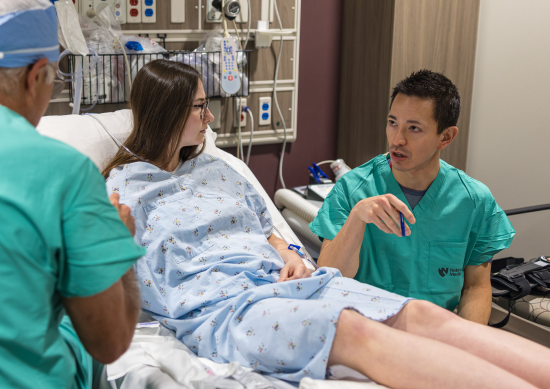
“I have a patient who is very active and tore her ACL after a fall on the ice,” Dr. Tao says. “The patient is from several hours away and initially got worked up locally. She did quite a bit of research on BEAR on her own and elected to come here to explore further.”
After reviewing the patient’s MRI and overall situation, Dr. Tao determined she was an excellent candidate.
“The patient was really engaged in the process and was a perfect model of shared decision making,” Dr. Tao says.
The outcome speaks to BEAR’s potential: “Although there is still some rehab to do, the knee motion, swelling and stability are all normal. The patient was so happy to do BEAR, and while it’s still early in recovery, she is very pleased with her decision.”
Referral considerations
- Age: Dr. Tao typically prefers BEAR patients to be over 25 years old.
- Timeline: Surgery within two months of injury for optimal healing potential.
- Tear location: Ideally tears directly off the femur.
The two-month window for optimal tissue health makes early specialist consultation essential.
Why consider Nebraska Medicine?
Nebraska Medicine providers are pioneers in minimally invasive ACL repair techniques, offering patients access to the latest advances in orthopaedic care. The multidisciplinary approach ensures comprehensive evaluation and personalized treatment planning for each patient.
For referrals or consultations regarding BEAR candidacy, call 402.559.8000 to discuss this innovative treatment option with your patients who have suffered acute ACL injuries.