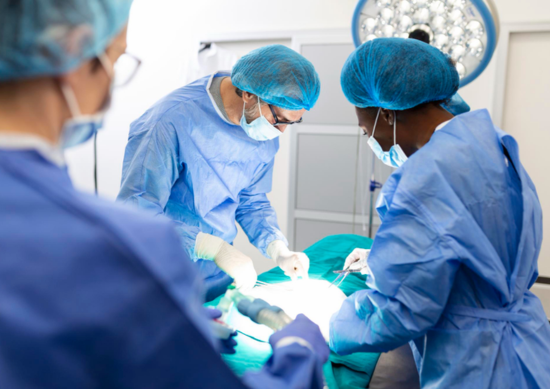
Mohs surgery is an advanced surgical technique that removes cancer cells under local anesthesia while allowing surgeons to avoid healthy tissue to minimize scarring.
“During the single-day surgery, we remove a layer and test in real time while the patient waits,” says board-certified dermatologist and fellowship trained Mohs surgeon Vanessa Voss, MD. “We repeat the process and look at the margins until the skin cancer is fully removed, and if it is, we perform reconstruction. We are among the few centers that use an immunohistochemical stain (MART-1) that makes melanoma cells visible during surgery. This helps remove the entire tumor, lowering the risk of cancer recurrence.”
The procedure has the highest cure rates, the best real-time margin control and excellent cosmetic results for skin cancer treatment. While a risk for recurrence remains, the Mohs surgery technique has a 97% to 99% cure rate.
Reconstructive surgery is performed after a Mohs procedure to help rebuild affected facial features including complex areas such as the nose, lips or eyes. Nebraska Medicine board-certified Mohs surgeons have extensive training in reconstructive surgery for skin cancer and work to achieve the best possible cosmetic results. They may also work in conjunction with other surgical specialists, such as facial plastic surgery, oculoplastics, otolaryngology and general plastic surgery when needed.
Indications for Mohs surgery:
- High-risk locations, including the face, head, neck, hands, feet, genitals and shins.
- Aggressive or high-risk histologic subtypes anywhere on the body.
- High-risk features such as rapid growth, large size over 2 cm or immunocompromised patients.
- Select rare tumors such as dermatofibrosarcoma protuberans (DFSP), atypical fibroxanthomas (AFX), adnexal or spindle cell tumors, or others, regardless of location.
“Patients may ask about Superficial Radiation Therapy (SRT),” says Dr. Voss. “National cancer guidelines do not recommend radiation treatment as a first-line treatment for skin cancer. Mohs remains the gold standard. Radiation is reserved for inoperable tumors; patients unfit for surgery or select adjuvant contexts within a multidisciplinary plan.”
Mohs AUC app: Guiding PCP referral decisions and appropriateness
The Mohs Appropriate Use Criteria (AUC) app is a helpful, evidence‑based tool for primary care physicians, providing a structured way to assess when Mohs surgery may be appropriate. The app generates a score from 0 to 10 to support more informed referral decisions and improves alignment with established clinical criteria.
Interpretation of results:
- 7 or higher: Mohs strongly recommended.
- 4 to 6: Mohs may be appropriate (dependent on other factors).
- 3 or lower: Mohs surgery is generally not recommended.
Expert resource for rare and complex skin cancer treatment
Nebraska Medicine Mohs and reconstructive surgeons are double board-certified in dermatology and Mohs micrographic surgery. During intensive, highly competitive American College of Mohs Surgery Fellowships, surgeons receive a year of hands-on training from highly qualified surgeons. As the state's only ACGME-accredited Mohs fellowship program, Nebraska Medicine is dedicated to training the next generation of specialists.
Weekly meetings review complex cases and align on a coordinated treatment plan. A multidisciplinary tumor board brings together specialists in Mohs surgery, radiation oncology, head and neck surgery, plastic surgery, oncology, radiology and dermatopathology to guide care for rare or complex conditions.
After surgery, the Mohs team manages acute postoperative care, wound healing and scar care until healing is complete. Patients also participate in the Mohs surgery recovery aftercare plan.
For patients outside Omaha, the team coordinates to find follow-up care closer to home. Patients are referred to a local dermatologist for ongoing full-body skin checks, as a diagnosis of skin cancer is a key risk factor for future cancers.
To refer a patient for Mohs surgery or have questions:
Call 402.552.7928, fax 402.552.3239 or contact us via dermatology@nebraskamed.com. For urgent referrals, please let the scheduler know this is a priority patient request.