Brachial plexus injury: How nerve damage affects the arm
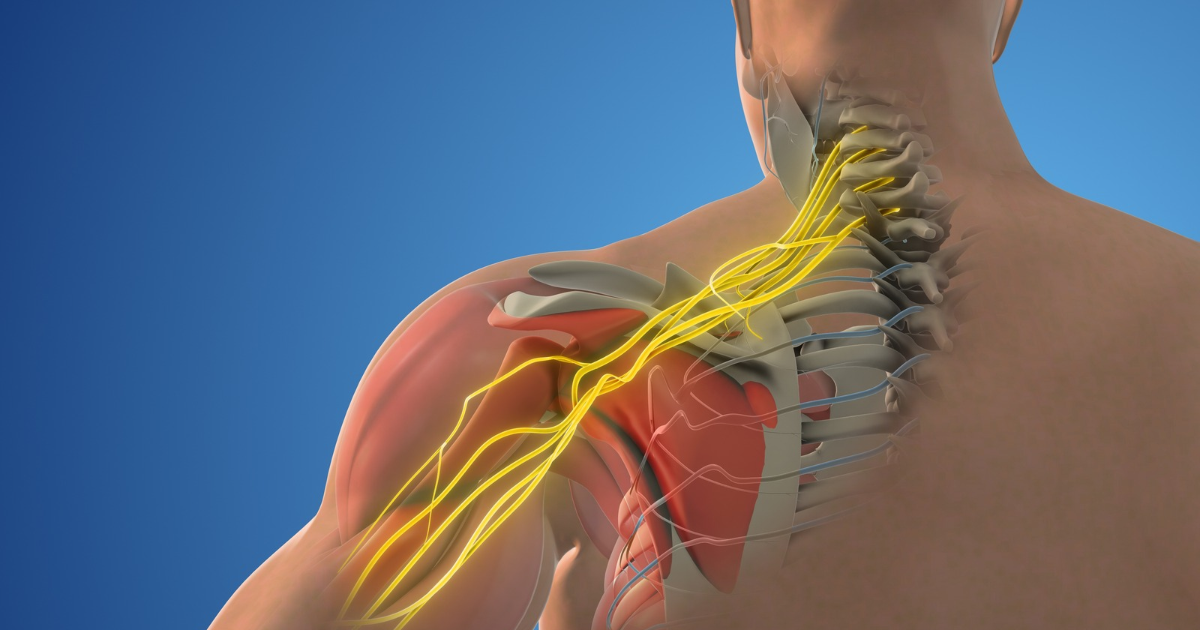
Brachial plexus injuries can be tricky to diagnose. Because this area’s nervous system runs from the spinal cord to the entire upper limbs, an injury can cause symptoms ranging from mild to severe.
Brachial plexus injuries can happen at any age, including at childbirth.
The brachial plexus area
“Brachial” refers to the arm, and “plexus” refers to the many nerves that provide sensation and movement to muscles. Brachial plexus nerves originate from the spinal cord in the neck. This nerve bundle carries sensory and motor signals to the upper limbs.
“Everything that controls your upper extremity comes from five spinal nerve levels that eventually form the brachial plexus,” explains hand and plastic surgeon Kai Yang, MD. “The nerve roots come out from the spinal cord, crisscross from the neck down to the shoulder and upper arm. They provide sensation and motor function to the arms, forearm, wrist, hands, and fingers.”
Brachial plexus injury types and causes
Because each terminal nerve serves a specific function, the type of injury depends on the affected nerve’s location and the type of injury. This dictates which symptoms you may experience.
The severity of the injury depends on the amount of force involved, how many nerves were affected, and how severely each was injured.
Types of injury can include:
- Blunt trauma, such as vehicle accidents, falls, direct blows, or contact sport collisions
- Sharp trauma, such as gunshot or knife wounds. Sometimes, a brachial plexus injury is discovered after treatment for life-threatening injuries.
- Iatrogenic injury, such as complications from spine surgery or even radiation therapy
- Mass effect, such as tumors that grow or put pressure on the brachial plexus nerves
- Stretch injuries at birth due to traction during delivery, known as brachial plexus birth palsy
Brachial plexus diagnosis and treatment window
Because brachial plexus injuries can have many causes, seeing a specialist with the right training for proper monitoring and, if needed, surgical intervention is crucial.
Most common symptoms
- Nerve pain in your arm, hand, or wrist
- A limp arm or loss of muscle control in your arm, hand, or wrist
- Inability to move or use your arm or hand
- Loss of feeling, tingling, or numbness in your arm or hand
“There is a critical treatment time window,” says Dr. Yang. “Surgical outcomes are poor after around nine months, so getting an early diagnosis and specialized referral is essential. It's important to check for proximal nerve (brachial plexus) involvement when seeing a doctor.”
Symptoms can resemble other conditions, such as a rotator cuff tear, joint problem, muscle or tendon tear, or milder nerve-related issues such as carpal tunnel.
Electromyography (EMG) is a key diagnostic tool that often reveals the injury and prompts a referral.
“The problem we see is that patients are often misdiagnosed or bounced around by doctors unfamiliar with these relatively less common injuries,” adds Dr. Yang. “Often patients end up seeing multiple specialists, are told they have a brachial plexus injury, then referred to a specialist who may or may not be trained to treat the injury.”
Treatment strategy
The goal of treatment is to relieve pain and restore as much sensory and motor function as possible.
- Initially following brachial plexus injury, doctors may observe for spontaneous recovery, as some injuries can heal on their own. An EMG and physical therapy can show whether recovery is occurring or if surgery may be needed.
- The surgical window is generally three to nine months; the optimal time window for nerve transfer surgeries
“Nerve regeneration is slow, so waiting too long can result in poor outcomes,” says Dr. Yang. “We consider surgery if spontaneous recovery plateaus and EMG confirms lack of nerve regeneration. Surgery is often performed at the plexus level, and nerve transfers may be performed around the shoulder, upper back or arm. However, other procedures around the forearm, wrist and hand may also be needed to achieve optimal outcome. During surgery, part of a working nerve is transferred to re-innervate a non-working nerve and respective muscle.”
Recovery and outcomes
- Recovery is a long process, often taking one to two years. Changes may not be noticeable for the first seven months or so.
- Untreated injuries can result in permanent loss of function
FAQ
What is the brachial plexus, and what does it do?
The brachial plexus is a network of nerves that originates from five spinal nerve levels in the neck. These nerves extend through the shoulder and upper arm, carrying signals between the spinal cord and upper limbs. They control movement and sensation in the arms, forearms, wrists, hands and fingers. An injury to this nerve network can affect both muscle function and feeling.
What causes a brachial plexus injury?
Brachial plexus injuries can result from vehicle accidents, falls, direct blows, contact sports or penetrating injuries, such as gunshot or knife wounds. They may also occur following certain medical treatments, including surgery or radiation therapy, or when tumors put pressure on the nerves. Stretch injuries can also happen during childbirth. The severity depends on the force involved and which nerves are affected.
What are the symptoms of a brachial plexus injury?
Common symptoms include nerve pain, weakness, numbness or tingling in the arm, wrist or hand. More severe injuries may cause a limp arm, loss of muscle control or an inability to move the affected limb. Symptoms vary depending on the nerves involved and the extent of the damage. Because they can resemble other conditions, such as rotator cuff injuries or carpal tunnel syndrome, specialized evaluation is important.
When should a brachial plexus injury be treated?
Early diagnosis and referral to a specialist are important because brachial plexus injuries have a limited surgical treatment window. According to Nebraska Medicine hand and plastic surgeon Kai Yang, MD, surgery is generally considered within three to nine months of the injury. Outcomes may be poor after approximately nine months. Doctors may initially monitor spontaneous nerve recovery through electromyography (EMG) testing and physical therapy before determining whether surgery is needed.
How long does it take to recover from a brachial plexus injury?
Recovery from a brachial plexus injury is a lengthy process, often taking one to two years. Because nerve regeneration happens slowly, noticeable changes may not occur for the first seven months or so. Some injuries recover on their own, while others require surgery to restore nerve and muscle function. Without appropriate treatment, severe injuries can lead to permanent loss of function.
A comprehensive team for the diagnosis and treatment of brachial plexus injuries
Nebraska Medicine hand, wrist, and peripheral nerve specialists care for patients with complex nerve injuries and upper extremity problems. The team, which includes certified hand therapists, APPs, and physicians, ensures accurate diagnosis, treatment, and appropriate referral, even if the issue is not brachial plexus-related.
Restoring function and form to your arms, hands, and wrists is our priority. If after an exam the issue isn’t brachial plexus-related, we will refer you to the right specialist for your condition.