How to treat a burn at home: First aid tips and when to see a doctor
A splash of boiling water. Accidentally touching a flat iron. Grabbing a hot pan. A burn can happen in seconds. Many can be treated safely at home, but knowing what to do (and what not to do) can make a difference in how your skin heals.
“The first few minutes after a burn are important,” says Nebraska Medicine APRN Jason Gillespie. “Cooling the burn appropriately and avoiding common home remedies can help reduce tissue damage and support healing.”
Here’s how to care for a burn at home, recognize signs of infection, and know when it’s time to seek medical care.
What are the most common household burns?
About 75% of burn injuries in the United States happen at home. The most common household burns include:
- Scalds from hot water, coffee, soup, or cooking liquids
- Contact burns from hot pans, ovens, hot hair tools, or stovetops
- Flame burns from candles, grills, or fireplaces
- Sunburns
- Chemical burns from household cleaners
- Electrical burns from damaged cords or outlets
Scald burns are especially common with young children, while contact burns often happen during cooking or household chores.
What should you do after a burn?
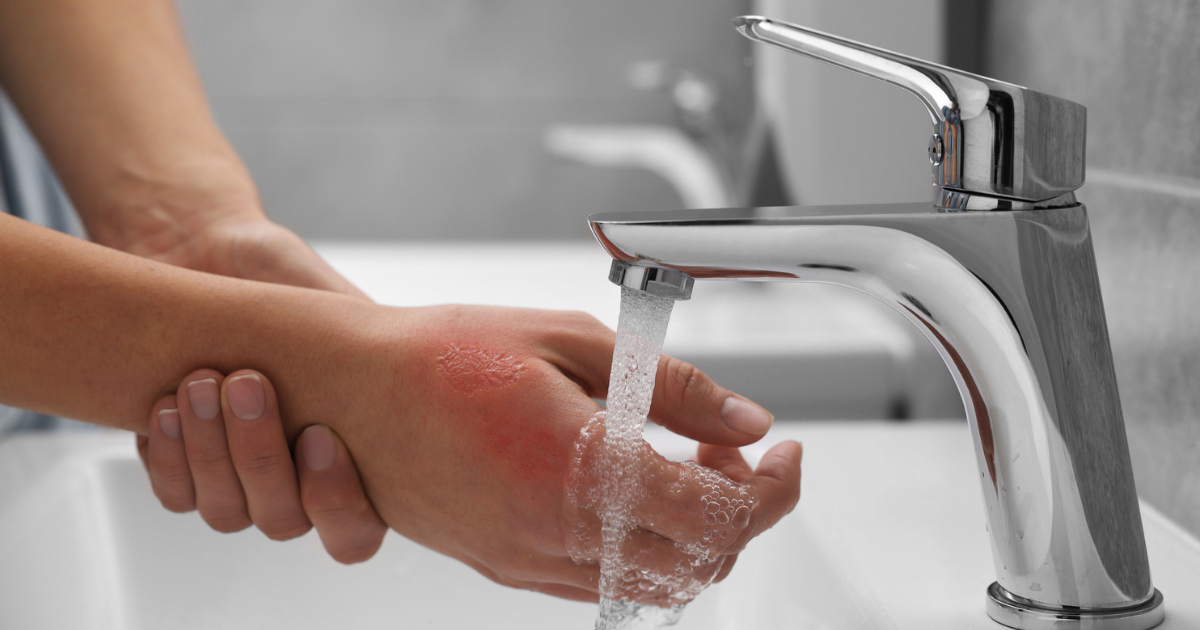
The best first aid is simple: Place the burned area under cool running water for 20 minutes. Ideally, this should begin as soon as possible and within three hours of the injury.
“Cool running water helps remove heat from the skin and can limit the depth of the burn,” says Gillespie. “It’s one of the most effective first-aid treatments we have.”
Avoid using very cold water or ice, which can damage already injured tissue.
Many traditional home remedies, such as ice, butter, or toothpaste, can actually slow the healing or increase the risk of infection.
Avoid putting these on a burn:
- Ice or ice water
- Butter
- Cooking oils or grease
- Toothpaste
- Mayonnaise
- Raw eggs
- Homemade food pastes
- Soil or dirt
- Kerosene
These don’t remove heat from the burn and can cause infection or further injury to the skin.
Are burn ointments safe?
Not all ointments are necessary for every burn. For a minor, superficial burn, a simple moisturizer or aloe vera gel is often enough after cooling the skin. Over-the-counter pain relievers such as acetaminophen or ibuprofen can also help relieve pain.
Some prescription or antibiotic creams should only be used under medical guidance, as they aren’t appropriate for every burn.
Should you cover a burn or let it air out?
Despite the common belief that burns should “air out,” they actually heal better when they’re covered.
A clean, nonstick dressing helps keep the wound moist, reduces pain, lowers the risk of infection, and promotes faster healing. It can also help reduce potential scarring.
“A moist healing environment allows new skin cells to grow more efficiently than a dry wound,” says Gillespie.
Change the dressing as instructed by your health care provider or according to the product directions.
How do you care for a mild burn at home?
Small, first-degree burns that only affect the outer layer of skin can usually be treated at home. Follow these steps:
- Cool the burn under running water for 20 minutes.
- Gently clean the area, if needed.
- Apply a simple moisturizer or aloe vera.
- Cover with a clean, nonstick dressing.
- Take an over-the-counter pain reliever if needed.
Avoid breaking any blisters that form. An intact blister is the body’s natural protective covering and helps reduce infection risk.
“If a blister remains intact, it’s best to leave it alone,” says Gillespie.
If a blister breaks on its own, gently clean the area and cover it with a clean dressing.
Are chemical and electrical burns different?
Unlike a typical burn from heat, chemical burns continue to damage tissue until the chemical is completely removed.
Electrical burns can cause extensive damage beneath the skin that isn’t immediately visible.
Both types of burns should be evaluated by a medical professional, no matter how small they appear.
How do you know if a burn is healing normally?
Most minor burns gradually improve over several days. The wound will become smaller over time and new pink skin develops along the edges. Additionally, pain, redness, and swelling improve. Most superficial burns heal without permanent scarring.
Contact your health care provider if you notice increasing redness or worsening pain. Pus or thick drainage, fever, swelling, or a foul odor may signal infection and require prompt medical evaluation.
When should you see a doctor for a burn?
Some burns should never be treated at home alone. Seek medical care if the burn:
- Is larger than about 3 inches across
- Appears deep or extends into multiple layers of skin
- Is white, brown, black, leathery, or waxy
- Causes numbness instead of pain
- Causes uncontrolled pain
- Shows signs of infection
You should also be evaluated if the burn involves the face, hands, feet, genitals, or major joints such as the elbow, shoulder, or knee. These burns can affect long-term function and may need specialized care.
“When in doubt, it’s always better to have a burn examined,” says Gillespie. “Early treatment can help prevent complications and improve healing, especially for burns that may be more serious than they appear.
Call 800.922.0000 or schedule an appointment online. For same-day care, find an Immediate Care Clinic near you.