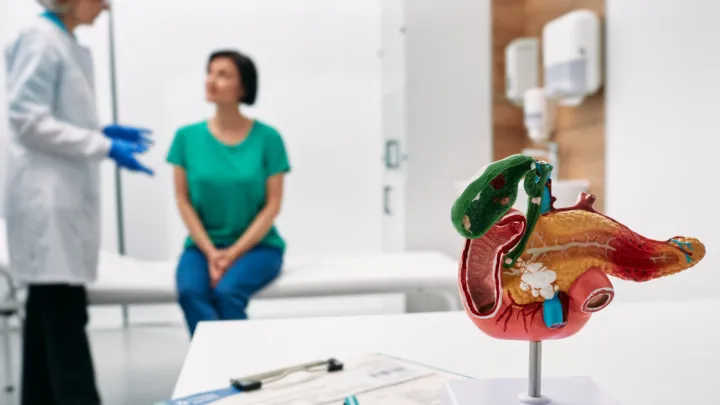
While traditional screening works well, it only detects one type of cancer. Cancer centers are now exploring new technology that can screen for multiple cancers at once.
Pancreatic cancer is considered rare, with an estimated 67,440 new cases diagnosed in the U.S. in 2024. Even so, it is the third-leading cause of cancer-related death in the U.S.
Current research shows that pancreatic cancer can indeed cause diabetes. Although the link between the two diseases is complex, ongoing studies help provide insights that could improve detection and treatment.
When Pattie Wojtkiewicz started experiencing back pain in early 2017, she brushed it off as a muscle issue. But after persistent prodding from a close friend, Wojtkiewicz finally saw a physician assistant – a decision that would ultimately save her life.
A class act. A true professional. The nicest person you'd ever want to meet. Those are just a few of the ways people describe the voice of the Huskers, Greg Sharpe. Even in the face of a pancreatic cancer diagnosis, he's taken the time to share his thoughts on the care he's received.
There is no symptom which is specific to pancreatic cancer and many patients do not develop any symptoms of the disease. Pancreatic cancer can be found by chance on tests done for other reasons
When Kim Bate went to an appointment with his family physician in October 2018, he didn't consider the worst-case scenario. Bate had a rash, but nothing too extreme. Still, when Kim's doctor informed him that he believed Kim had an undiagnosed cancer and they'd need to run more tests, it wasn't a complete surprise.
Through ongoing research, Nebraska Medicine is exploring innovative approaches to treating pancreatic cancer, including novel combinations of existing therapies and new strategies.
Pancreatic cancer is a genetic disease caused by changes or mutations in segments of DNA called genes. Genes carry the code or the instructions which tells the cells in the body how to grow and function. Mutations in certain genes can allow cells to grow in an uncontrolled way.
You’re about to leave the Nebraska Medicine website. The other site may collect information about your visit, including your IP address. Do you want to continue?